

Published: |Last updated:
Listen to this article
Show Quick ReadConcise summary from this article
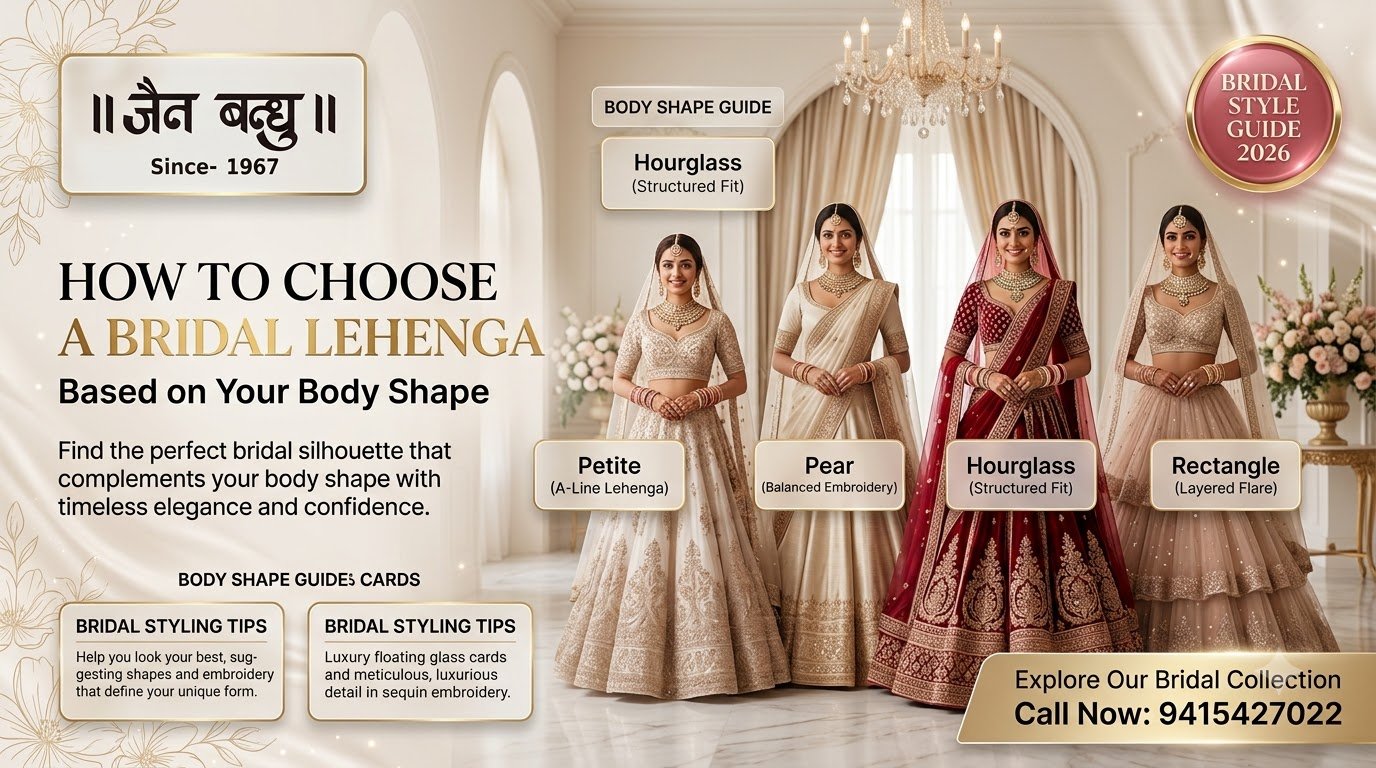
Most guidance on bridal lehenga selection focuses on body shape alone, but height plays an equally significant role in how a silhouette ultimately falls and photographs. A cut that flatters a pear-shaped figure at one height can look proportionally different on a shorter or taller frame. This combined approach is something an experienced team at a Best Lehenga Shop In Lucknow typically factors into their recommendations during a fitting. Why…
Ask AI About This Article
Answers are limited to information in this article.
Most guidance on bridal lehenga selection focuses on body shape alone, but height plays an equally significant role in how a silhouette ultimately falls and photographs. A cut that flatters a pear-shaped figure at one height can look proportionally different on a shorter or taller frame. This combined approach is something an experienced team at a Best Lehenga Shop In Lucknow typically factors into their recommendations during a fitting.
Why Height Changes the Equation
A flared or heavily layered lehenga skirt can visually shorten a petite frame if not proportioned correctly, while the same design might elongate a taller figure beautifully. Similarly, a floor-grazing hemline works differently depending on natural height and heel choice. Considering height alongside body shape, rather than shape in isolation, tends to produce more accurate recommendations.
Petite Brides: Elongating the Frame
For brides under roughly 5’3”, the goal is generally to create visual length. High-waisted lehenga skirts, vertical embroidery patterns, and a fitted blouse that doesn’t cut the torso visually in half all help achieve this. Avoiding overly wide borders at the hem, which can shorten the leg line, is also a common piece of advice from staff at a Lehenga Shop In Lucknow working with petite clients. A single-layer skirt, rather than heavily tiered layers, generally works better for this frame since too much horizontal detail can visually compress height.
Petite and Pear-Shaped Combination
Petite brides with a pear-shaped figure benefit particularly from A-line skirts with vertical embroidery lines, paired with a structured blouse that has some embellishment at the shoulder to balance proportion without adding bulk at the hip.
Petite and Hourglass Combination
For petite hourglass figures, a fitted blouse with a flared but not overly voluminous skirt tends to maintain proportion well, since too much fullness at the hem can overwhelm a smaller frame.
Taller Brides: Working With Natural Length
Taller brides, generally above 5’7”, have more flexibility with fuller skirts, heavier borders, and multiple layers, since their natural height balances the added volume well. A dramatic trail or additional cape layered over the lehenga, increasingly popular in recent seasons, tends to suit taller frames particularly well without appearing overwhelming.
Tall and Apple-Shaped Combination
For taller apple-shaped brides, an empire waistline combined with a flowing, floor-length skirt creates an elegant vertical line while still addressing the midsection concern that defines this body shape.
Tall and Inverted Triangle Combination
Taller brides with broader shoulders often do well with a softer neckline paired with a fuller skirt, since their height accommodates the added lower-body volume without the outfit appearing top-heavy.
Average Height Brides: The Most Flexibility
Brides in the average height range, roughly 5’3” to 5’6”, typically have the widest range of workable silhouettes, since most standard lehenga proportions are designed around this range by default. This is often the easiest group to fit off-the-rack, though minor alterations to hemline length remain common regardless of height.
Heel Height and Its Role in Final Proportion
Heel choice affects how a lehenga’s length and proportion appear on the actual wedding day, which is why many showrooms recommend trying on the outfit with heels close to what you plan to wear. A Best Lehenga Showroom In Lucknow experienced in bridal fittings will often ask about your planned footwear specifically before finalising hem length, since even a two-inch difference in heel height can noticeably change how a floor-length skirt sits.
Practical Tips for Combining Height and Shape Guidance
- Try on your chosen silhouette in the approximate heel height you’ll wear on the day.
- Ask specifically how a design’s proportions might change for your height, rather than relying on how it looks on a model or in a photograph.
- Consider vertical versus horizontal embroidery placement based on whether you want to visually elongate or add width.
- Request minor hemline or waistline adjustments where needed, since even small changes can meaningfully affect overall proportion.
The Value of an In-Person Fitting
Height and body shape interact in ways that are genuinely difficult to judge from photographs or size charts alone. Visiting a Lehenga Shop Near Me in person, and trying on a design with your actual height and footwear in mind, remains one of the more reliable ways to see how a silhouette will truly look on your wedding day.
Jain Bandhu Saree Showroom, located at Daliganj Bazar, Lucknow, offers fitting consultations that take both body shape and height into account, helping brides find a genuinely well-proportioned silhouette rather than relying on generic sizing alone.
Proportion Over Trend
A trending silhouette that doesn’t account for your height can end up looking unbalanced regardless of how popular the design currently is. Prioritising proportion — height and shape considered together — tends to result in a more consistently flattering outcome across photographs, ceremonies, and the many hours a wedding day typically involves.
Torso-to-Leg Ratio: A Detail Beyond Overall Height
Two brides of the same overall height can have quite different torso-to-leg proportions, which affects where a waistline should ideally sit. A bride with a longer torso and shorter legs may benefit from a higher waistline to visually lengthen the lower body, while a bride with a shorter torso and longer legs often looks balanced with a natural or slightly lower waist placement. This level of detail is difficult to assess without an in-person fitting, since it isn’t something standard height measurements alone reveal.
Adjusting Blouse Length for Height
Blouse length interacts with height in ways similar to skirt waistline placement. Petite brides often benefit from slightly shorter, more fitted blouses that avoid visually cutting the torso into disproportionate segments, while taller brides have more flexibility with longer blouse styles that extend past the natural waist without appearing to shorten the frame.
Photography Considerations for Different Heights
Wedding photographers often note that certain angles and poses work better for different heights and proportions. While this isn’t something a lehenga choice alone controls, choosing a silhouette that already photographs well for your height and shape combination reduces the need to rely heavily on posing adjustments to compensate. A design that elongates naturally through cut and embroidery placement tends to photograph consistently well across a range of angles, which is a practical benefit worth considering alongside how the outfit looks in a standing mirror trial.
Working With, Not Against, Your Natural Proportions
The overall goal of considering height alongside body shape isn’t to chase an idealised proportion, but to choose a silhouette that works naturally with what you already have. A well-matched combination of height-appropriate cut and shape-appropriate silhouette tends to require fewer compromises and less reliance on styling tricks to look balanced.
Frequently Asked Questions
Q1: Does height really change which lehenga silhouette suits me best?
Yes. The same silhouette can look quite different depending on height, which is why many showrooms consider both height and body shape together rather than body shape alone.
Q2: Should petite brides avoid heavily layered lehenga skirts entirely?
Not entirely, but it’s generally advisable to choose fewer, well-proportioned layers rather than very voluminous tiered skirts, which can visually shorten a smaller frame.
Q3: How much does heel height actually affect lehenga fitting?
It can matter quite a bit, particularly for floor-length skirts, since even a small difference in heel height changes how the hemline falls and how proportion reads overall.
If you’re unsure which silhouette would work best for your height and body shape together, an in-person fitting at a local showroom is generally the clearest way to find out.
Promote your articles nowCheck for details
Choose a promotion package
Choose a package below, scan the QR code and pay the displayed amount for 20 days.
After payment, email your article title and payment screenshot to info@yourneeds.asia. Once confirmation is received, one of our administrators will activate the promotion.

Choose where your promoted article receives extra visibility
Promotion changes presentation and placement for the selected period. It does not guarantee traffic, enquiries, search ranking or sales.
Priority visibility in the VIP Lounge, promoted shelves and highlighted article areas.
Top-style highlighting in article directories, homepage feeds and promoted article blocks.
Premium styling across supported article feeds, recommendations and directory placements.
Featured presentation in supported homepage, category, directory and related-article areas.
Build a stronger online presence for your business
Get Your Website for ₹15,000
Are you listed and don't have a website for your business? We can plan, design and launch a responsive website that makes your business easier to understand and contact.
Get My WebsiteSEO Starts from ₹10,000/Month
Improve how your business is presented across Google, local listings and AI-powered search results with ongoing SEO, content and authority-building work.
Improve My VisibilitySuggested Articles
View all articles
Naugaon Farms for Weekend Living: Planning Your Ideal Retreat
City life often leaves little room for open spaces and relaxed family time. A farmhouse can change that by giving you a private place…

Buy Property in Siolim: A Smart Guide for Part Time Owners
Owning a home in Goa sounds simple until you realise that you may not live there throughout the year. Many buyers want a property…

How to Choose Residential Apartments in Siolim for Everyday Living
Choosing a home in Goa is not only about finding a beautiful building. Your daily routine matters just as much. You need to think…

Best Real Estate Developers in Delhi NCR: What Should Buyers Consider?
[caption id="attachment_8324" align="alignnone" width="300"] best real estate developers in delhi ncr[/caption] Delhi NCR continues to attract homebuyers and investors because of its strong connectivity,…
Latest Blog Posts
View all articles
How Intelligent Chatbots Drive Better Customer Engagement
Intelligent Chatbots are transforming the way businesses communicate with customers across websites, social media, messaging platforms, and digital services. Unlike traditional chatbots that follow…

Best ServiceNow ITAM Training In Hyderabad At TechMyIndia To Master Practical IT Asset Management
Technology professionals today manage more than just computers and software. A company may have laptops, servers, applications, licenses, cloud resources and many other technology…

MENA Press Release Distribution: Expand Your Brand’s Reach Across the Middle East and North Africa
In today’s competitive digital media environment, businesses need more than a great announcement — they need a strategic way to get that announcement in front of…

Best Workday Finance Training in Bangalore at TechMyIndia: Learn Finance Technology the Practical Way
Finance is no longer limited to using Excel sheets and reports. Organizations use technology to manage financial information, business processes and reporting. As a…

Best Workday HCM Training In Noida at TechMyIndia: A Pragmatic Approach to Learning Workday HCM
Human resources technology is witnessing rapid changes, and the demand for professionals who understand HR processes and enterprise platforms is growing. Workday HCM has…

Proven Community Growth Strategies to Expand Your Online Community
Community Growth is an important part of building a strong and sustainable online presence. Whether you manage a brand community, professional network, social media…