
Published: |Last updated:
Listen to this article
Show Quick ReadConcise summary from this article
Weddings scheduled between April and September in North India come with a specific challenge: how do you look festive without feeling weighed down by heat and humidity? For brides in Lucknow, this question comes up often, especially when browsing a Lehenga Shop In Lucknow for outfits meant to be worn across multiple back-to-back functions. The Real Impact of Weather on Wedding Wear Lucknow’s summers regularly cross 38–40°C, and even the…
Ask AI About This Article
Answers are limited to information in this article.
Weddings scheduled between April and September in North India come with a specific challenge: how do you look festive without feeling weighed down by heat and humidity? For brides in Lucknow, this question comes up often, especially when browsing a Lehenga Shop In Lucknow for outfits meant to be worn across multiple back-to-back functions.
The Real Impact of Weather on Wedding Wear
Lucknow’s summers regularly cross 38–40°C, and even the monsoon months bring high humidity rather than relief. Heavy fabrics like raw silk or dense velvet, while striking in photographs, can become genuinely uncomfortable within a couple of hours — particularly for outdoor haldi or mehendi ceremonies. This is a practical concern, not a stylistic preference, and it’s one that experienced staff at a Best Lehenga Shop In Lucknow are used to addressing directly with customers.
Choosing Fabric by Function, Not Just Occasion Name
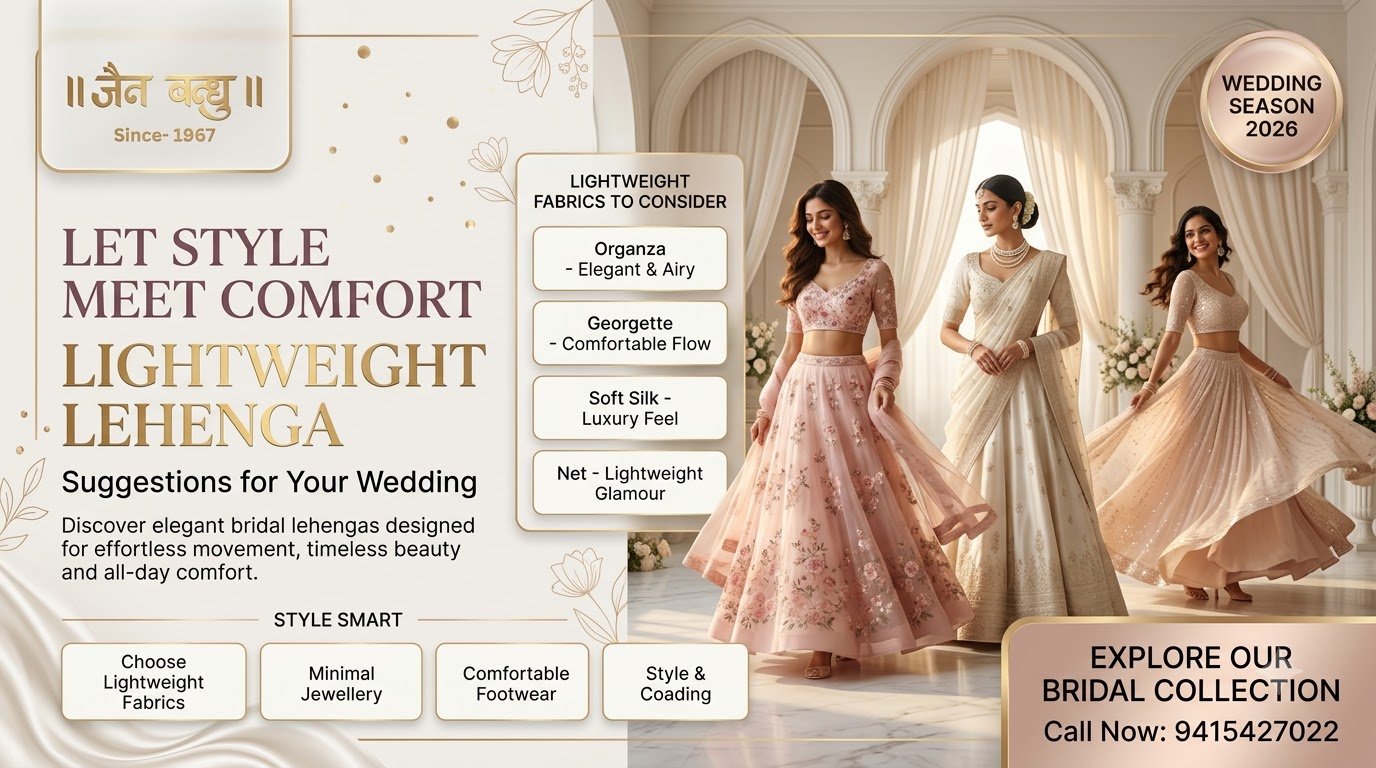
Daytime functions (Haldi, Mehendi) Cotton-silk blends, light georgette, and soft chikankari-inspired fabrics work well here. These functions are typically outdoors or in open-air settings, so breathability matters more than embroidery density.
Evening functions (Sangeet, Cocktail) Slightly more structured fabrics like organza or a soft net can work, since evening temperatures are more manageable and there’s often more movement involved, such as dance performances.
Wedding Day and Reception This is where many brides still want richness and visual weight. A well-lined net or a lightweight silk blend, paired with strategically placed embroidery, can achieve a bridal look without full fabric density. Shoppers visiting a Best Lehenga Showroom In Lucknow for this specific function often ask to see options that “look heavy but aren’t.”
H3: Practical Styling Adjustments for Hot-Weather Weddings
- Half-sleeve or cap-sleeve blouses reduce overall fabric coverage and heat retention compared to full-sleeve, heavily worked blouses.
- Single-layer skirts with a stiffened hem can replicate the fullness of a multi-layer lehenga without the added weight.
- Lighter dupattas in net or organza rather than heavy silk help balance the overall outfit weight, especially when draped over the head for long ceremonies.
H3: Colour Choices That Work Well in Warmer Months
Pastels, corals, mint greens, and soft yellows have become popular for daytime functions, partly because they photograph well in natural light and partly because lighter shades are often paired with lighter fabric weights. Deeper jewel tones remain preferred for evening and reception wear, where slightly heavier fabric is more tolerable.
Local Context: Why This Matters for Lucknow Brides Specifically
Unlike destination weddings in hill stations, most Lucknow weddings involve travel between venues in the city’s heat, multiple outfit changes across a single day, and often outdoor photography sessions. A lehenga that looks perfect in an air-conditioned trial room can feel very different after two hours outdoors. This is one reason experienced shoppers recommend trying on outfits during an actual visit rather than relying solely on online images — something a Jain Bandhu Saree Showroom In Lucknow search often leads local buyers to prioritise.
What to Ask When You Visit a Showroom
- “Can I see this design in a lighter fabric option?”
- “How does this drape after being worn for a few hours — does it lose shape?”
- “Is the embroidery placement adjustable to reduce weight in the blouse or waistband?”
- “What’s a realistic timeline for alterations before my function date?”
These are the same questions a knowledgeable in-store consultant at any established Lehenga Shop Near Me should be comfortable answering in detail.
Visiting in Person Makes a Difference
Fabric behaviour — how it moves, how it feels against skin, how it holds up after sitting for long stretches — is genuinely hard to judge from a screen. Jain Bandhu Saree Showroom, located at Daliganj Bazar, Lucknow, allows customers to try on multiple fabric-and-embroidery combinations side by side, which tends to make the comfort-versus-style trade-off much clearer in person than online.
A Balanced Approach
The goal isn’t to sacrifice festivity for comfort or vice versa. It’s about matching fabric choice to the specific demands of each function, and being honest about how many hours you’ll realistically be wearing the outfit. A lehenga chosen this way tends to hold up better through the day and photographs just as well by evening.
H3: Managing Makeup and Hair Alongside Heavy Outfits
Comfort during hot-weather functions isn’t just about the lehenga itself. A heavier outfit combined with elaborate hairstyling and full makeup can compound discomfort considerably, especially outdoors. Many brides now coordinate with their makeup artists to use lighter, sweat-resistant formulations for daytime functions, reserving heavier contouring and setting for evening events where the outfit itself may also be more structured. This kind of overall planning — outfit, hair, and makeup considered together for each function — tends to produce a more comfortable experience than treating each element separately.
The Photography Angle
Wedding photographers in Lucknow frequently note that comfort translates visibly into photographs. A bride who is overheated or physically uncomfortable often appears stiff or fatigued by the later hours of a function, regardless of how elaborate the outfit is. Lighter fabrics that allow natural movement tend to photograph more naturally, particularly during candid shots away from posed portraits. This is a practical reason, beyond comfort alone, that experienced photographers sometimes recommend lighter fabric choices to their clients ahead of a shoot.
H3: Accessorising Without Adding Weight
Heavy jewellery paired with a heavy lehenga can compound fatigue considerably. For daytime functions particularly, many brides now opt for lighter jewellery pieces — smaller earrings, a simpler necklace, or fewer layered pieces — reserving statement jewellery for the evening reception when the outfit itself may already carry more visual weight. This balance helps distribute the overall physical load of the outfit more evenly across the day.
Weather Contingency Planning
Even with careful planning, weather in Lucknow can be unpredictable, particularly during the monsoon season. It’s worth asking your showroom whether the fabric you’ve chosen holds up reasonably well if exposed to light rain or high humidity backstage, and whether any protective treatment is recommended for particularly delicate embroidery. Having a contingency plan, such as a light shawl or dupatta that can be added or removed depending on conditions, can also help manage unexpected temperature shifts between indoor and outdoor portions of a function.
Weddings scheduled between April and September in North India come with a specific challenge: how do you look festive without feeling weighed down by heat and humidity? For brides in Lucknow, this question comes up often, especially when browsing a Lehenga Shop In Lucknow for outfits meant to be worn across multiple back-to-back functions.
The Real Impact of Weather on Wedding Wear
Lucknow’s summers regularly cross 38–40°C, and even the monsoon months bring high humidity rather than relief. Heavy fabrics like raw silk or dense velvet, while striking in photographs, can become genuinely uncomfortable within a couple of hours — particularly for outdoor haldi or mehendi ceremonies. This is a practical concern, not a stylistic preference, and it’s one that experienced staff at a Best Lehenga Shop In Lucknow are used to addressing directly with customers.
Choosing Fabric by Function, Not Just Occasion Name
Daytime functions (Haldi, Mehendi) Cotton-silk blends, light georgette, and soft chikankari-inspired fabrics work well here. These functions are typically outdoors or in open-air settings, so breathability matters more than embroidery density.
Evening functions (Sangeet, Cocktail) Slightly more structured fabrics like organza or a soft net can work, since evening temperatures are more manageable and there’s often more movement involved, such as dance performances.
Wedding Day and Reception This is where many brides still want richness and visual weight. A well-lined net or a lightweight silk blend, paired with strategically placed embroidery, can achieve a bridal look without full fabric density. Shoppers visiting a Best Lehenga Showroom In Lucknow for this specific function often ask to see options that “look heavy but aren’t.”
H3: Practical Styling Adjustments for Hot-Weather Weddings
- Half-sleeve or cap-sleeve blouses reduce overall fabric coverage and heat retention compared to full-sleeve, heavily worked blouses.
- Single-layer skirts with a stiffened hem can replicate the fullness of a multi-layer lehenga without the added weight.
- Lighter dupattas in net or organza rather than heavy silk help balance the overall outfit weight, especially when draped over the head for long ceremonies.
H3: Colour Choices That Work Well in Warmer Months
Pastels, corals, mint greens, and soft yellows have become popular for daytime functions, partly because they photograph well in natural light and partly because lighter shades are often paired with lighter fabric weights. Deeper jewel tones remain preferred for evening and reception wear, where slightly heavier fabric is more tolerable.
Local Context: Why This Matters for Lucknow Brides Specifically
Unlike destination weddings in hill stations, most Lucknow weddings involve travel between venues in the city’s heat, multiple outfit changes across a single day, and often outdoor photography sessions. A lehenga that looks perfect in an air-conditioned trial room can feel very different after two hours outdoors. This is one reason experienced shoppers recommend trying on outfits during an actual visit rather than relying solely on online images — something a Jain Bandhu Saree Showroom In Lucknow search often leads local buyers to prioritise.
What to Ask When You Visit a Showroom
- “Can I see this design in a lighter fabric option?”
- “How does this drape after being worn for a few hours — does it lose shape?”
- “Is the embroidery placement adjustable to reduce weight in the blouse or waistband?”
- “What’s a realistic timeline for alterations before my function date?”
These are the same questions a knowledgeable in-store consultant at any established Lehenga Shop Near Me should be comfortable answering in detail.
Visiting in Person Makes a Difference
Fabric behaviour — how it moves, how it feels against skin, how it holds up after sitting for long stretches — is genuinely hard to judge from a screen. Jain Bandhu Saree Showroom, located at Daliganj Bazar, Lucknow, allows customers to try on multiple fabric-and-embroidery combinations side by side, which tends to make the comfort-versus-style trade-off much clearer in person than online.
A Balanced Approach
The goal isn’t to sacrifice festivity for comfort or vice versa. It’s about matching fabric choice to the specific demands of each function, and being honest about how many hours you’ll realistically be wearing the outfit. A lehenga chosen this way tends to hold up better through the day and photographs just as well by evening.
H3: Managing Makeup and Hair Alongside Heavy Outfits
Comfort during hot-weather functions isn’t just about the lehenga itself. A heavier outfit combined with elaborate hairstyling and full makeup can compound discomfort considerably, especially outdoors. Many brides now coordinate with their makeup artists to use lighter, sweat-resistant formulations for daytime functions, reserving heavier contouring and setting for evening events where the outfit itself may also be more structured. This kind of overall planning — outfit, hair, and makeup considered together for each function — tends to produce a more comfortable experience than treating each element separately.
The Photography Angle
Wedding photographers in Lucknow frequently note that comfort translates visibly into photographs. A bride who is overheated or physically uncomfortable often appears stiff or fatigued by the later hours of a function, regardless of how elaborate the outfit is. Lighter fabrics that allow natural movement tend to photograph more naturally, particularly during candid shots away from posed portraits. This is a practical reason, beyond comfort alone, that experienced photographers sometimes recommend lighter fabric choices to their clients ahead of a shoot.
H3: Accessorising Without Adding Weight
Heavy jewellery paired with a heavy lehenga can compound fatigue considerably. For daytime functions particularly, many brides now opt for lighter jewellery pieces — smaller earrings, a simpler necklace, or fewer layered pieces — reserving statement jewellery for the evening reception when the outfit itself may already carry more visual weight. This balance helps distribute the overall physical load of the outfit more evenly across the day.
Weather Contingency Planning
Even with careful planning, weather in Lucknow can be unpredictable, particularly during the monsoon season. It’s worth asking your showroom whether the fabric you’ve chosen holds up reasonably well if exposed to light rain or high humidity backstage, and whether any protective treatment is recommended for particularly delicate embroidery. Having a contingency plan, such as a light shawl or dupatta that can be added or removed depending on conditions, can also help manage unexpected temperature shifts between indoor and outdoor portions of a function.
Promote your articles nowCheck for details
Choose a promotion package
Choose a package below, scan the QR code and pay the displayed amount for 20 days.
After payment, email your article title and payment screenshot to info@yourneeds.asia. Once confirmation is received, one of our administrators will activate the promotion.

Choose where your promoted article receives extra visibility
Promotion changes presentation and placement for the selected period. It does not guarantee traffic, enquiries, search ranking or sales.
Priority visibility in the VIP Lounge, promoted shelves and highlighted article areas.
Top-style highlighting in article directories, homepage feeds and promoted article blocks.
Premium styling across supported article feeds, recommendations and directory placements.
Featured presentation in supported homepage, category, directory and related-article areas.
Build a stronger online presence for your business
Get Your Website for ₹15,000
Are you listed and don't have a website for your business? We can plan, design and launch a responsive website that makes your business easier to understand and contact.
Get My WebsiteSEO Starts from ₹10,000/Month
Improve how your business is presented across Google, local listings and AI-powered search results with ongoing SEO, content and authority-building work.
Improve My VisibilitySuggested Articles
View all articles
Naugaon Farms for Weekend Living: Planning Your Ideal Retreat
City life often leaves little room for open spaces and relaxed family time. A farmhouse can change that by giving you a private place…
Buy Property in Siolim: A Smart Guide for Part Time Owners
Owning a home in Goa sounds simple until you realise that you may not live there throughout the year. Many buyers want a property…
How to Choose Residential Apartments in Siolim for Everyday Living
Choosing a home in Goa is not only about finding a beautiful building. Your daily routine matters just as much. You need to think…

Best Real Estate Developers in Delhi NCR: What Should Buyers Consider?
[caption id="attachment_8324" align="alignnone" width="300"] best real estate developers in delhi ncr[/caption] Delhi NCR continues to attract homebuyers and investors because of its strong connectivity,…
Latest Blog Posts
View all articles
How Intelligent Chatbots Drive Better Customer Engagement
Intelligent Chatbots are transforming the way businesses communicate with customers across websites, social media, messaging platforms, and digital services. Unlike traditional chatbots that follow…
Best ServiceNow ITAM Training In Hyderabad At TechMyIndia To Master Practical IT Asset Management
Technology professionals today manage more than just computers and software. A company may have laptops, servers, applications, licenses, cloud resources and many other technology…

MENA Press Release Distribution: Expand Your Brand’s Reach Across the Middle East and North Africa
In today’s competitive digital media environment, businesses need more than a great announcement — they need a strategic way to get that announcement in front of…

Best Workday Finance Training in Bangalore at TechMyIndia: Learn Finance Technology the Practical Way
Finance is no longer limited to using Excel sheets and reports. Organizations use technology to manage financial information, business processes and reporting. As a…
Best Workday HCM Training In Noida at TechMyIndia: A Pragmatic Approach to Learning Workday HCM
Human resources technology is witnessing rapid changes, and the demand for professionals who understand HR processes and enterprise platforms is growing. Workday HCM has…
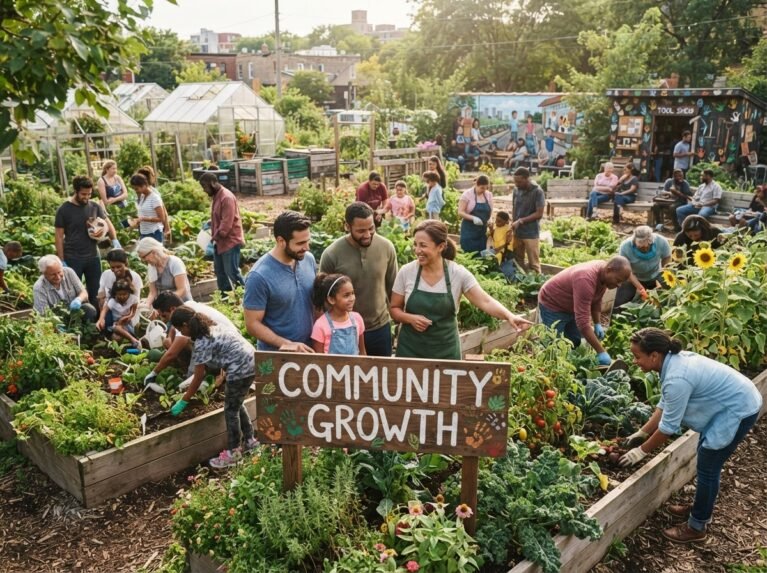
Proven Community Growth Strategies to Expand Your Online Community
Community Growth is an important part of building a strong and sustainable online presence. Whether you manage a brand community, professional network, social media…