

Published: |Last updated:
Listen to this article
Show Quick ReadConcise summary from this article
Not every meal is eaten on an ordinary day. Some arrive on the days that are the opposite of ordinary — the days that are hard in the specific way that only certain days are hard, when the distance between where a person is and where they wish they were feels less like geography and more like something that has no name and no simple resolution. These are the days…
Ask AI About This Article
Answers are limited to information in this article.
Not every meal is eaten on an ordinary day. Some arrive on the days that are the opposite of ordinary — the days that are hard in the specific way that only certain days are hard, when the distance between where a person is and where they wish they were feels less like geography and more like something that has no name and no simple resolution. These are the days when food is not about appetite or occasion or the pleasure of something well made. These are the days when food is about comfort — the specific and irreplaceable comfort of something that connects a person to the people and the places that make the hard days bearable.
For Riyaz, a software architect living alone in Bengaluru, the hardest day of that year was the first Eid after his father passed away. He was in Bengaluru. His family was in Hyderabad. The city around him was going about its ordinary business with the indifference that cities always have toward the private weight of any individual’s grief. And the table in his apartment was empty in the way that it had never quite felt empty before — not because there was no food, but because the food that Eid had always meant was five hundred kilometres away, in a city he could not get to, prepared by the kitchen his family had ordered from for every Eid of his life.
He placed the order through Hungersate the evening before, almost without thinking. The haleem from the establishment his family had always used. The biryani that had been on the Eid table every year he could remember. He placed the order and went to sleep and did not think much about it until the delivery arrived the following morning.
The Morning the Table Was Not Empty
The delivery came at nine forty-five. Riyaz opened the door and stood with the container in his hands for a moment in the way that a person stands when they are holding something that is heavier than its weight. Then he carried it inside and placed it on the table and sat with it for a moment before opening it.
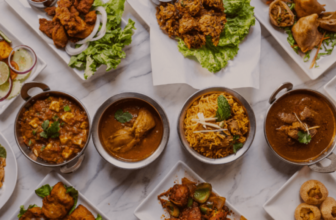
The freshness of what arrived was the first thing that reached him — the haleem carrying the silky depth of a full-day preparation that he had grown up eating at this specific kitchen’s standard, the biryani sealed and fragrant in the way that this kitchen’s biryani had always been sealed and fragrant when his father brought it home from the city on Eid mornings when Riyaz was young enough that the carrying of the container felt like ceremony. The fragrance that filled his Bengaluru apartment was the fragrance of those mornings — specific, complete, belonging entirely to this preparation from this kitchen.
He ate slowly. He called his mother while eating. He described the fragrance to her and she was quiet for a moment and then said that it smelled the same from where she was sitting, which was not possible across five hundred kilometres but was the only true thing either of them said that morning.
What the Food Did That Nothing Else Could
There is a category of comfort that only food can provide — the specific comfort of something made the way it has always been made, carrying in every element of its preparation the continuity of the tradition behind it. Grief interrupts almost everything. It does not interrupt the haleem from the kitchen that has been making it the same way for forty years. The preparation that began the previous day in Hyderabad was not diminished by what Riyaz was carrying. It arrived as it always arrived — complete, fragrant, exactly as the kitchen had always produced it.
This is not something that can be planned for in the way that most things that help on hard days can be planned for. Riyaz had not ordered the food because he understood what it would do. He had ordered it out of the same instinct that sends a person back to the things that have always mattered when the day requires something to hold onto. The food arrived. It did what food from home does when it arrives correctly on a day that needed it — it did not make the grief smaller, but it made the table feel less empty, and the morning feel connected to every other Eid morning that had come before it, and the distance between Bengaluru and Hyderabad feel, for the length of the meal, like something that had been bridged rather than something that separated.
Why This Is What the Platform Was Built For
Hungersate has been described, across the months of its growing presence in Bengaluru, in terms of the Friday office spreads and the birthday dinners and the Saturday family traditions that it has made possible. All of these are real and all of them matter. But what Riyaz’s Eid morning represents is the deeper thing the platform is actually built for — the understanding that the food of home is not simply a preference or a pleasure but a connection, and that the ability to receive it on the days when connection is what a person needs most is not a convenience but something considerably more significant.
As the best intercity food delivery app on the Hyderabad-Bengaluru route, Hungersate delivered that morning not a meal but the thing the meal has always carried — the continuity of a family’s Eid table, the fragrance of a kitchen that had been part of the family’s life for decades, the specific and irreplaceable comfort of food that arrived the way it was supposed to arrive even when everything else about the day was not the way it was supposed to be.
The Days That Food Is For
Most meals are eaten on ordinary days. The food is good or adequate or forgettable, and the day proceeds, and the meal becomes part of the background of a life lived at a reasonable distance from anything that requires comfort or connection or the specific reassurance that some things remain exactly as they have always been.
And then there are the other days. The ones where the table feels empty and the city feels indifferent and the distance between where a person is and where they wish they were feels like the only thing that is real. On those days, the food that arrives from the right kitchen — made the way it has always been made, packaged with the care the journey requires, delivered to a door that would otherwise open onto an empty table — does something that nothing else available can do.
The budget-friendly pricing that Hungersate maintains across its intercity menu means that on the days when the food of home is needed most, the practical barrier to receiving it is as low as the platform can make it. The haleem that Riyaz ordered on the hardest morning of his year arrived at a price that was, by any measure, a very reasonable cost. What it delivered was not measurable by any of the same measures.
He has ordered every Eid since. The table is not empty. The fragrance is the same. And somewhere in it, across five hundred kilometres, his father is still bringing the container home.
On the days when the table needs the food of home most, Hungersate delivers it — from the right kitchen, with the care the day deserves, to wherever you are.
Promote your articles nowCheck for details
Choose a promotion package
Choose a package below, scan the QR code and pay the displayed amount for 20 days.
After payment, email your article title and payment screenshot to info@yourneeds.asia. Once confirmation is received, one of our administrators will activate the promotion.

Choose where your promoted article receives extra visibility
Promotion changes presentation and placement for the selected period. It does not guarantee traffic, enquiries, search ranking or sales.
Priority visibility in the VIP Lounge, promoted shelves and highlighted article areas.
Top-style highlighting in article directories, homepage feeds and promoted article blocks.
Premium styling across supported article feeds, recommendations and directory placements.
Featured presentation in supported homepage, category, directory and related-article areas.
Build a stronger online presence for your business
Get Your Website for ₹15,000
Are you listed and don't have a website for your business? We can plan, design and launch a responsive website that makes your business easier to understand and contact.
Get My WebsiteSEO Starts from ₹10,000/Month
Improve how your business is presented across Google, local listings and AI-powered search results with ongoing SEO, content and authority-building work.
Improve My VisibilitySuggested Articles
View all articles
Best Tasting Sweet Potato Varieties: Which One Is the Sweetest?
Sweet potatoes are available in many varieties, each with its own balance of sweetness, texture, moisture, and flavor. Some varieties are naturally soft and…
How to Choose the Best Sweet Potato Variety for Your Needs
Sweet potatoes come in many varieties, and each one has different characteristics that make it more suitable for certain recipes, cooking methods, or food…
The Anniversary Dinner That Neither of Them Will Ever Forget
Anniversary dinners carry an expectation that grows heavier with each passing year. The first anniversary is forgiving — anything thoughtful feels significant simply because…
The First Order of Intercity Food to Bengaluru and the Silence That Followed It
There is a particular silence that good food produces — different from the silence of an empty room, different from the silence between people…
Latest Blog Posts
View all articles
From Madhapur Search to AI Discovery Best SEO Company Madhapur Done it right 2026
From Madhapur Search to AI Discovery: How YourNeeds.asia Builds a 360° SEO Visibility Engine for Local Businesses A customer looking for a business in…
BBQ Catering in Karachi: Delicious Grilled Food for Every Occasion
When it comes to outdoor gatherings and celebrations, BBQ is one of the most popular food choices. From family get-togethers and birthday parties to…

Event Press Release: How to Announce and Promote Your Event | BeritaWire
An event press release is a professional announcement used to share important information about an upcoming event with journalists, news websites, media organizations, customers,…
Party Catering in Karachi: Delicious Food for Every Celebration
Planning a party involves many details, but food is one of the most important parts of creating a memorable experience. Whether you are arranging…

Top 5 ABDM Integration Platforms in India
India’s healthcare industry is rapidly moving toward connected and interoperable digital systems. Hospitals, clinics, diagnostic centers, health-tech startups, laboratories, and healthcare software companies increasingly…

Integrated HSE Documentation Kit: Complete Guide to ISO 14001 and ISO 45001
Business organizations nowadays emphasize more on environment-related responsibility, employee safety at the workplace, compliance with the law, and sustainable operations. The integration of ISO…