The Bengaluru Food Lover Who Ordered Hyderabadi Food Every Week for a Year — What They Learned

Published: |Last updated:
Listen to this article
Show Quick ReadConcise summary from this article
Fifty-two weeks of intercity Hyderabadi food orders from Bengaluru — the lessons, the discoveries, and the dishes that changed everything The decision began as an experiment and became a way of life. A Bengaluru-based food writer with a particular interest in regional Indian cuisine decided at the beginning of a year to order Hyderabadi food from Hyderabad every single week — not as an occasional treat, not when the occasion…
Ask AI About This Article
Answers are limited to information in this article.
Fifty-two weeks of intercity Hyderabadi food orders from Bengaluru — the lessons, the discoveries, and the dishes that changed everything
The decision began as an experiment and became a way of life. A Bengaluru-based food writer with a particular interest in regional Indian cuisine decided at the beginning of a year to order Hyderabadi food from Hyderabad every single week — not as an occasional treat, not when the occasion demanded it, but as a deliberate and sustained engagement with one of India’s most celebrated food cultures experienced entirely through intercity delivery. The parameters were simple: one order per week, from a different establishment or a different dish each time where possible, and a genuine effort to understand what each order was teaching rather than simply eating it.
What followed was fifty-two weeks of Hyderabadi food arriving at a Bengaluru address, fifty-two openings of containers that each announced themselves before they were fully open, and fifty-two encounters with a cuisine that revealed new dimensions with every week that passed. The experiment produced a food education that most people would need multiple visits to Hyderabad over several years to accumulate. What it also produced was a set of specific and practical learnings — about the food, about the delivery experience, about the relationship between a cuisine and its source — that are worth sharing with anyone who is considering their first intercity order or their fiftieth.
The First Learning: The Biryani Was Never What They Thought It Was
The first week’s order was dum biryani — the natural starting point for anyone approaching Hyderabadi food through intercity delivery for the first time. What arrived was not a surprise in terms of quality — the expectation had been set by the recommendation that prompted the first order. The surprise was in the specificity. The biryani that arrived from the right Hyderabadi kitchen was not simply better than the local version the food writer had been eating. It was different in kind — fragrant in a way that local versions are not, unified in a way that shorter preparations cannot achieve, carrying in every grain of rice the full character of an overnight marinade and a sealed cooking process that local kitchens do not reproduce in full.
The first learning, confirmed by the second biryani order three weeks later from a different establishment and confirmed again over the course of the year, was this: Hyderabadi dum biryani from the right kitchen is not a version of a dish the food writer already knew. It is a different dish that shares a name. The freshness of what arrived through the best intercity food delivery app on the route — fresh preparation timed to each order, packaging that maintained the sealed environment the dum vessel created — meant that what the food writer was learning about was the real thing rather than a compromised version of it.
The Second Learning: Haleem Is a Season, Not a Dish
The food writer’s first haleem order arrived in the third week of the experiment and produced an experience so different from what had been anticipated that the notes taken afterwards filled three times the space of any other weekly entry. The full-day preparation, the specific depth that only emerges when mutton and broken wheat have spent an entire day dissolving into each other, the particular warmth of a bowl of haleem that has been made by a kitchen that has been producing it the same way through multiple decades — these were not qualities the food writer had fully understood before the first bowl arrived.
The second learning was that haleem is not simply a dish but a relationship between a preparation and a season and an occasion. Ordered through the cold months of the Bengaluru year, haleem arrived with a depth and a warmth that felt almost medicinal. Ordered through Ramadan, it arrived carrying the atmosphere of its origin in a way that surprised even someone approaching it as a food writer rather than as a devotee. Haleem, the experiment taught, has a context — and that context travels with it from the kitchen that has always understood it.
The Third Learning: There Is a Whole Cuisine Beyond the Famous Dishes
By the time the food writer reached the midpoint of the year, the curriculum had expanded well beyond biryani and haleem. Nihari arrived in week eight and produced an overnight-cooked bone marrow gravy so silky and so complex that it occupied the notes for two full pages. Patthar ka gosht arrived in week twelve and introduced the specific smoky char of stone-cooked mutton that no pan can replicate. Shikampuri kebabs in week fifteen produced the specific surprise of the cool curd filling inside the warm exterior that the food writer had read about but had not fully understood until the first bite. Marag arrived in week nineteen as what the food writer described as the most elegant thing that had arrived through an intercity order — a clear lamb broth of such refined and precisely calibrated depth that it required a full rethink of what the word simple means in the context of serious cooking.
The third learning was that the Hyderabadi food universe available through intercity delivery is considerably deeper and wider than its most famous representatives suggest. Fifty-two weeks was enough time to explore its breadth without exhausting it.
The Fourth Learning: Budget Friendly and Extraordinary Are Not Opposites
The practical learning that most surprised the food writer was about cost. The assumption going into the year-long experiment had been that ordering from iconic Hyderabadi kitchens through intercity delivery every week for a year would represent a significant food budget commitment. The reality was that the Hungersate platform’s pricing made each weekly order budget friendly enough that the experiment cost no more per week than a good meal at a Bengaluru restaurant — and delivered considerably more value in terms of the depth of the food education it provided and the quality of the experience it consistently offered.
What Fifty-Two Weeks Produced
At the end of the year, the food writer had developed a specific and detailed personal knowledge of Hyderabadi cuisine that no amount of reading or occasional visiting could have produced at the same time. The learnings were not abstract — they were sensory and specific, accumulated through the direct experience of eating from the right kitchens, through the best intercity food delivery app connecting these two cities, at the quality those kitchens produce consistently. The experiment is over. The weekly orders are not. Download the app. Start education. Fifty-two weeks is not required to understand why the food is worth the order — one week is enough for that.
Promote your articles nowCheck for details
Choose a promotion package
Choose a package below, scan the QR code and pay the displayed amount for 20 days.
After payment, email your article title and payment screenshot to info@yourneeds.asia. Once confirmation is received, one of our administrators will activate the promotion.

Choose where your promoted article receives extra visibility
Promotion changes presentation and placement for the selected period. It does not guarantee traffic, enquiries, search ranking or sales.
Priority visibility in the VIP Lounge, promoted shelves and highlighted article areas.
Top-style highlighting in article directories, homepage feeds and promoted article blocks.
Premium styling across supported article feeds, recommendations and directory placements.
Featured presentation in supported homepage, category, directory and related-article areas.
Build a stronger online presence for your business
Get Your Website for ₹15,000
Are you listed and don't have a website for your business? We can plan, design and launch a responsive website that makes your business easier to understand and contact.
Get My WebsiteSEO Starts from ₹10,000/Month
Improve how your business is presented across Google, local listings and AI-powered search results with ongoing SEO, content and authority-building work.
Improve My VisibilitySuggested Articles
View all articles
Best Tasting Sweet Potato Varieties: Which One Is the Sweetest?
Sweet potatoes are available in many varieties, each with its own balance of sweetness, texture, moisture, and flavor. Some varieties are naturally soft and…
How to Choose the Best Sweet Potato Variety for Your Needs
Sweet potatoes come in many varieties, and each one has different characteristics that make it more suitable for certain recipes, cooking methods, or food…
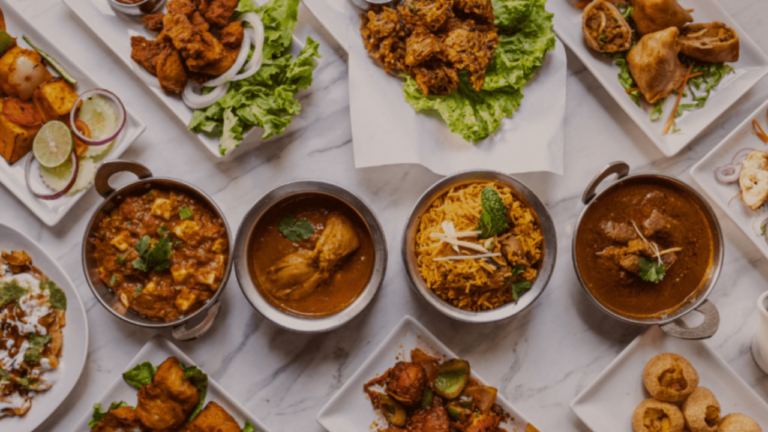
The Anniversary Dinner That Neither of Them Will Ever Forget
Anniversary dinners carry an expectation that grows heavier with each passing year. The first anniversary is forgiving — anything thoughtful feels significant simply because…
The First Order of Intercity Food to Bengaluru and the Silence That Followed It
There is a particular silence that good food produces — different from the silence of an empty room, different from the silence between people…
Latest Blog Posts
View all articles
ISO 27001 Procedures: A Complete Guide to Information Security Management
Information security has emerged as a significant aspect of current corporate processes. Companies process customer data, financial information, intellectual property, personnel data, and various…

New Flats in Pune City Guide | Real Estate Talk
Explore the New Flats in Pune City Guide 2026 from Real Estate Talk. Discover current residential developments, apartment configurations, pricing trends, amenities, connectivity, and…

LMPC Registration in India: Certificate Requirements for Importers, Packers and Manufacturers Under Rule 27
Every business that imports, packs or manufactures pre-packaged goods for sale in India must comply with the Legal Metrology law. The central requirement is…

How to Choose a Reliable Frozen Sweet Potato Fries Supplier?
Choosing the right frozen sweet potato fries supplier is an important decision for distributors, retailers, and foodservice businesses. A reliable supplier should provide consistent…
Ultimate Guide to Buying Frozen Sweet Potato Fries for Foodservice
Introduction Sourcing high-quality frozen sweet potato fries is an important part of successful foodservice operations. Restaurants, foodservice buyers, distributors, and brand managers need to…
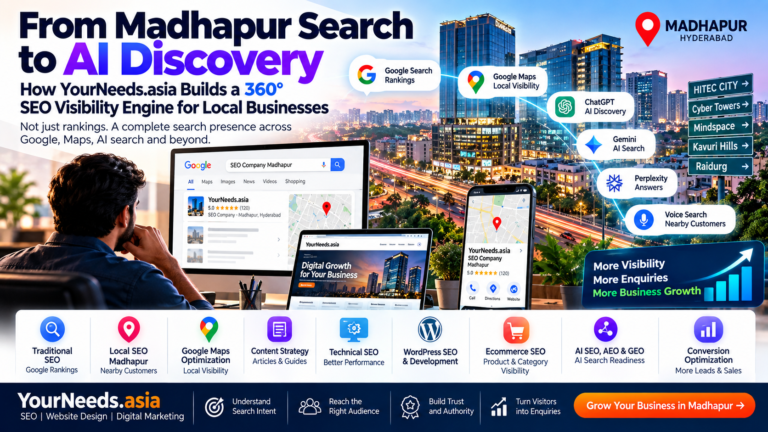
From Madhapur Search to AI Discovery Best SEO Company Madhapur Done it right 2026
From Madhapur Search to AI Discovery: How YourNeeds.asia Builds a 360° SEO Visibility Engine for Local Businesses A customer looking for a business in…