
Published: |Last updated:
Listen to this article
Show Quick ReadConcise summary from this article
Pharmaceutical products must remain safe, stable, and effective throughout their shelf life, and packaging plays a critical role in protecting them from external contamination and environmental exposure. Even when a drug product is manufactured under controlled conditions, a defective container closure system can compromise its quality. This is why Container Closure Integrity Tester (CCIT) technology and reliable Container Closure Integrity Testing (CCIT) for Pharmaceutical applications are important parts of modern…
Ask AI About This Article
Answers are limited to information in this article.
Pharmaceutical products must remain safe, stable, and effective throughout their shelf life, and packaging plays a critical role in protecting them from external contamination and environmental exposure. Even when a drug product is manufactured under controlled conditions, a defective container closure system can compromise its quality. This is why Container Closure Integrity Tester (CCIT) technology and reliable Container Closure Integrity Testing (CCIT) for Pharmaceutical applications are important parts of modern pharmaceutical quality assurance.
Container closure integrity testing evaluates whether a package can maintain an effective barrier against contaminants and unwanted ingress or egress. It can be applied to vials, ampoules, syringes, cartridges, bottles, and other pharmaceutical packaging formats. By identifying leaks and weaknesses, CCIT helps manufacturers verify that packaging is capable of protecting the product throughout its intended lifecycle.
What Is Container Closure Integrity Testing?
Container Closure Integrity Testing, commonly abbreviated as CCIT, is a group of methods used to determine whether a sealed pharmaceutical container maintains its integrity. The container closure system typically includes the primary container and its closure components, such as a vial and stopper or a bottle and cap.
A package may appear properly sealed while still containing microscopic defects. Small leaks can allow microorganisms, moisture, oxygen, or other contaminants to enter the package. Depending on the product, leakage can also result in the loss of solvents, gases, or other important components.
CCIT helps detect these potential failures and provides evidence that the container closure system performs as intended.
Protects Pharmaceutical Product Quality
One of the primary reasons Container Closure Integrity Testing (CCIT) for Pharma is important is product protection. Pharmaceutical formulations can be sensitive to environmental conditions, including oxygen, humidity, microorganisms, and temperature changes.
If packaging develops a leak, the product may be exposed to conditions that can affect its chemical, physical, or microbiological quality. For sterile products, maintaining package integrity is particularly important because a compromised closure may create a pathway for microbial contamination.
By evaluating package integrity, manufacturers can identify potential vulnerabilities before products reach patients.
Helps Maintain Sterility
Sterile pharmaceutical products require packaging systems capable of maintaining sterility throughout the specified storage period and, where applicable, transportation and handling.
A closure that is not properly sealed can provide a route for microorganisms to enter the container. Visual inspection alone may not identify every microscopic defect. CCIT methods provide additional assurance by evaluating the actual integrity of the sealed package.
For this reason, Container Closure Integrity Testing (CCIT) for Pharmaceutical products is an important consideration when developing and qualifying packaging systems for sterile medicines.
Detects Microleaks and Packaging Defects
Packaging defects can occur for several reasons. Manufacturing variations, improper sealing, damaged components, material inconsistencies, or incorrect assembly may affect container integrity.
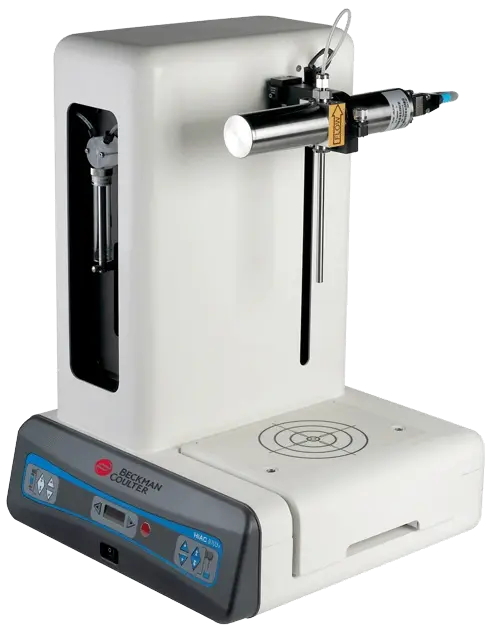
Some defects are large enough to be identified visually, while others can be extremely small and difficult to detect without specialized testing. A Container Closure Integrity Tester (CCIT) can use appropriate non-destructive or deterministic testing technologies to identify leaks and evaluate package performance.
The specific testing technique depends on the container format, product characteristics, packaging materials, and validation requirements.
Supports Pharmaceutical Quality Assurance
Quality assurance in pharmaceutical manufacturing involves controlling every stage that can influence product safety and performance. Packaging is an essential part of this system.
CCIT can be incorporated into packaging development, validation, manufacturing controls, stability programs, and quality investigations. Testing can help manufacturers establish whether a container closure system consistently provides the required level of protection.
When used as part of a well-designed quality program, CCIT contributes to a stronger understanding of packaging performance.
Important for Packaging Development
Container closure integrity should not be considered only after pharmaceutical packaging has been finalized. It can be evaluated during packaging development to help manufacturers select suitable container and closure combinations.
Different materials and closure designs may respond differently to sterilization, filling, sealing, transportation, and storage conditions. Testing can reveal weaknesses that may not be apparent during initial development.
Early evaluation allows manufacturers to make informed decisions about packaging design and reduce the risk of problems later in the product lifecycle.
Helps Evaluate Packaging After Manufacturing Processes
Pharmaceutical containers may undergo processes such as filling, stoppering, capping, crimping, sterilization, freezing, or other treatments depending on the product.
These processes can potentially influence closure performance. For example, mechanical stresses or changes in temperature may affect components or sealing characteristics.
Using CCIT during appropriate stages of packaging qualification and validation can help manufacturers understand whether the closure system remains intact after relevant processing conditions.
Supports Stability and Shelf-Life Studies
A pharmaceutical product must remain adequately protected during its intended shelf life. Stability studies evaluate how products respond to factors such as temperature, humidity, light, and time.
Container closure integrity can be an important part of this overall evaluation because packaging performance can influence product stability. If a closure system allows moisture or oxygen ingress, it may contribute to product degradation in sensitive formulations.
CCIT data can therefore complement other stability assessments by helping demonstrate that the packaging continues to provide an effective barrier under defined conditions.
Non-Destructive Testing Can Improve Efficiency
Many modern CCIT technologies can perform testing without destroying the pharmaceutical container. Non-destructive methods can provide advantages when valuable products or stability samples need to be preserved.
A Container Closure Integrity Tester (CCIT) designed for non-destructive testing can allow manufacturers to inspect packages while retaining the tested units for additional evaluation, where the validated method and procedures permit.
This can reduce product waste and potentially make certain testing programs more efficient.
Choosing the Appropriate CCIT Method
There is no single CCIT method suitable for every pharmaceutical package. The appropriate technology depends on the container design, closure system, materials, product characteristics, leak requirements, and testing objective.
Common approaches may include pressure or vacuum-based techniques, tracer-gas methods, high-voltage leak detection, and other validated deterministic technologies. Manufacturers should select and validate a method that is suitable for the specific packaging system.
The testing process should also include appropriate controls, defined acceptance criteria, method validation, and documented procedures.
Why CCIT Matters for Pharma
The importance of Container Closure Integrity Testing (CCIT) for Pharma extends beyond simply detecting leaks. It helps manufacturers understand whether their packaging can protect pharmaceutical products throughout processing, storage, transportation, and use.
A reliable closure system can help reduce the risk of contamination, maintain product quality, support stability, and strengthen overall packaging assurance. For sterile and sensitive pharmaceutical products, these considerations are especially significant.
Conclusion
Container Closure Integrity Testing (CCIT) for Pharmaceutical packaging is an important element of modern pharmaceutical quality control. Packaging must do more than contain a drug product—it must provide reliable protection against contamination and environmental exposure throughout the product’s intended lifecycle.
Using a suitable Container Closure Integrity Tester (CCIT) and a properly validated testing strategy can help pharmaceutical manufacturers identify leaks, evaluate packaging performance, support sterility assurance, and improve confidence in container closure systems. As pharmaceutical packaging continues to evolve, effective CCIT remains an important tool for maintaining product quality, safety, and packaging reliability.
Promote your articles nowCheck for details
Choose a promotion package
Choose a package below, scan the QR code and pay the displayed amount for 20 days.
After payment, email your article title and payment screenshot to info@yourneeds.asia. Once confirmation is received, one of our administrators will activate the promotion.

Choose where your promoted article receives extra visibility
Promotion changes presentation and placement for the selected period. It does not guarantee traffic, enquiries, search ranking or sales.
Priority visibility in the VIP Lounge, promoted shelves and highlighted article areas.
Top-style highlighting in article directories, homepage feeds and promoted article blocks.
Premium styling across supported article feeds, recommendations and directory placements.
Featured presentation in supported homepage, category, directory and related-article areas.
Build a stronger online presence for your business
Get Your Website for ₹15,000
Are you listed and don't have a website for your business? We can plan, design and launch a responsive website that makes your business easier to understand and contact.
Get My WebsiteSEO Starts from ₹10,000/Month
Improve how your business is presented across Google, local listings and AI-powered search results with ongoing SEO, content and authority-building work.
Improve My VisibilitySuggested Articles
View all articles
Where Is Engineering Services Demand Expanding? Mapping Design, Testing, Automation, and Product Development Needs
Engineering services demand is expanding as manufacturers face a difficult combination: products are becoming more complex while development cycles are becoming shorter. Vehicles increasingly…

5 Baby Lock Embroidery Machines Small Businesses Actually Use for Custom Orders
Most shop owners buy their first multi-needle machine twice. The first one fits the budget, and the second one fits the orders. Baby Lock…

The Grand Marquee Wedding Planner Karachi: Making the Most of Internal Catering
When a venue has its own kitchen, one of the biggest decisions in your wedding is already half made. The menu will come from…

What Makes Blockchain Gaming NFTs Valuable Beyond Their Scarcity?
A gaming NFT becomes more interesting when it serves a meaningful purpose. Some assets provide access to specific features, while others offer cosmetic customisation,…
Latest Blog Posts
View all articles
What Is Digital Marketing? A Beginner’s Guide for India
Digital marketing is the promotion of products, services or brands through online channels such as search engines, social media, email and websites. With over…

Araville Farms in Naugaon: Exploring a Farmhouse Lifestyle Near Delhi NCR
The desire for more open space, privacy and a slower pace of life has encouraged many buyers to explore farmhouse properties beyond major cities.…

Ideal Farm House – A Perfect Destination for Family Picnics and Special Events
Ideal Farm House is a wonderful destination for families, friends, and groups looking to enjoy a relaxing break from the busy routine of city…
What Is a USB Hub? Types, Benefits, Uses, and How to Choose the Right One
Modern computers, laptops, and tablets come with multiple features, but one common limitation is the number of available ports. Many devices have only a…

Buying Land in Dholera Smart City: 7 Things Every Property Buyer Should Verify
Dholera, Gujarat, has attracted attention from homebuyers, entrepreneurs and property investors interested in the region's planned development. With different types of land available across…

Sunset Luxury Farm House – A Perfect Destination for Relaxation and Private Events
Sunset Luxury Farm House is an ideal choice for people looking for a relaxing getaway, a private family gathering, or a special event away…