

Published: |Last updated:
Listen to this article
Show Quick ReadConcise summary from this article
Not everyone who discovers intercity food delivery arrives at it with enthusiasm. Some arrive at it the way Karan did — reluctantly, under mild social pressure, with a collection of reasonable objections that he had been making for months and that had, until a particular Saturday afternoon, successfully kept him from placing an order he was now convinced was going to disappoint him. Karan is, by his own description, a…
Ask AI About This Article
Answers are limited to information in this article.
Not everyone who discovers intercity food delivery arrives at it with enthusiasm. Some arrive at it the way Karan did — reluctantly, under mild social pressure, with a collection of reasonable objections that he had been making for months and that had, until a particular Saturday afternoon, successfully kept him from placing an order he was now convinced was going to disappoint him.
Karan is, by his own description, a food sceptic. Not about food itself — he cares about food, eats thoughtfully, and has opinions about restaurants that he holds with the confidence of someone who has developed them through sustained attention rather than casual experience. His skepticism was specific and targeted: the idea that food ordered from another city could arrive in a condition worth eating. The logic was straightforward. Food degrades with time. Heat dissipates. Textures change. A biryani that has been sitting in packaging for several hours is not, by any reasonable culinary standard, the same biryani that left the kitchen. This was his position. He had held it consistently. He had communicated it, with some frequency, to the colleagues who had been encouraging him to try an intercity order for the better part of two months.
Then his colleague Divya, who had been ordering through Hungersate for six months and had run out of patience with his objections, placed the order on his behalf and told him it was arriving on Saturday whether he intended to be a sceptic about it or not.
The Objections That Saturday Was Going to Test
Karan’s objections were not unreasonable. They were the objections of someone who has eaten delivery food that promised more than it delivered and who had generalized, sensibly, from those experiences to a position of caution about the category. His specific concerns about intercity food delivery were three.
First, temperature. Food that has travelled for several hours is cold food, or at best lukewarm food, and neither of these is what a dum biryani is supposed to be. Second, texture. Rice that has been sitting in its own steam for hours is not the rice that left the kitchen — it softens, it loses the separation between grains, it becomes something other than what the preparation intended. Third, fragrance. The aromatic compounds that make a biryani worth eating are volatile. They escape into the surrounding environment. A biryani that arrives after a long journey in a sealed box has, in his estimation, already lost the element that makes a biryani worth the conversation about it.
These were fair concerns. They were also, as Saturday afternoon was about to demonstrate, concerns that the right platform and the right kitchen had already solved.
What Arrived — and What It Did to the Objections
The delivery came at half past two. The packaging communicated something before it was opened — the container was warm in the hand in a way that the thermal insulation of a correctly engineered intercity delivery box produces, the kind of warmth that suggests the contents have been protected through their journey rather than passively cooled by it.
Karan opened it in the kitchen with the focused attention of someone who has been debating a position for two months and is now in the presence of the evidence that will settle it. The freshness that arrived when the seal was broken was the first objection answered. The aromatic compounds that Karan had been confident would have dissipated across the journey filled the kitchen immediately and completely — the whole spices, the saffron, the overnight-marinated mutton releasing everything it had absorbed in twelve hours of preparation. The fragrance was not muted or approximated. It was the fragrance of a biryani that had been made correctly and packaged in a sealed environment that had protected what the kitchen produced across every kilometer between Hyderabad and Bengaluru.
He took a spoonful. The rice had the separation between grains that the dum process produces — each grain distinct, each one carrying the character of the steam it had absorbed during the sealed cooking. The mutton had the tenderness of an overnight marinade followed by hours of sealed heat. The temperature was what a correctly insulated intercity delivery produces — warm enough to eat immediately, stable enough that the preparation had not been adversely affected by the journey.
He ate in silence for approximately four minutes. Then he said to Divya, who had been watching with the satisfaction of someone who has been right for two months: “When can I order again?”
The Conversion That One Meal Produced
Skepticism, when it is honest skepticism built on reasonable concerns rather than stubbornness, converts cleanly when the evidence is sufficient. Karan’s conversion was immediate and complete. Not because he had been proved wrong in a way that required defending — his concerns had been genuinely reasonable given his experience — but because the evidence had addressed each of them specifically and thoroughly. The temperature concern had been answered by the packaging. The texture concern had been answered by the preparation. The fragrance concern had been answered by the sealed delivery environment that the right platform builds around its intercity orders.
As the best intercity food delivery app on the Hyderabad-Bengaluru route, Hungersate had, through the simple act of delivering a correctly made and correctly packaged dum biryani to a sceptic on a Saturday afternoon, demonstrated something that two months of his colleagues’ recommendations had not managed to convey. The proof was in the eating. It always is.
What Followed the Saturday Biryani
The following week, Karan placed his own order. He selected the haleem — the next dish on the menu that his now considerably more attentive curiosity had identified as worth exploring. It arrived with the same quality and the same care as the biryani, confirming that the Saturday experience had not been exceptional. It was consistent. It was what the platform delivered reliably, week after week, to the households in Bengaluru that had discovered it.
The budget-friendly pricing that Hungersate maintains across its intercity menu was the final piece of the conversion — the discovery that the quality Karan had experienced on Saturday was not priced as an exceptional luxury but as a very good meal at a very reasonable price. A dum biryani from a kitchen that had been making it the same way for forty years, delivered intercity with the packaging and care the journey requires, arrived at a price that made weekly ordering practical rather than occasional. His objections, all of them, had been answered. His position, held for two months with genuine conviction, had been revised in the space of one Saturday afternoon.
He now orders every week. He has recommended the platform to four colleagues. He has not, as yet, apologized to Divya for two months of skepticism — but she considers the weekly orders sufficient acknowledgment that she was right all along.
Place your first intercity order through Hungersate — and find out which of your objections survive contact with the actual biryani.
Promote your articles nowCheck for details
Choose a promotion package
Choose a package below, scan the QR code and pay the displayed amount for 20 days.
After payment, email your article title and payment screenshot to info@yourneeds.asia. Once confirmation is received, one of our administrators will activate the promotion.

Choose where your promoted article receives extra visibility
Promotion changes presentation and placement for the selected period. It does not guarantee traffic, enquiries, search ranking or sales.
Priority visibility in the VIP Lounge, promoted shelves and highlighted article areas.
Top-style highlighting in article directories, homepage feeds and promoted article blocks.
Premium styling across supported article feeds, recommendations and directory placements.
Featured presentation in supported homepage, category, directory and related-article areas.
Build a stronger online presence for your business
Get Your Website for ₹15,000
Are you listed and don't have a website for your business? We can plan, design and launch a responsive website that makes your business easier to understand and contact.
Get My WebsiteSEO Starts from ₹10,000/Month
Improve how your business is presented across Google, local listings and AI-powered search results with ongoing SEO, content and authority-building work.
Improve My VisibilitySuggested Articles
View all articles
Best Tasting Sweet Potato Varieties: Which One Is the Sweetest?
Sweet potatoes are available in many varieties, each with its own balance of sweetness, texture, moisture, and flavor. Some varieties are naturally soft and…
How to Choose the Best Sweet Potato Variety for Your Needs
Sweet potatoes come in many varieties, and each one has different characteristics that make it more suitable for certain recipes, cooking methods, or food…
The Anniversary Dinner That Neither of Them Will Ever Forget
Anniversary dinners carry an expectation that grows heavier with each passing year. The first anniversary is forgiving — anything thoughtful feels significant simply because…
The First Order of Intercity Food to Bengaluru and the Silence That Followed It
There is a particular silence that good food produces — different from the silence of an empty room, different from the silence between people…
Latest Blog Posts
View all articles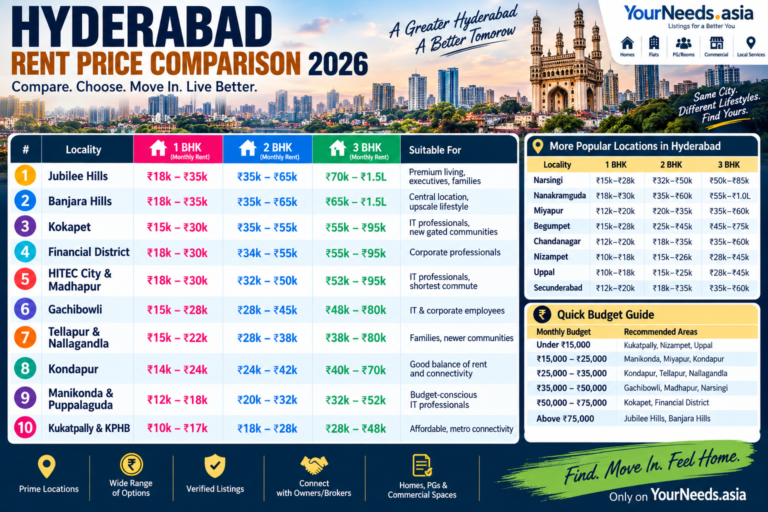
Flats for Rent in Hyderabad: Apartments, Tolet, Villas & Independent Houses 2026
Flats for Rent in Hyderabad: Apartments, To-Let Homes, Villas & Independent Houses – Complete 2026 Rental Guide Finding the right Flats for rent in…

Sara777 – Satta Matka Results and Chart Latest Records
Welcome to Sara777, an online platform created to provide easy access to Satta Matka results, charts, market records, and related information in one place.…

How to deposit on allpanel777?
Here is some steps to deposit on allpanel777 are:- Step 1: Start With Your Account To deposit, users should have an active AllPanel777 account.…
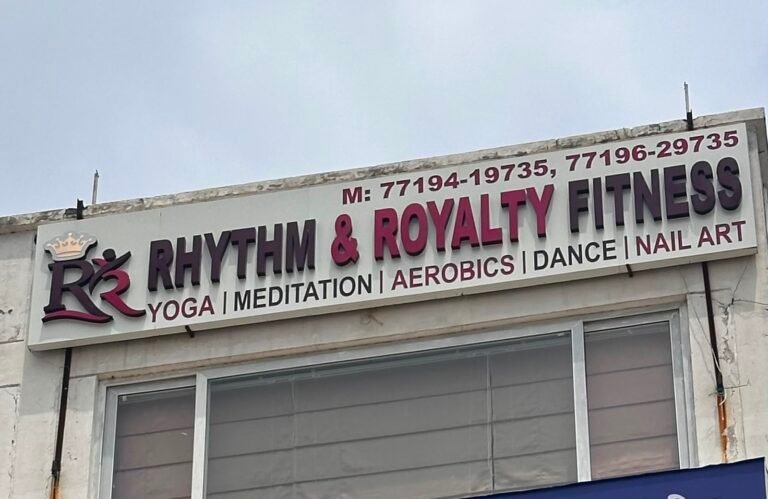
How Rhythm & Royalty Fitness Makes Dance Classes in Zirakpur Fun for Every Age Group
Dance has a unique way of bringing people together, no matter their age, fitness level, or experience. With everyone seeking a workout that doesn't…

Free JPG to PES Tools and Their Limitations
Turning a picture into an embroidery file sounds simple until you see what happens inside the machine. A JPG shows an image, while a…

Getting to Know Ciprofloxacin 500 mg: Uses, Safety and Important Information
[caption id="attachment_8302" align="alignnone" width="300"] Ciprofloxacin 500 mg: Understanding the basics in a simple way.[/caption] Ciprofloxacin 500 mg: Some Basic Points to Consider When one…