
The Future of Real Estate in Delhi NCR: Top Corridors and Investment Hotspots

Published: |Last updated:
Listen to this article
Show Quick ReadConcise summary from this article
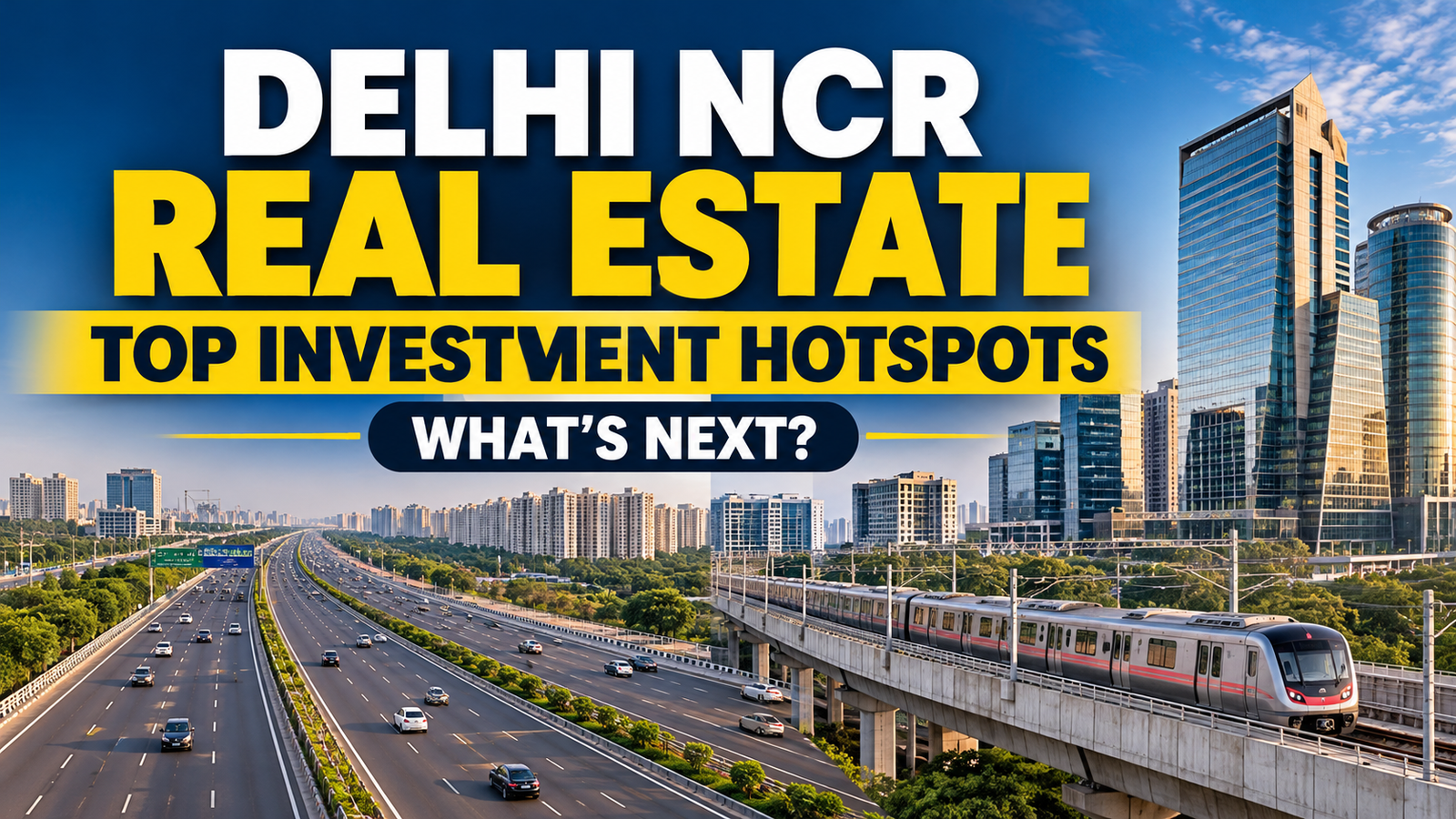
Delhi NCR is entering a new phase of real estate development. Large infrastructure projects, expanding public transport networks and improving airport connectivity are changing how people travel, work and conduct business across the region. Locations that once remained on the outskirts are gradually becoming important commercial destinations. This transformation is creating fresh opportunities for businesses, retailers and property investors. From the Dwarka Expressway to the Yamuna Expressway corridor, several locations…
Ask AI About This Article
Answers are limited to information in this article.
Delhi NCR is entering a new phase of real estate development. Large infrastructure projects, expanding public transport networks and improving airport connectivity are changing how people travel, work and conduct business across the region. Locations that once remained on the outskirts are gradually becoming important commercial destinations.
This transformation is creating fresh opportunities for businesses, retailers and property investors. From the Dwarka Expressway to the Yamuna Expressway corridor, several locations are gaining attention because of their improving connectivity and growing economic activity. Understanding these changes is important for anyone looking at the future of commercial real estate in Delhi NCR.
1. Major Infrastructure Developments Driving Real Estate Growth
Infrastructure is one of the strongest factors influencing property demand. Better roads and public transport reduce travel time, improve business accessibility and make emerging locations more attractive.
Expressways and Major Road Networks
Several expressways are changing connectivity across Delhi NCR:
Dwarka Expressway: This corridor has improved connectivity between Delhi and Gurugram while providing better access to IGI Airport and Dwarka. Its growing importance as a regional transport link is supporting commercial activity in adjoining areas. Businesses can benefit from improved access to corporate districts, logistics facilities and customer catchments.
Yamuna Expressway: Connecting Greater Noida with Agra, this expressway has become an important growth corridor. The development of Noida International Airport at Jewar is adding another dimension to its commercial potential. Improved connectivity could support logistics, hospitality, retail and other business activities over time.
Delhi-Mumbai Expressway: This major infrastructure project is expected to strengthen freight movement and regional trade between northern and western India. Its connecting routes can improve access to industrial and commercial locations across the NCR region, particularly for businesses that depend on transportation and supply chains.
Metro Expansion and Rapid Rail Connectivity
Public transport is equally important in determining the future of commercial locations.
Delhi Metro Phase IV is extending connectivity through corridors such as Janakpuri West–RK Ashram, Majlis Park–Maujpur and Aerocity–Tughlakabad. These extensions are expected to improve access to several residential, institutional and commercial areas.
The Delhi–Ghaziabad–Meerut Namo Bharat corridor is another significant development. With the complete corridor becoming operational in February 2026, regional travel has become more convenient for commuters. Better connections between cities can expand employment catchments and support businesses that depend on regular customer and workforce movement.
Airport connectivity is also improving through road projects linking Delhi, Gurugram, Faridabad and Greater Noida with the upcoming Jewar Airport. Together, these developments are strengthening NCR’s position as a major business and investment destination.
2. Urban Redevelopment and the Growth of Organised High-Street Retail
The future of commercial real estate is not limited to constructing new office buildings and shopping complexes. Existing business districts are also undergoing changes to meet modern requirements.
Traditional markets such as Connaught Place, Karol Bagh, Lajpat Nagar and South Delhi’s established commercial areas continue to attract shoppers and businesses. However, changing consumer expectations are increasing the need for organised retail spaces, improved infrastructure, convenient parking and better pedestrian access.
At the same time, newer commercial corridors in Gurugram and Noida are encouraging the growth of organised high-street retail.
These developments are creating opportunities for:
- Food and beverage outlets: Restaurants and cafes are becoming important parts of commercial destinations.
- Fashion and lifestyle stores: Modern retail formats are attracting customers looking for convenient shopping experiences.
- Daily convenience services: Pharmacies, grocery stores, salons and other essential businesses are supporting regular footfall.
- Mixed-use commercial environments: Combining offices, retail and service businesses can create more active commercial districts.
The growing preference for accessible retail formats is also influencing leasing activity. Investors are increasingly looking at tenant quality, location visibility and consistent customer movement rather than depending only on future price appreciation.
3. Strategic Micro-Markets and the Role of Developers
Different parts of Delhi NCR offer different commercial investment opportunities. Understanding the strengths of each micro-market can help investors make more informed decisions.
Gurugram: Golf Course Road, Golf Course Extension Road and Cyber City benefit from corporate offices, business activity and a strong professional workforce. These locations continue to attract demand for organised retail, food outlets and business-support services.
Noida: Sector 18, Sector 62 and areas along the Noida Expressway have established commercial and institutional activity. Improving connectivity and employment opportunities are supporting the development of new business destinations.
Greater Noida and Yamuna Expressway: This belt has long-term potential because of industrial development, educational institutions, logistics activity and the upcoming airport infrastructure. Its commercial growth will depend on how quickly supporting businesses and employment centres develop.
Delhi and South Delhi: Established commercial markets benefit from brand recognition, existing customer bases and proximity to important business districts. Redevelopment and organised retail can help these locations adapt to changing business requirements.
The NCR skyline is undergoing a major transformation through infrastructure expansion and better urban planning. In this changing environment, experienced developers also play an important role in modernising commercial spaces and supporting organised retail growth. Long-standing market participants such as Devika Group contribute to this evolving commercial landscape through strategic commercial developments and organised high-street retail. Their role reflects a wider shift towards creating functional business destinations that serve the needs of an expanding urban workforce.
This broader development approach is also changing how people evaluate the top builders in delhi ncr. Beyond construction, attention is increasingly shifting towards commercial planning, location suitability, accessibility and the long-term usability of developed spaces.
4. What Should Real Estate Investors Evaluate in 2026 and Beyond?
Although infrastructure creates new opportunities, every developing corridor does not guarantee strong investment returns. Investors should examine the fundamentals before making a decision.
Here are some important factors to consider:
- Operational connectivity: Check whether expressways, metro stations and transport links are already operational or still under construction.
- Business demand: Evaluate nearby offices, industrial areas, institutions and employment centres that can generate regular commercial activity.
- Retail potential: Study customer footfall, visibility, parking facilities, tenant mix and competition from nearby commercial properties.
- Legal approvals: Verify land ownership, project approvals, completion certificates and applicable regulatory requirements.
- Rental and occupancy trends: Compare prevailing rents, vacancy levels, maintenance expenses and the availability of reliable tenants.
- Long-term development plans: Understand upcoming infrastructure, public facilities and commercial projects that could influence the area’s future.
A well-connected location with actual business demand may offer a more sustainable opportunity than an area relying entirely on future infrastructure announcements.
Conclusion: A Changing Commercial Real Estate Landscape
The future of Delhi NCR’s real estate market will be shaped by infrastructure, employment growth and changing business requirements. Expressways and rapid rail networks are improving regional connectivity, while established commercial districts are adapting through redevelopment and organised retail.
Emerging corridors such as Dwarka Expressway, Noida Expressway and Yamuna Expressway offer different opportunities, but their long-term performance will depend on actual economic activity and supporting infrastructure.
For investors, the focus should remain on locations with practical connectivity, genuine commercial demand, sound development planning and sustainable occupancy prospects. These fundamentals will play a major role in shaping the next phase of commercial real estate growth across Delhi NCR.
Promote your articles nowCheck for details
Choose a promotion package
Choose a package below, scan the QR code and pay the displayed amount for 20 days.
After payment, email your article title and payment screenshot to info@yourneeds.asia. Once confirmation is received, one of our administrators will activate the promotion.

Choose where your promoted article receives extra visibility
Promotion changes presentation and placement for the selected period. It does not guarantee traffic, enquiries, search ranking or sales.
Priority visibility in the VIP Lounge, promoted shelves and highlighted article areas.
Top-style highlighting in article directories, homepage feeds and promoted article blocks.
Premium styling across supported article feeds, recommendations and directory placements.
Featured presentation in supported homepage, category, directory and related-article areas.
Build a stronger online presence for your business
Get Your Website for ₹15,000
Are you listed and don't have a website for your business? We can plan, design and launch a responsive website that makes your business easier to understand and contact.
Get My WebsiteSEO Starts from ₹10,000/Month
Improve how your business is presented across Google, local listings and AI-powered search results with ongoing SEO, content and authority-building work.
Improve My VisibilitySuggested Articles
View all articles
What Should You Check Before Buying a Jasmine Farmhouse in Naugaon?
[caption id="attachment_9509" align="alignnone" width="300"] Jasmin Farms[/caption] Buying a farmhouse plot is different from purchasing an apartment in a residential society. The buyer…

What Amenities Should You Check Before Buying an Apartment in Porvorim Goa?
Buying a home involves more than choosing an attractive property or comparing prices. The facilities inside a residential building, quality of construction, maintenance arrangements,…
Luxury Serviced Apartments in Goa: What Defines Premium Living?
Luxury property in Goa is often associated with beach access, private pools, landscaped surroundings and beautifully furnished interiors. However, a premium apartment should offer…

Is Buying a Farmhouse in Naugaon, Alwar a Good Investment for Delhi NCR Buyers?
Buying a farmhouse outside Delhi NCR is no longer just about owning a large piece of land. For many buyers, it is about finding…
Latest Blog Posts
View all articles
Press Release Distribution in Bahrain - Grow Your Brand with MENAWireNOW
Bahrain is an important business destination in the Middle East, offering opportunities across finance, technology, healthcare, real estate, tourism, and other growing industries. For…

Event Organizer in Karachi: Creating Memorable Events with Professional Planning
Organizing a successful event requires creativity, proper coordination, and attention to detail. Whether you are planning a corporate gathering, wedding celebration, birthday party, or…

What Does the Best Wedding Planner Actually Do? From First Call to Walima
Many people picture a wedding planner as someone who chooses flowers and holds a clipboard. The reality is far more detailed, and most of…

Is Travomint a Legitimate OTA?
When booking flight tickets online, choosing a legitimate and reliable travel agency is essential. Travelers want a platform that offers convenient reservations, competitive fares,…

8 Channel CCTV UPS: Features, Uses, Benefits & Buying Guide
Introduction A reliable power supply is essential for keeping security cameras and surveillance systems running continuously. Power cuts or voltage fluctuations can interrupt CCTV…
Can Advanced Plastic Separation Transform Thailand’s Recycling Chain?
Thailand’s waste-management landscape is placing greater emphasis on organized separation, material recovery and recycling. As municipalities, industrial operators and recycling facilities work with increasingly…