


Published: |Last updated:
Listen to this article
Show Quick ReadConcise summary from this article
Many estate planning law firms invest time and money into building a website, expecting it to automatically bring in new clients. However, most of these websites fail to generate consistent leads. The issue is not simply having an online presence—it is how that presence is structured, optimized, and used to guide potential clients toward taking action. In a competitive legal market, a website must do more than just provide information.…
Ask AI About This Article
Answers are limited to information in this article.
Many estate planning law firms invest time and money into building a website, expecting it to automatically bring in new clients. However, most of these websites fail to generate consistent leads. The issue is not simply having an online presence—it is how that presence is structured, optimized, and used to guide potential clients toward taking action.
In a competitive legal market, a website must do more than just provide information. It must build trust, answer questions, and convert visitors into consultations. Unfortunately, many estate planning websites fall short in these areas, resulting in missed opportunities and inconsistent client flow.
Lack of Clear Messaging and Client Focus
One of the most common reasons estate planning websites fail is unclear messaging. Many law firms focus too heavily on describing themselves rather than addressing client needs.
Visitors are usually not interested in legal jargon or firm history at first. Instead, they want answers to questions like:
- Do I need a will or a trust?
- How can I protect my family’s assets?
- What happens if I die without an estate plan?
- How much does estate planning cost?
When a website does not immediately answer these concerns, visitors often leave and look elsewhere. Successful websites focus on client problems and provide clear, simple solutions.
Weak Conversion Structure
Even if a website attracts traffic, it will not generate leads without a strong conversion structure. Many estate planning websites fail because they do not guide visitors toward taking action.
Common conversion issues include:
- Hidden or unclear contact buttons
- Complicated contact forms
- Lack of consultation calls-to-action
- No clear next step for visitors
A high-performing website should make it extremely easy for users to schedule a consultation or contact the firm. Every page should include a clear and visible call-to-action.
Poor Content Strategy
Content plays a major role in attracting and educating potential clients. However, many estate planning websites either lack content entirely or publish content that is not helpful to users.
Effective content should:
- Answer common estate planning questions
- Explain legal processes in simple terms
- Address client concerns and fears
- Provide actionable guidance
Without valuable content, websites struggle to attract organic traffic and fail to build trust with potential clients. Educational content is often what turns a casual visitor into a serious lead.
Weak Search Engine Visibility
A website that cannot be found is unlikely to generate leads. Many estate planning websites fail because they are not optimized for search engines.
Without proper SEO, websites miss out on high-intent users actively searching for legal services. These users are often ready to take action but simply cannot find the firm online.
Search visibility requires:
- Keyword optimization
- High-quality content
- Technical SEO improvements
- Local search optimization
Without these elements, even well-designed websites remain invisible to potential clients.
Ignoring Local Search Opportunities
Estate planning is a location-based service. Clients typically prefer attorneys within their region. Yet many law firms fail to optimize their websites for local search.
Missing local SEO opportunities means losing clients who are actively searching for nearby legal services.
Strong local optimization includes:
- Google Business Profile setup
- Local keywords targeting
- Client reviews and ratings
- Location-specific service pages
Without these elements, a firm may lose visibility in its own local market.
Poor User Experience and Website Design
User experience plays a major role in whether visitors stay on a website or leave immediately. Many estate planning websites are outdated, difficult to navigate, or not mobile-friendly.
Common UX problems include:
- Slow loading speed
- Cluttered layouts
- Hard-to-read text
- Poor mobile responsiveness
When users struggle to navigate a website, they are unlikely to trust the firm or take the next step.
Lack of Trust-Building Elements
Estate planning involves highly personal and financial decisions. Without trust, visitors will not convert into clients.
Many websites fail because they do not include strong trust signals such as:
- Client testimonials
- Attorney credentials
- Case studies or success stories
- Professional design quality
Trust must be built quickly. If a website does not establish credibility within seconds, potential clients often leave.
No Strategy for Lead Nurturing
Even when visitors do not convert immediately, they should not be lost forever. However, many estate planning websites lack systems to capture and nurture leads.
Without email follow-ups, educational resources, or remarketing strategies, potential clients are often forgotten after their first visit.
Lead nurturing helps keep the firm top-of-mind until the client is ready to move forward.
Missing Integration With Modern Marketing
Today’s successful estate planning firms combine websites with broader digital marketing strategies. A standalone website is no longer enough.
Effective integration includes:
- SEO and content marketing
- Paid advertising campaigns
- Social media presence
- AI-driven search optimization
Firms that align their website with these strategies see significantly better results.
For estate planning practices looking to improve performance and generate more consistent leads, https://keygrow.co/industries/legal/estate-planning provides structured digital marketing solutions designed specifically for this industry.
Conclusion
Most estate planning websites fail to generate consistent leads not because of lack of effort, but because they lack strategy. Weak messaging, poor SEO, unclear conversion paths, and missing trust elements all contribute to underperformance.
A successful website must do more than exist—it must actively guide visitors, answer their questions, and build confidence. When combined with strong digital marketing and user-focused design, an estate planning website can become one of the most powerful tools for generating consistent, high-quality client inquiries.
Promote your articles nowCheck for details
Choose a promotion package
Choose a package below, scan the QR code and pay the displayed amount for 20 days.
After payment, email your article title and payment screenshot to info@yourneeds.asia. Once confirmation is received, one of our administrators will activate the promotion.

Choose where your promoted article receives extra visibility
Promotion changes presentation and placement for the selected period. It does not guarantee traffic, enquiries, search ranking or sales.
Priority visibility in the VIP Lounge, promoted shelves and highlighted article areas.
Top-style highlighting in article directories, homepage feeds and promoted article blocks.
Premium styling across supported article feeds, recommendations and directory placements.
Featured presentation in supported homepage, category, directory and related-article areas.
Build a stronger online presence for your business
Get Your Website for ₹15,000
Are you listed and don't have a website for your business? We can plan, design and launch a responsive website that makes your business easier to understand and contact.
Get My WebsiteSEO Starts from ₹10,000/Month
Improve how your business is presented across Google, local listings and AI-powered search results with ongoing SEO, content and authority-building work.
Improve My VisibilitySuggested Articles
View all articles
Brand Automation: How to Keep Your Brand Consistent Across Every Channel
Your website uses one version of your logo, while your social media profile shows another. Your sales team may still be using an old…
What Is WordPress? A Beginner’s Guide to Understanding WordPress
If you are planning to create a website, you have probably come across the word WordPress. It is one of the most popular platforms…

Page Speed Optimization: How to Make Your Website Faster
Website speed is one of the most important factors that can affect user experience, search visibility, and conversions. Visitors expect websites to load quickly,…

Market Basket Analysis: Transforming Education Through Calm and Focus
Modern education is becoming increasingly dependent on digital platforms and student data. Every lesson watched, resource downloaded, quiz completed, and course accessed can provide…
Latest Blog Posts
View all articles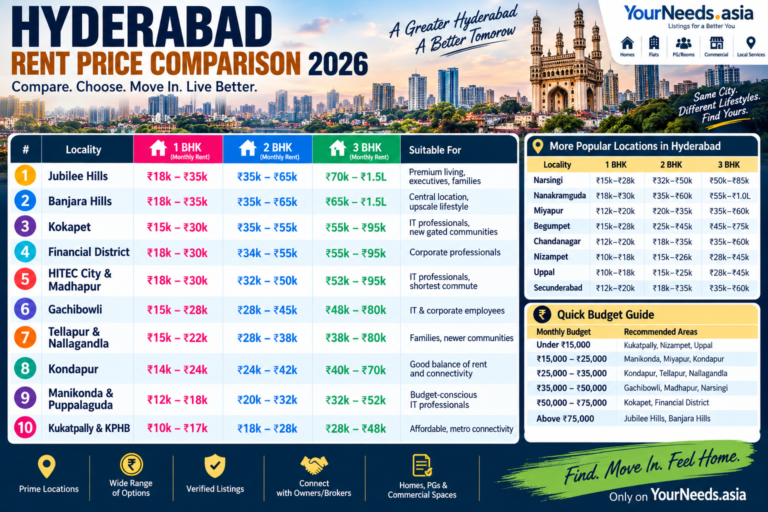
Flats for Rent in Hyderabad: Apartments, Tolet, Villas & Independent Houses 2026
Flats for Rent in Hyderabad: Apartments, To-Let Homes, Villas & Independent Houses – Complete 2026 Rental Guide Finding the right Flats for rent in…

Sara777 – Satta Matka Results and Chart Latest Records
Welcome to Sara777, an online platform created to provide easy access to Satta Matka results, charts, market records, and related information in one place.…

How to deposit on allpanel777?
Here is some steps to deposit on allpanel777 are:- Step 1: Start With Your Account To deposit, users should have an active AllPanel777 account.…

How Rhythm & Royalty Fitness Makes Dance Classes in Zirakpur Fun for Every Age Group
Dance has a unique way of bringing people together, no matter their age, fitness level, or experience. With everyone seeking a workout that doesn't…

Free JPG to PES Tools and Their Limitations
Turning a picture into an embroidery file sounds simple until you see what happens inside the machine. A JPG shows an image, while a…

Getting to Know Ciprofloxacin 500 mg: Uses, Safety and Important Information
[caption id="attachment_8302" align="alignnone" width="300"] Ciprofloxacin 500 mg: Understanding the basics in a simple way.[/caption] Ciprofloxacin 500 mg: Some Basic Points to Consider When one…