

Published: |Last updated:
Listen to this article
Show Quick ReadConcise summary from this article
What images do you have in mind when you think of tarantulas? Many people are fascinated and afraid at the same time. These big, hairy spiders have a reputation that precedes them since they are frequently represented in popular culture as frightening animals. But tarantulas are far more interesting and intricate than their terrifying reputation would have you believe. We'll dive into the world of tarantulas in this article, examining…
Ask AI About This Article
Answers are limited to information in this article.
What images do you have in mind when you think of tarantulas? Many people are fascinated and afraid at the same time. These big, hairy spiders have a reputation that precedes them since they are frequently represented in popular culture as frightening animals. But tarantulas are far more interesting and intricate than their terrifying reputation would have you believe. We’ll dive into the world of tarantulas in this article, examining their biology, behavior, habitats, and common misconceptions.
The Biology of Spiders
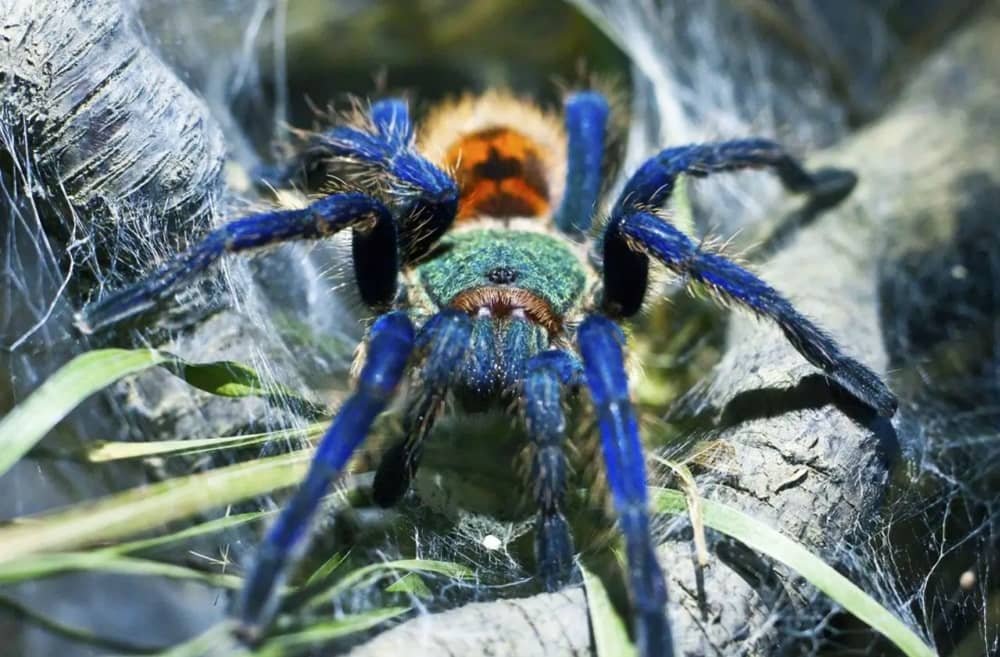
Theraphosidae is a family of tarantulas, with more than a thousand species. These spiders are renowned for their enormous size; some species have up to 12 inches of leg spread. Even though they have a frightening appearance, tarantulas are interesting animals with unusual biological characteristics.
Anatomy
The cephalothorax and the abdomen are the two primary sections of the strong tarantula body. The spider’s critical organs are located in the abdomen, while its eyes, mouthparts, and legs are housed in the cephalothorax. The itchy hairs on tarantulas are one of its most characteristic characteristics. As a defensive measure, these unique hairs can be flicked off, irritating both people and predators.
Venom
Although venom is present in all tarantulas, people are usually not harmed by it. The main purpose of tarantula venom is to immobilize prey, including insects, small rodents, and birds. Like a bee sting, tarantula bites often result in minimal discomfort and swelling.
Hunting
Being nocturnal animals, tarantulas come out of their tunnels at night to hunt. They locate prey by using their acute vibrational sense, and then they swiftly leap and inject poison to render their victim immobile. After capturing its prey, the tarantula releases digestive enzymes that melt the material so that it may be eaten.
Molting
An essential part of a tarantula’s life cycle is molting. Tarantulas regularly shed their exoskeletons as they get larger in order to accommodate their growing size. The spider is exposed to predators during this laborious process. Tarantulas frequently lie on their backs during molting, giving the impression that they are dead.
Distribution and Habitats
Around the world, tarantulas can be found in a range of environments, including dry deserts and tropical rainforests. The Americas, Africa, and some regions of Asia are where they are mostly found. Every species of tarantula has adapted to fit its surroundings; some live in burrows, while others are found in trees or cracks.
Burrowers
Being skilled burrowers, many tarantulas build elaborate underground dwellings. Extreme weather and predators are kept safe inside these burrows. The tarantula uses silk to line its tunnel, which aids in both structural reinforcement and prey detection.
Arboreal Species
The silk retreats that arboreal tarantulas build among the branches of their trees are their homes. Generally speaking, these species are more colorful and nimble than their terrestrial equivalents.
Because of their special adaptations, arboreal tarantulas may survive and even thrive in the forest canopy, where they forage for small animals and insects.
Mythologies and Illusions
Owing in large part to their terrifying look and representation in popular media, tarantulas are frequently the focus of myths and misunderstandings. But a lot of these myths are false, and they fuel an unreasonable dread of these amazing animals.
Myth: Humans Cannot Live With Tarantulas
The idea that tarantula bites are lethal is among the most widespread fallacies. In actuality, people cannot die from spider venom. The majority of bites cause minor side effects like soreness, redness, and swelling. There are no known deaths due to tarantula bites.
Myth: Aggressive Tarantulas
It’s not that tarantulas are naturally hostile. Rather than bite, they will rather run or utilize their protective hairs. When a spider feels threatened and has nowhere else to go, it usually bites as a final resort.
Myth: Tarantulas jump at people
Although they may run in brief spurts, tarantulas do not jump at humans. For dramatic effect, this behavior is frequently overdone in television programs and films. As a matter of fact, tarantulas only move when absolutely essential.
Keeping Tarantulas as Pets
Even with their terrifying reputation, tarantulas are becoming more and more common as pets. They work well in compact living spaces since they take up little room and require little care. Before bringing one home, though, potential tarantula owners should familiarize themselves with the unique requirements and habits of these spiders.
Tarantula Cribbs
An enclosure that imitates the natural environment of tarantulas is necessary. For burrowing animals, these can contain substrates like coconut fiber or peat moss; for arboreal species, these can be vertical structures. Additional necessities include enough airflow and a small water dish.
Feeding
Live insects including mealworms, roaches, and crickets are fed to tarantulas. Feeding needs to be done carefully because uneaten food can stress out tarantulas or can be dangerous when they are molting.
Handling
Although they can be handled, tarantulas are generally not advised. The spider may become agitated while handling, which raises the possibility of harm or escape. If handling is required, the tarantula’s well-being should be respected and cared for.
Threats to Conservation
Threats to many tarantula species include habitat loss, changing climates, and the pet trade. To preserve these unusual arachnids and guarantee their continued existence for future generations, conservation activities are crucial.
Protection of Habitat
Tarantula conservation depends on the preservation of their natural habitats. This entails protecting the grasslands, woodlands, and deserts that are home to these spiders. The goals of conservation organizations are to protect these ecosystems and advance sustainable land use techniques.
Conscientious Pet Trading
Wild populations may suffer as a result of the pet trade’s demand for tarantulas. Responsible sourcing practices and captive breeding initiatives are essential to preventing the pet trade from exacerbating the fall in wild tarantula populations.
Conclusion
Amazing creatures that arouse wonder and curiosity are tarantulas. With a better grasp of their biology, behavior, and mythology, we can recognize these spiders for the amazing creatures that they are. Tarantulas, whether found in the wild or kept as pets, provide a unique window into the amazing diversity of the spider world. We can cohabit with these fascinating species and help conserve them if we choose knowledge over fear.
Promote your articles nowCheck for details
Choose a promotion package
Choose a package below, scan the QR code and pay the displayed amount for 20 days.
After payment, email your article title and payment screenshot to info@yourneeds.asia. Once confirmation is received, one of our administrators will activate the promotion.
Email your payment screenshot and article title to info@yourneeds.asia. Once confirmation is received, one of our administrators will activate your article.

Suggested Articles
View all articles
Iran-America Conflict Is Weakening the Rupee — Why NRI Investors Are Buying Indian Property Right Now
If you are an Indian living abroad — in the US, UK, UAE, Canada, or Australia — and you have been watching the Iran-America…

Metamaterials Market Size | Forecast – 2035
Here is a structured Metamaterials Market analysis with company references + values (revenues, share, developments) for each section: 📊 Metamaterials Market Overview Market size: ~USD 1.30 billion (2026) → USD 3.73 billion by…

Sulfuric Acid Market Analysis | Industry Statistics
Here is a structured Sulfuric Acid Market analysis with company references and quantified insights: Sulfuric Acid Market Overview Market size: USD 35.13 billion (2025) → USD 52.86 billion (2034) CAGR: ~4.7% (2026–2034)…

Ammonium Nitrate Market Report Size
Here is a structured Ammonium Nitrate Market analysis with company references and values: Ammonium Nitrate Market Overview Global market size: ~USD 20.09 billion (2025), projected to reach USD 35.15…
Latest Blog Posts
View all articles
Maximize Your Audi’s Performance with TTE Turbo Upgrades for A3, S3, A4, and S4
Introduction Audi's turbocharged engine lineup has long been celebrated for its blend of everyday drivability and impressive performance potential. Models like the A3, S3,…

Post Free Ads Why Businesses Should Build Listings & Promote Products on YourNeeds.asia
Post Free Ads,Why Businesses Should Build Listings & Promote Products on YourNeeds.asia (2026 Guide) Grow Your Business with AI-Ready Classified Ads, Business Listings, B2B…

Buying a House vs a Plot in Fazullaganj: A Cost-Focused Comparison
When people ask us whether to buy a house for sale in Fazullaganj or a plot instead, the conversation almost always comes back to…

Are Fazullaganj Property Prices Set to Climb? A Five-Year Outlook
It's one of the most practical questions a buyer can ask before committing to a house for sale in Fazullaganj: will this locality's prices…

Houdini FX Course: What It Actually Takes to Become an FX Artist
Ask any working FX artist what separates a decent VFX career from a genuinely strong one, and Houdini almost always comes up in the…

How to Choose a Bridal Lehenga for Your Wedding Based on Body Shape
Most guidance on bridal lehenga selection focuses on body shape alone, but height plays an equally significant role in how a silhouette ultimately falls…