

Published: |Last updated:
Listen to this article
Show Quick ReadConcise summary from this article
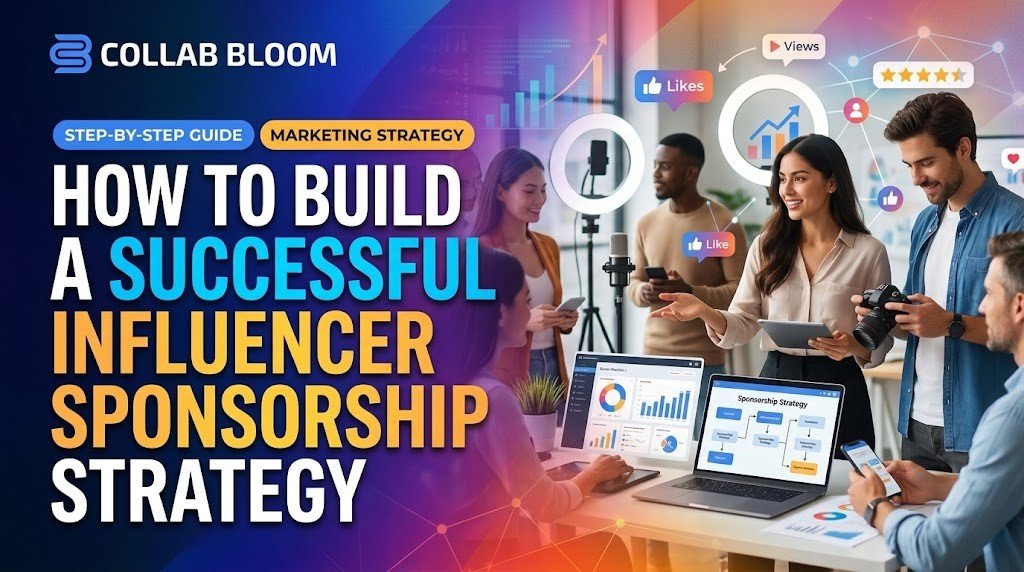
Influencer Sponsorship has become an effective strategy for brands that want to connect with targeted audiences through authentic and engaging content. Instead of depending entirely on traditional advertising, businesses can collaborate with influencers who already have established communities and strong relationships with their followers. When the partnership is carefully planned, sponsored content can increase brand awareness, credibility, engagement, website traffic, and conversions. However, successful influencer marketing requires more than selecting…
Ask AI About This Article
Answers are limited to information in this article.
Influencer Sponsorship has become an effective strategy for brands that want to connect with targeted audiences through authentic and engaging content. Instead of depending entirely on traditional advertising, businesses can collaborate with influencers who already have established communities and strong relationships with their followers. When the partnership is carefully planned, sponsored content can increase brand awareness, credibility, engagement, website traffic, and conversions.
However, successful influencer marketing requires more than selecting a popular creator and paying for a promotional post. Brands need a clear strategy that connects influencer partnerships with specific business goals. Audience relevance, creator authenticity, campaign objectives, content quality, budget management, performance tracking, and long-term relationships all play important roles.
Understand Your Influencer Sponsorship Goals
Before contacting influencers, a brand should understand exactly what it wants to accomplish through the campaign. Clear objectives provide direction for creator selection, content development, budget allocation, and performance measurement. Without defined goals, it becomes difficult to determine whether an influencer partnership has delivered meaningful business value.
Define Your Campaign Objectives
Influencer campaigns can support different marketing objectives depending on the brand’s needs. A company may want to increase brand awareness, launch a new product, generate website traffic, collect leads, increase sales, or improve customer engagement.
For awareness campaigns, reach and impressions may be important indicators. For conversion campaigns, brands may focus more on sales, leads, referral traffic, and conversion rates. Establishing these objectives before launching the campaign makes the entire strategy more focused.
Identify Your Target Audience
Audience research is a critical part of Influencer Sponsorship because even an experienced influencer cannot deliver strong results if their followers do not match the brand’s potential customers. Businesses should understand who they want to reach before searching for suitable creators.
Research Audience Demographics
Brands should consider factors such as age, location, interests, purchasing behavior, lifestyle, and content preferences. These characteristics help marketers determine whether an influencer’s community overlaps with their ideal customer profile.
Audience relevance is often more valuable than follower count. A creator with a smaller but highly relevant audience can generate stronger engagement and conversions than a large creator whose followers have little interest in the product.
Choose the Right Influencers
Influencer selection can directly affect the success of a sponsorship campaign. Brands should evaluate creators based on audience quality, engagement, content style, credibility, previous collaborations, and alignment with company values.
A suitable influencer should be capable of presenting the product naturally while maintaining the trust of their audience. Their existing content should also provide evidence that they understand the subject or industry connected to the campaign.
Micro-Influencers and Macro-Influencers
Micro-influencers often have smaller but highly engaged communities, while macro-influencers can provide broader exposure. Both can be useful depending on campaign objectives and available resources.
For niche products, micro-influencers may provide strong audience relevance and personal engagement. For major product launches, larger creators may help brands achieve significant visibility. The best choice depends on the relationship between audience quality, campaign goals, budget, and expected outcomes.
Evaluate Influencer Authenticity
Authenticity is one of the most important factors in influencer marketing. Audiences can often recognize when sponsored content feels overly scripted or unrelated to a creator’s usual interests. Brands should therefore prioritize influencers who genuinely fit the product and understand the value they are promoting.
Review Previous Content
Before entering a sponsorship agreement, brands should examine an influencer’s previous posts, videos, reviews, collaborations, and audience interactions. This research can reveal the creator’s communication style and the type of relationship they maintain with followers.
It is also important to consider whether previous sponsored content appears natural and useful. A creator who frequently promotes unrelated products may have weaker audience trust than someone who carefully selects partnerships.
Set a Realistic Influencer Marketing Budget
Budget planning helps brands build sustainable Influencer Sponsorship campaigns. Influencer fees can vary significantly based on audience size, engagement rate, platform, content format, niche, campaign duration, and creator experience.
The campaign budget should also account for content production, product samples, paid amplification, tracking tools, and other marketing expenses when applicable.
Balance Cost and Expected Value
The cheapest influencer is not necessarily the best choice, and the most expensive creator does not automatically deliver the strongest results. Brands should evaluate expected value based on audience relevance, engagement quality, content performance, and campaign objectives.
A smaller creator with a highly targeted community may deliver stronger returns than a celebrity whose audience has limited interest in the product.
Create a Clear Campaign Brief
A campaign brief gives influencers a clear understanding of what the brand expects. It should communicate campaign objectives, important product information, required deliverables, deadlines, key messages, disclosure expectations, and content guidelines.
At the same time, the brief should not control every detail of the creator’s presentation. Influencers understand their audiences better than most brands, so creative flexibility can improve authenticity.
Give Influencers Creative Freedom
Creative freedom allows creators to communicate sponsored messages using their established voice and style. This can make promotional content feel more natural and relatable.
Brands should provide accurate information and clear boundaries while allowing influencers to determine how the story should be presented. A creator’s personal experience can often make the content more persuasive than a highly scripted advertisement.
Build Authentic Sponsored Content
Authentic content is central to successful Influencer Sponsorship. Consumers are more likely to engage with sponsored posts when the product naturally fits the creator’s interests and content style.
Product demonstrations, tutorials, reviews, comparisons, educational videos, personal experiences, and behind-the-scenes content can make sponsored campaigns more informative and engaging.
Focus on Value Instead of Promotion
Effective influencer content should provide something useful to the audience instead of simply asking them to buy. Educational information, practical demonstrations, honest experiences, or solutions to common problems can create greater value.
When audiences receive useful information, they may be more willing to explore the brand and consider its products. This approach can also strengthen consumer trust over time.
Establish Clear Influencer Agreements
A formal agreement can protect both the brand and the influencer by defining campaign expectations. The agreement should clearly address content requirements, compensation, deadlines, approval processes, usage rights, disclosure requirements, and other relevant terms.
Clarify Content and Usage Rights
Brands should establish where and how sponsored content can be used. For example, a company may want permission to reuse creator content on its website, social media profiles, email campaigns, or paid advertisements.
Clearly defining content ownership and usage rights before publication can prevent misunderstandings and create a smoother working relationship.
Track Influencer Sponsorship Performance
Performance measurement helps brands understand whether their investment is generating meaningful results. Campaign analytics should be connected directly to the original objectives established before the partnership began.
Brands can monitor engagement, reach, impressions, referral traffic, website activity, leads, conversions, sales, and customer acquisition metrics.
Measure Engagement and Conversions
Engagement rate can reveal how audiences interact with sponsored content, while conversion data provides deeper insight into business results. Unique discount codes, affiliate links, UTM tracking, landing pages, and platform analytics can help connect influencer activity with measurable outcomes.
Evaluating several metrics together provides a more complete understanding of campaign performance than focusing on likes or views alone.
Develop Long-Term Influencer Relationships
A successful Influencer Sponsorship strategy should not always depend on one-time campaigns. Long-term creator relationships can create repeated exposure and stronger associations between influencers and brands.
When creators work with the same company over time, they can develop greater product knowledge and communicate brand messages more naturally.
Turn Creators Into Brand Advocates
Strong partnerships can eventually transform influencers into genuine brand advocates. When creators have positive experiences with a business, their recommendations can become more authentic and credible.
Long-term relationships can also improve campaign efficiency because both sides become familiar with expectations, communication processes, content styles, and audience preferences.
Avoid Common Influencer Sponsorship Mistakes
Brands can weaken influencer campaigns by choosing creators based solely on follower count, ignoring audience relevance, providing excessive creative restrictions, failing to track results, or using unclear campaign expectations.
Another major mistake is treating influencer marketing as a quick advertising transaction. Sustainable results require research, communication, testing, optimization, and relationship building.
Prioritize Relevance Over Follower Count
Follower numbers can provide useful context, but they should not be the main selection criterion. Engagement quality, audience demographics, niche relevance, credibility, and content consistency are often more valuable indicators.
A highly relevant creator with an engaged community may generate stronger business outcomes than a much larger influencer with an unrelated audience.
Optimize Your Influencer Sponsorship Strategy
Influencer marketing should be continuously improved based on campaign data. Brands can compare creators, content formats, platforms, messaging, posting times, and calls to action to identify what generates the strongest results.
Testing different approaches allows businesses to make future campaigns more efficient and effective.
Use Data to Improve Future Campaigns
Campaign analytics can reveal which influencers attract the most relevant traffic, which content generates stronger engagement, and which messages encourage conversions. These insights can guide future creator selection and content planning.
Continuous optimization transforms Influencer Sponsorship from a one-time experiment into a repeatable marketing channel that can support long-term business growth.
Conclusion
Building a successful Influencer Sponsorship strategy requires careful planning, relevant creator selection, authentic content, clear communication, measurable objectives, and ongoing optimization. Brands should begin by understanding their target audience and campaign goals before selecting influencers who genuinely align with their products and values.
The strongest partnerships provide influencers with clear expectations while allowing enough creative freedom to maintain their natural voice. Measuring performance through engagement, traffic, conversions, and sales helps businesses understand the real value of their investments.
Most importantly, brands should think beyond individual sponsored posts. Developing long-term relationships with trusted creators can strengthen brand awareness, consumer trust, social proof, and customer loyalty. With a strategic and data-driven approach, Influencer Sponsorship can become a sustainable part of a modern brand’s digital marketing strategy.
Frequently Asked Questions
1. What is an Influencer Sponsorship strategy?
An Influencer Sponsorship strategy is a planned approach to working with influencers to achieve specific marketing goals such as brand awareness, engagement, lead generation, website traffic, or sales.
2. How do I choose the right influencer?
Choose influencers based on audience relevance, engagement quality, content style, credibility, demographics, niche expertise, previous collaborations, and alignment with your brand values.
3. Is follower count important when selecting influencers?
Follower count matters, but it should not be the primary factor. Audience relevance, engagement rate, credibility, and content quality can have a greater impact on campaign performance.
4. Are micro-influencers effective for Influencer Sponsorship?
Yes. Micro-influencers can provide highly targeted audiences and strong engagement. They are particularly useful for niche products and brands with specific customer segments.
5. How much should I spend on influencer marketing?
There is no fixed amount. Influencer fees depend on audience size, platform, engagement, content requirements, niche, campaign duration, and creator experience. Your budget should match your campaign objectives and expected return.
6. What should an influencer campaign brief include?
A campaign brief should explain the objectives, product information, required content, key messages, deadlines, disclosure requirements, deliverables, and relevant brand guidelines while preserving creative flexibility.
7. How can I measure Influencer Sponsorship success?
Success can be measured through reach, impressions, engagement, website traffic, referral visits, leads, conversions, sales, customer acquisition cost, and return on investment.
8. Should brands build long-term influencer partnerships?
Yes. Long-term partnerships can create repeated brand exposure, stronger audience familiarity, greater creator credibility, and more consistent campaign performance.
9. Why is authenticity important in influencer marketing?
Authenticity helps sponsored content feel natural and credible. When influencers genuinely understand and fit the product, their recommendations can be more meaningful to their audiences.
10. What is the biggest mistake in Influencer Sponsorship?
One of the biggest mistakes is choosing influencers based only on follower count. Successful campaigns require audience relevance, authentic content, clear objectives, proper measurement, and strong brand-influencer alignment.
Promote your articles nowCheck for details
Choose a promotion package
Choose a package below, scan the QR code and pay the displayed amount for 20 days.
After payment, email your article title and payment screenshot to info@yourneeds.asia. Once confirmation is received, one of our administrators will activate the promotion.
Choose where your promoted article receives extra visibility
Promotion changes presentation and placement for the selected period. It does not guarantee traffic, enquiries, search ranking or sales.
Priority visibility in the VIP Lounge, promoted shelves and highlighted article areas.
Top-style highlighting in article directories, homepage feeds and promoted article blocks.
Premium styling across supported article feeds, recommendations and directory placements.
Featured presentation in supported homepage, category, directory and related-article areas.
Build a stronger online presence for your business
Get Your Website for ₹15,000
Are you listed and don't have a website for your business? We can plan, design and launch a responsive website that makes your business easier to understand and contact.
Get My WebsiteSEO Starts from ₹10,000/Month
Improve how your business is presented across Google, local listings and AI-powered search results with ongoing SEO, content and authority-building work.
Improve My VisibilitySuggested Articles
View all articles
Emerging Business Opportunities That Are Shaping the Future Market
Due to continuous growth and development in the global economy, entrepreneurs are finding many ways to innovate, utilize advanced technology, and leverage strategic acquisitions…

Mayura TW Multi Utility Trencher for OFC, Water & Solar Projects
Mayura TW Multi Utility Trencher: One Machine for OFC, Water, Solar and Defence Projects Infrastructure and utility projects demand equipment that can work fast,…
Getting App Installs Is Easy. Getting Active Users Is Harder.
One of the easiest mistakes in mobile advertising is treating an app install as the final goal. Someone can see an ad, download the…

AI Virtual Assistants for Automated Customer Support
Customer expectations are changing rapidly as people increasingly expect businesses to provide fast, accurate, and convenient support. Traditional customer service teams can struggle to…
Latest Blog Posts
View all articles
ISO 20000 Manual: A Complete Guide to Modern IT Service Management
Current businesses rely on efficient IT services for the successful functioning of day-to-day operations, customer requirements, communications, and growth of their business. In the…

Amit Malhotra: Simplifying Forex Trading for a New Generation of Investors
A new generation of investors is entering financial markets faster than ever before, driven by digital access, social media exposure, and a growing curiosity…
Everyday Play for Children: 7 Powerful Ways to Build Life Skills
Children can benefit from simple play activities, such as working with blocks, drawing, and solving puzzles. Through play, children can explore their world and…
Seasonal Promotions for E-commerce: A Complete Guide to Planning, Marketing, and Growth
Seasonal promotions are one of the most effective ways for e-commerce businesses to increase sales, attract new customers, and create stronger engagement throughout the…

Inventory Management for Small Hospitals and Clinics in India: Where to Start and What to Automate
This is a condition most every small hospital and clinic in India have experienced: when a patient requires a medicine and the shelf is…

Calgary Safest Neighborhoods for Families, Seniors and Newcomers: A 2026 Guide
Where you live affects your life, how you sleep, how your kids get to school and how comfortable you are walking home at…