

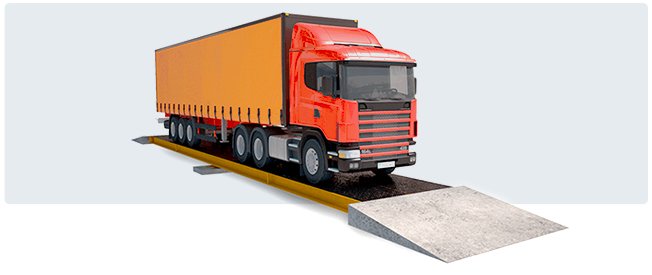
Published: |Last updated:
Listen to this article
Show Quick ReadConcise summary from this article
If you’ve ever invested in a weighbridge system and later faced accuracy issues, signal noise, or maintenance headaches, you’re not alone. Many manufacturing and logistics businesses struggle at this exact decision point — digital vs analog load cells. The wrong choice can quietly drain efficiency and profits. Having worked closely with industrial weighing solutions, I’ve seen how choosing the right load cell can dramatically improve performance and reliability. In this…
Ask AI About This Article
Answers are limited to information in this article.
If you’ve ever invested in a weighbridge system and later faced accuracy issues, signal noise, or maintenance headaches, you’re not alone. Many manufacturing and logistics businesses struggle at this exact decision point — digital vs analog load cells. The wrong choice can quietly drain efficiency and profits.
Having worked closely with industrial weighing solutions, I’ve seen how choosing the right load cell can dramatically improve performance and reliability. In this article, I’ll break down the real-world differences so you can confidently decide what suits your operation best.

For deeper technical guidance, you can explore the detailed resource here:
👉 https://multi-weigh.org/digital-load-cells-and-analog-load-cells.html
1. Understanding the Basics of Load Cells
Before choosing, it’s important to know what you’re comparing.
Analog load cells convert force into a small electrical signal that travels to a junction box and indicator.
Digital load cells convert the signal into digital data inside the load cell itself before transmission.
Why it matters
Signal processing location directly affects accuracy and noise resistance.
Actionable tip
If your environment has electrical interference (common in factories), digital load cells usually perform better.
2. Accuracy and Signal Stability
This is where most businesses notice the biggest difference.
Analog systems are more vulnerable to:
-
Electrical noise
-
Signal loss over long cables
-
Calibration drift
Digital load cells, on the other hand, offer:
-
Built-in signal processing
-
Better corner accuracy
-
More consistent readings
Why it matters
Even small weighing errors can compound into major financial losses in high-volume operations.
Actionable tip
For heavy-duty weighbridges or high-value materials, prioritize digital technology.
3. Installation and Calibration Complexity
Analog load cells typically require:
-
Junction box trimming
-
Manual corner balancing
-
More field calibration
Digital load cells usually provide:
-
Automatic corner correction
-
Simplified setup
-
Faster commissioning
Why it matters
Installation time equals downtime — and downtime costs money.
Actionable tip
If you want quicker deployment with fewer technical adjustments, digital is the smoother path.
4. Maintenance and Troubleshooting
From my experience, this is where many operators feel the long-term impact.
Analog systems
-
Harder fault detection
-
More wiring issues
-
Manual diagnostics required
Digital systems
-
Self-diagnostics
-
Error reporting
-
Easier fault isolation
Why it matters
Faster troubleshooting means less operational disruption.
Actionable tip
Facilities with limited technical staff should strongly consider digital load cells.
5. Cost vs Long-Term Value
Let’s address the elephant in the room.
-
Analog load cells → lower upfront cost
-
Digital load cells → higher initial investment but lower lifecycle cost
Why it matters
Cheaper today can become expensive tomorrow through maintenance, recalibration, and downtime.
Actionable tip
If your weighbridge is mission-critical, think in 5–10 year ROI, not just purchase price.
6. When Analog Load Cells Still Make Sense
Despite the advantages of digital, analog isn’t obsolete.
Choose analog when:
-
Budget is very tight
-
Application is low precision
-
Environment is electrically clean
-
System is small and simple
Why it matters
Not every operation needs premium technology.
Actionable tip
For small warehouses or basic weighing, analog can still be a practical choice.
FAQs
Q1. Are digital load cells more accurate than analog?
Yes, in most industrial environments digital load cells provide better accuracy and stability due to onboard signal processing.
Q2. Do digital load cells require less maintenance?
Generally yes. They offer self-diagnostics and fewer wiring-related issues.
Q3. Is the price difference significant?
Digital load cells cost more upfront, but often reduce long-term operational expenses.
Q4. Can analog load cells be upgraded to digital?
Usually this requires replacing the load cells and sometimes the indicator system.
Q5. Which is better for weighbridges in harsh environments?
Digital load cells typically perform better in electrically noisy or heavy-duty industrial settings.
Final Thoughts
Choosing between digital and analog load cells isn’t just a technical decision — it’s a strategic one. If your operations demand precision, reliability, and minimal downtime, digital load cells are usually the smarter long-term investment. However, for simpler applications with tight budgets, analog systems still have their place.
As someone deeply involved in industrial weighing solutions, my professional advice is simple: match the technology to your operational risk and growth plans. And if you want expert guidance or a customized weighbridge solution, explore the resources at https://multi-weigh.org/.
Promote your articles nowCheck for details
Choose a promotion package
Choose a package below, scan the QR code and pay the displayed amount for 20 days.
After payment, email your article title and payment screenshot to info@yourneeds.asia. Once confirmation is received, one of our administrators will activate the promotion.

Choose where your promoted article receives extra visibility
Promotion changes presentation and placement for the selected period. It does not guarantee traffic, enquiries, search ranking or sales.
Priority visibility in the VIP Lounge, promoted shelves and highlighted article areas.
Top-style highlighting in article directories, homepage feeds and promoted article blocks.
Premium styling across supported article feeds, recommendations and directory placements.
Featured presentation in supported homepage, category, directory and related-article areas.
Build a stronger online presence for your business
Get Your Website for ₹15,000
Are you listed and don't have a website for your business? We can plan, design and launch a responsive website that makes your business easier to understand and contact.
Get My WebsiteSEO Starts from ₹10,000/Month
Improve how your business is presented across Google, local listings and AI-powered search results with ongoing SEO, content and authority-building work.
Improve My VisibilitySuggested Articles
View all articles
Heavy-Duty Towing in San Antonio: What to Do When a Commercial Truck Breaks Down
For commercial truck operators, a breakdown is more than an inconvenience. When a tractor-trailer, bus, RV, or heavy piece of equipment becomes disabled, every…

Cum sa alegi un serviciu de inchirieri masini
România se descoperă pe drum: de ce mobilitatea a devenit parte din experiența turistică Un turist străin care ajunge în România nu descoperă o…

Energy Management System Maintenance — Protecting Your Investment in Kerala’s Industries
Introduction As electricity tariffs rise and sustainability pressures mount, Energy Management Systems (EMS) have become essential infrastructure for Kerala's industrial and commercial facilities. But…
Matka420 – Latest Results and Chart records
Introduction to Matka420 Matka420 is an online-focused information topic associated with Matka results, charts, historical records, and commonly used result terminology. Visitors searching for…
Latest Blog Posts
View all articles
Five Reasons Why AllPanel777 Are Good for Online Betting
Allpanel777 sports book site gives you a great and simple platform to explore all available betting options without complicated navigation and confusing menus. 1.…
HIS Hospital Information System in India: Features, Benefits & Guide
Patient records, lab results, prescriptions, billing hospitals churn through a huge amount of information every single day, and without something holding it all together,…

10 Best Neurosurgeons in Varanasi for Brain, Spine and Neurological Care
The brain and spine are among the most complex parts of the human body, and problems affecting them can influence movement, sensation, balance, speech,…

What are the advantages of choosing a management recruiters agency for employees?
Here are the advantages of choosing a management recruiters agency: - 1. Better Job Opportunities Access to relevant job opportunities is one of the…

How to Choose Residential Apartments in Siolim for Everyday Living
Choosing a home in Goa is not only about finding a beautiful building. Your daily routine matters just as much. You need to think…

Computer Vision Solutions for Robotics: AI Vision Systems | Kivo.ai
Computer vision solutions for robotics help machines see, understand, and respond to their surroundings using AI powered visual intelligence. These systems can support robots…