

Published: |Last updated:
Listen to this article
Show Quick ReadConcise summary from this article
Thailand’s waste-management landscape is placing greater emphasis on organized separation, material recovery and recycling. As municipalities, industrial operators and recycling facilities work with increasingly diverse waste streams, sorting equipment is becoming essential for separating valuable materials from mixed waste. Mechanical systems remain important, while sensor-based, magnetic, air-classification and automated technologies offer pathways toward cleaner recovered materials and more efficient processing. According to a Vyansa Intelligence report, the Thailand waste sorting…
Ask AI About This Article
Answers are limited to information in this article.
Thailand’s waste-management landscape is placing greater emphasis on organized separation, material recovery and recycling. As municipalities, industrial operators and recycling facilities work with increasingly diverse waste streams, sorting equipment is becoming essential for separating valuable materials from mixed waste. Mechanical systems remain important, while sensor-based, magnetic, air-classification and automated technologies offer pathways toward cleaner recovered materials and more efficient processing.
According to a Vyansa Intelligence report, the Thailand waste sorting equipment market was valued at USD 18 million in 2025 and is projected to reach USD 31 million by 2032, representing an 8.08% CAGR during 2026–2032.
Policy Is Putting Better Waste Separation in Focus
Thailand’s waste-management policies are creating a stronger foundation for organized sorting and recovery systems. The underlying research identifies national waste-management initiatives and recycling objectives as major influences on equipment adoption.
For a Thailand waste sorting equipment analysis, this matters because achieving better recovery requires more than collecting waste. Mixed materials need to be separated into usable streams before recyclables can move efficiently into downstream processing.
Sorting equipment therefore serves as an important connection between collection and recycling.
Material Recovery Facilities Are Becoming More Important
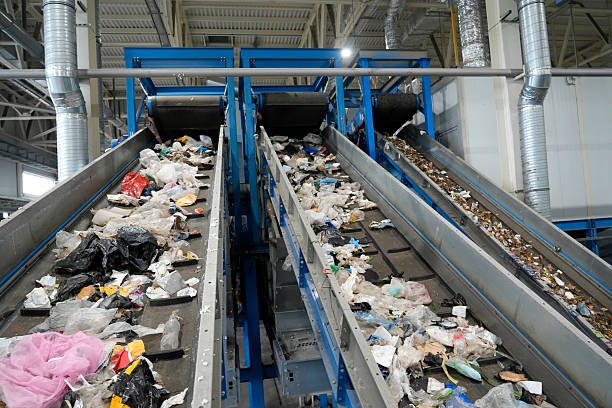
Thailand is moving toward more structured material recovery facility models, ranging from manual facilities to semi-automated and automated operations.
These facilities can separate mixed non-hazardous waste into materials suitable for recycling or further processing. Conveyors, screens, separators and other sorting technologies help operators improve consistency while reducing reliance on entirely manual workflows.
For municipalities and commercial operators, formal recovery facilities can also create a clearer pathway for routing recovered materials to appropriate downstream users.
Mechanical Sorting Provides a Practical Foundation
Mechanical equipment remains fundamental because many waste-processing operations need reliable technologies capable of handling mixed material streams.
Screens, conveyors and related separation systems can classify materials according to characteristics such as size and physical composition. Different technologies can then be combined according to the waste entering a particular facility.
These detailed waste sorting equipment industry insights demonstrate why system design needs to reflect local waste composition rather than applying an identical configuration everywhere.
Plastic Recovery Creates a Clear Equipment Opportunity
Plastic is one of the most important materials in Thailand’s waste-management conversation.
The underlying study identifies plastic recovery as a particularly significant opportunity for sorting-equipment providers as Thailand works to improve plastic collection, separation and recycling.
Plastic arriving in mixed waste can contain different polymer types, colours and contamination levels. Better sorting can help recyclers produce more consistent input streams while preventing recoverable materials from being unnecessarily directed toward disposal.
Equipment that improves plastic identification and separation can therefore support broader circularity objectives.
Sensor-Based Systems Can Improve Material Identification
As facilities become more sophisticated, operators can move beyond basic mechanical separation.
Optical and near-infrared systems can help identify materials according to characteristics that may be difficult to distinguish consistently through manual sorting. X-ray technologies provide another option for particular applications, while automated systems can improve repeatability in high-throughput environments.
For a waste sorting equipment industry report, these technologies illustrate how waste facilities can gradually progress toward more precise material recovery.
Metals Require Different Separation Technologies
Waste streams rarely contain only one type of recyclable material.
Ferrous metals can be separated using magnetic technologies, while eddy-current systems can support the recovery of non-ferrous metals. Air classification and screening can further divide mixed materials according to physical characteristics.
An effective sorting line may therefore combine several technologies instead of depending on one machine.
This modular approach allows facilities to configure processing systems according to the waste they receive and the recovered materials they want to produce.
Circularity Depends on Recovering Usable Materials
Sorting is important because recycling depends heavily on the quality of incoming materials.
UNIDO explains that circular-economy approaches involve improving resource efficiency, recycling materials and strengthening industrial waste management. Better material separation supports this process by helping move recoverable resources back into productive value chains rather than treating everything as disposable waste.
For the latest waste sorting equipment industry analysis, equipment should consequently be considered part of a broader resource-management system rather than simply machinery for moving waste.
Local Waste Systems Need Flexible Solutions
Waste-management infrastructure can vary considerably between locations.
Some operations may need straightforward mechanical systems, while larger recovery facilities can justify greater automation. Equipment suppliers therefore need solutions capable of working across different facility scales, material compositions and operational capabilities.
The source research also identifies infrastructure limitations as a challenge affecting the effective deployment of sorting systems in Thailand.
Sorting equipment delivers the strongest results when recovered materials have reliable pathways into recycling, treatment or appropriate disposal.
Mobile Sorting Can Address Decentralized Waste Streams
Not every waste stream needs to be transported immediately to a large centralized facility.
UNIDO documents a mobile waste-sorting platform that combines screening, manual sorting, conveyor handling and magnetic or other separators. The design demonstrates how sorting technologies can be configured for decentralized applications where available space and staffing are important considerations.
For Thailand waste sorting equipment research, flexible and modular approaches could be particularly relevant where operators need scalable processing rather than complex fixed installations.
Automation Can Complement Human Sorting
Automation does not necessarily mean eliminating every manual activity.
Material recovery facilities can combine human inspection with mechanical and sensor-based equipment. Machines can handle repetitive separation tasks, while workers can manage quality control and materials requiring greater judgment.
The underlying study identifies manual, semi-automatic and fully automatic operation modes within Thailand’s equipment landscape.
This provides operators with multiple pathways for improving sorting efficiency according to their operational requirements.
Better Separation Can Strengthen Thailand’s Recycling Chain
Thailand’s transition toward more organized waste management creates an increasingly important role for sorting technology.
Mechanical systems provide a practical foundation, while optical, magnetic and automated solutions can improve material identification and recovery. Plastic waste presents a particularly relevant application, and formal material recovery facilities provide the infrastructure needed to bring different technologies together.
The opportunity ultimately extends beyond individual machines. Effective sorting systems can help transform mixed waste into usable material streams, giving recycling facilities cleaner inputs and supporting a more circular approach to resource management across Thailand.
Promote your articles nowCheck for details
Choose a promotion package
Choose a package below, scan the QR code and pay the displayed amount for 20 days.
After payment, email your article title and payment screenshot to info@yourneeds.asia. Once confirmation is received, one of our administrators will activate the promotion.

Choose where your promoted article receives extra visibility
Promotion changes presentation and placement for the selected period. It does not guarantee traffic, enquiries, search ranking or sales.
Priority visibility in the VIP Lounge, promoted shelves and highlighted article areas.
Top-style highlighting in article directories, homepage feeds and promoted article blocks.
Premium styling across supported article feeds, recommendations and directory placements.
Featured presentation in supported homepage, category, directory and related-article areas.
Build a stronger online presence for your business
Get Your Website for ₹15,000
Are you listed and don't have a website for your business? We can plan, design and launch a responsive website that makes your business easier to understand and contact.
Get My WebsiteSEO Starts from ₹10,000/Month
Improve how your business is presented across Google, local listings and AI-powered search results with ongoing SEO, content and authority-building work.
Improve My VisibilitySuggested Articles
View all articles
Development of Mahallas and Society – The Driving Force Behind Uzbekistan’s National Progress in 2026
Developing mahallas and investing in human capital are key priorities for the country’s advancement. Uzbekistan has summed up the results of its large-scale reforms…

How Will the Coexistence of Cards, ACH, Mobile Wallets, and Instant Transfers Shape America’s Payment Future?
The United States payment ecosystem is evolving around a combination of established card usage, digital convenience, rewards-led products, and continuous innovation in financial infrastructure.…

What Does the Best Event Planner in Karachi Actually Charge? Fees Explained
Ask three planners for a quote and you may get three very different numbers. That confusion is one of the main reasons people struggle…

From Commutes to Calls: Why Wireless Earphones Fit Singapore’s Connected Lifestyle
Wireless earphones have evolved from optional smartphone accessories into practical everyday devices for many Singapore consumers. Compact designs make them suitable for commuting, calls,…
Latest Blog Posts
View all articles
Press Release Distribution in Bahrain - Grow Your Brand with MENAWireNOW
Bahrain is an important business destination in the Middle East, offering opportunities across finance, technology, healthcare, real estate, tourism, and other growing industries. For…

The Future of Real Estate in Delhi NCR: Top Corridors and Investment Hotspots
Delhi NCR is entering a new phase of real estate development. Large infrastructure projects, expanding public transport networks and improving airport connectivity are changing…

Event Organizer in Karachi: Creating Memorable Events with Professional Planning
Organizing a successful event requires creativity, proper coordination, and attention to detail. Whether you are planning a corporate gathering, wedding celebration, birthday party, or…

What Does the Best Wedding Planner Actually Do? From First Call to Walima
Many people picture a wedding planner as someone who chooses flowers and holds a clipboard. The reality is far more detailed, and most of…

What Should You Check Before Buying a Jasmine Farmhouse in Naugaon?
[caption id="attachment_9509" align="alignnone" width="300"] Jasmin Farms[/caption] Buying a farmhouse plot is different from purchasing an apartment in a residential society. The buyer…

Is Travomint a Legitimate OTA?
When booking flight tickets online, choosing a legitimate and reliable travel agency is essential. Travelers want a platform that offers convenient reservations, competitive fares,…