
Published: |Last updated:
Listen to this article
Show Quick ReadConcise summary from this article
The wound healing process is a remarkable biological mechanism that allows the body to repair damaged tissue and restore skin integrity. Whether it’s a minor cut, surgical incision, or chronic wound, understanding how healing works can help you take better care of injuries and speed up recovery. In this comprehensive guide, we’ll break down the stages of healing, factors that affect recovery, and practical tips to promote faster wound healing.…
Ask AI About This Article
Answers are limited to information in this article.
The wound healing process is a remarkable biological mechanism that allows the body to repair damaged tissue and restore skin integrity. Whether it’s a minor cut, surgical incision, or chronic wound, understanding how healing works can help you take better care of injuries and speed up recovery. In this comprehensive guide, we’ll break down the stages of healing, factors that affect recovery, and practical tips to promote faster wound healing.
What Is the Wound Healing Process?
The wound healing process is the body’s natural response to tissue injury. It involves a series of complex steps where cells, growth factors, and proteins work together to repair damaged skin. This process is essential not only for closing wounds but also for preventing infection and restoring normal function.
Healing can vary depending on the type and severity of the wound, as well as individual health conditions.
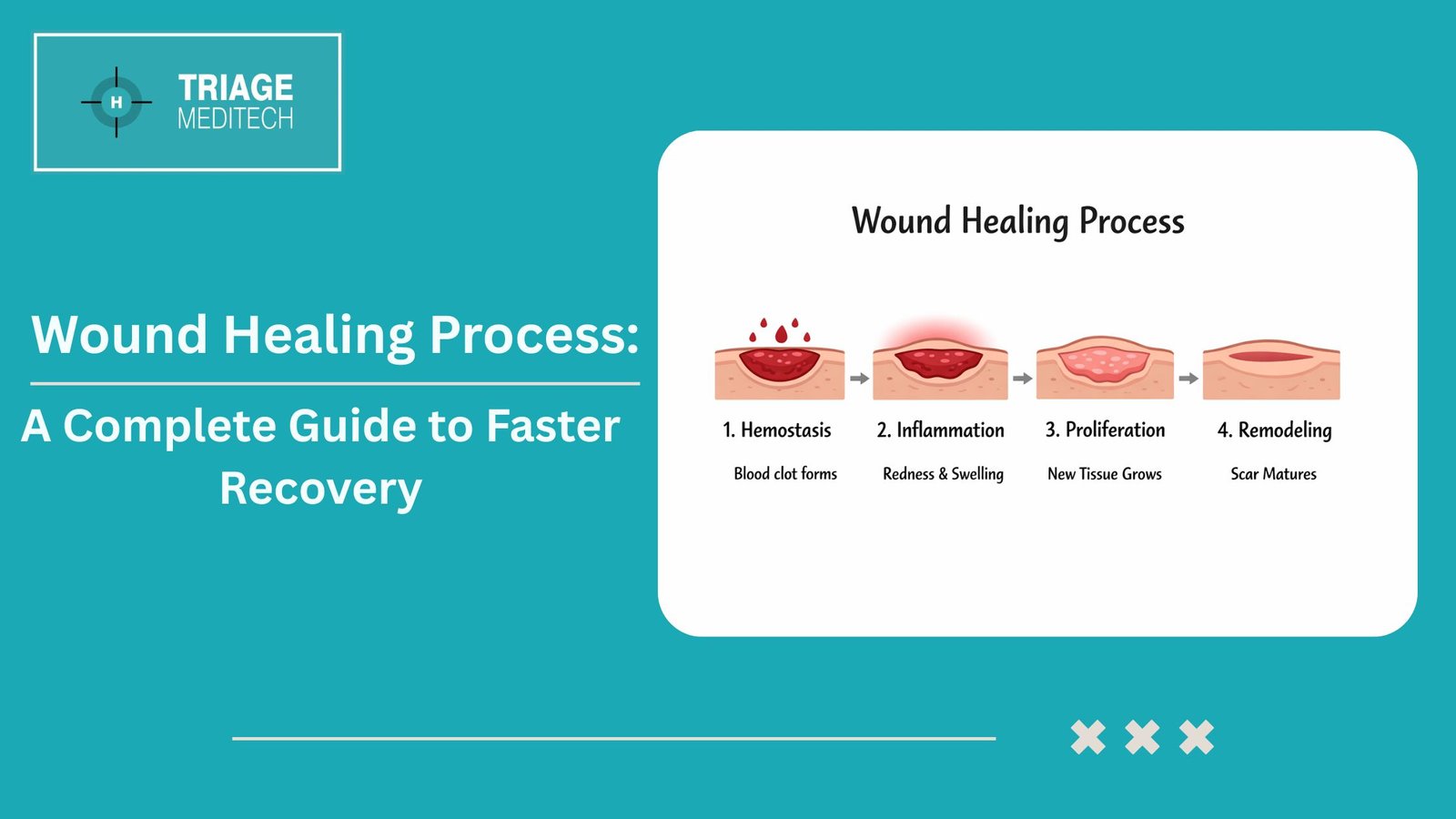
The 4 Key Stages of the Wound Healing Process
1. Hemostasis (Stopping the Bleeding)
The first stage begins immediately after injury. Blood vessels constrict to reduce blood loss, and platelets gather at the wound site to form a clot.
Key functions:
- Stops bleeding
- Forms a protective barrier
- Initiates the healing cascade
This stage typically lasts a few minutes to hours.
2. Inflammatory Phase
Once bleeding is controlled, the body focuses on preventing infection. White blood cells, particularly neutrophils and macrophages, move to the wound site to remove bacteria and debris.
Symptoms during this stage:
- Redness
- Swelling
- Warmth
- Mild pain
While these signs may seem concerning, they are a normal and necessary part of the wound healing process.
This phase usually lasts 2–5 days.
3. Proliferative Phase (Tissue Growth)
In this stage, the body begins rebuilding the damaged tissue. New blood vessels form (angiogenesis), and collagen is produced to strengthen the wound.
What happens:
- Formation of granulation tissue
- Wound contraction
- Development of new skin cells (epithelialization)
This phase can last from several days to a few weeks, depending on the wound size.
4. Maturation (Remodeling Phase)
The final stage involves strengthening and refining the new tissue. Collagen fibers reorganize, and the wound gradually gains strength.
Important points:
- Scar tissue forms
- Skin regains flexibility
- Tensile strength improves over time
This stage can last for months or even up to a year.
Factors That Affect the Wound Healing Process
Healing doesn’t happen at the same rate for everyone. Several factors can influence the wound healing process, including:
Internal Factors
- Age: Older individuals heal more slowly
- Nutrition: Lack of protein, vitamins (especially Vitamin C and Zinc), can delay healing
- Chronic diseases: Diabetes, vascular disease, and immune disorders impact recovery
- Hydration levels: Proper hydration supports cell function
External Factors
- Infection: Delays healing and may worsen the wound
- Poor wound care: Improper cleaning or dressing can slow recovery
- Smoking: Reduces oxygen supply to tissues
- Medications: Steroids and chemotherapy drugs can impair healing
Types of Wound Healing
Understanding the type of healing can help determine the right treatment approach.
Primary Intention Healing
- Wound edges are closed (e.g., surgical stitches)
- Minimal scarring
- Faster healing
Secondary Intention Healing
- Wound is left open to heal naturally
- Common in larger or infected wounds
- Takes longer and may leave scars
Tertiary Intention (Delayed Closure)
- Wound is initially left open and later closed
- Used when infection risk is high
Tips to Promote Faster Wound Healing
To support the wound healing process, follow these evidence-based practices:
1. Keep the Wound Clean
Gently clean with saline or mild antiseptic solutions to prevent infection.
2. Maintain Moisture Balance
Moist wound environments promote faster healing compared to dry wounds.
3. Use Appropriate Dressings
Advanced wound care products like hydrocolloid or foam dressings can enhance recovery.
4. Eat a Nutrient-Rich Diet
Include:
- Protein (for tissue repair)
- Vitamin C (collagen formation)
- Zinc (immune support)
5. Stay Hydrated
Water is essential for cellular repair and circulation.
6. Avoid Smoking and Alcohol
Both can significantly delay healing.
7. Monitor for Signs of Infection
Seek medical attention if you notice:
- Increased redness
- Pus or discharge
- Fever
- Persistent pain
When to Seek Medical Help
While many wounds heal naturally, some require professional care. Consult a healthcare provider if:
- The wound is deep or large
- Healing is unusually slow
- There are signs of infection
- You have underlying conditions like diabetes
Chronic wounds, such as pressure ulcers or diabetic foot ulcers, often need specialized treatment.
Conclusion
The wound healing process is a complex yet efficient system that restores damaged tissue through four distinct stages: hemostasis, inflammation, proliferation, and maturation. By understanding these stages and taking proper care of wounds, you can significantly improve healing outcomes and reduce complications.
Good nutrition, proper wound care, and timely medical attention are key to supporting faster recovery. Whether dealing with a minor cut or a chronic wound, being informed empowers you to make better healthcare decisions.
Promote your articles nowCheck for details
Choose a promotion package
Choose a package below, scan the QR code and pay the displayed amount for 20 days.
After payment, email your article title and payment screenshot to info@yourneeds.asia. Once confirmation is received, one of our administrators will activate the promotion.

Choose where your promoted article receives extra visibility
Promotion changes presentation and placement for the selected period. It does not guarantee traffic, enquiries, search ranking or sales.
Priority visibility in the VIP Lounge, promoted shelves and highlighted article areas.
Top-style highlighting in article directories, homepage feeds and promoted article blocks.
Premium styling across supported article feeds, recommendations and directory placements.
Featured presentation in supported homepage, category, directory and related-article areas.
Build a stronger online presence for your business
Get Your Website for ₹15,000
Are you listed and don't have a website for your business? We can plan, design and launch a responsive website that makes your business easier to understand and contact.
Get My WebsiteSEO Starts from ₹10,000/Month
Improve how your business is presented across Google, local listings and AI-powered search results with ongoing SEO, content and authority-building work.
Improve My VisibilitySuggested Articles
View all articles
Best Neurosurgeons in Varanasi: 10 Doctors for Brain and Spine Care
When a neurological problem affects the brain, spinal cord, or nerves, finding an experienced specialist can be an important part of the healthcare journey.…

How Rhythm & Royalty Fitness Makes Dance Classes in Zirakpur Fun for Every Age Group
Dance has a unique way of bringing people together, no matter their age, fitness level, or experience. With everyone seeking a workout that doesn't…
Getting to Know Ciprofloxacin 500 mg: Uses, Safety and Important Information
[caption id="attachment_8302" align="alignnone" width="300"] Ciprofloxacin 500 mg: Understanding the basics in a simple way.[/caption] Ciprofloxacin 500 mg: Some Basic Points to Consider When one…

Best Neurologists in Varanasi: 7 Expert Doctors for Brain & Nerve Care
Finding the best neurologists in Varanasi can be important when you or a family member is experiencing persistent headaches, dizziness, seizures, numbness, weakness, memory…
Latest Blog Posts
View all articles
How to Choose a Reliable Frozen Sweet Potato Fries Supplier?
Choosing the right frozen sweet potato fries supplier is an important decision for distributors, retailers, and foodservice businesses. A reliable supplier should provide consistent…
Ultimate Guide to Buying Frozen Sweet Potato Fries for Foodservice
Introduction Sourcing high-quality frozen sweet potato fries is an important part of successful foodservice operations. Restaurants, foodservice buyers, distributors, and brand managers need to…

From Madhapur Search to AI Discovery Best SEO Company Madhapur Done it right 2026
From Madhapur Search to AI Discovery: How YourNeeds.asia Builds a 360° SEO Visibility Engine for Local Businesses A customer looking for a business in…

BBQ Catering in Karachi: Delicious Grilled Food for Every Occasion
When it comes to outdoor gatherings and celebrations, BBQ is one of the most popular food choices. From family get-togethers and birthday parties to…

Event Press Release: How to Announce and Promote Your Event | BeritaWire
An event press release is a professional announcement used to share important information about an upcoming event with journalists, news websites, media organizations, customers,…

Party Catering in Karachi: Delicious Food for Every Celebration
Planning a party involves many details, but food is one of the most important parts of creating a memorable experience. Whether you are arranging…