

Published: |Last updated:
Listen to this article
Show Quick ReadConcise summary from this article
Hiring the right talent is one of the most critical decisions an organization makes. While many people use the terms “recruitment” and “executive search” interchangeably, they are not the same. Both approaches aim to fill positions, but they differ significantly in process, scope, and strategic importance. Understanding these differences helps businesses choose the right approach for their hiring needs and helps professionals better understand how senior-level hiring works. What Is…
Ask AI About This Article
Answers are limited to information in this article.
Hiring the right talent is one of the most critical decisions an organization makes. While many people use the terms “recruitment” and “executive search” interchangeably, they are not the same. Both approaches aim to fill positions, but they differ significantly in process, scope, and strategic importance.
Understanding these differences helps businesses choose the right approach for their hiring needs and helps professionals better understand how senior-level hiring works.
What Is Recruitment?
Recruitment generally refers to the process of attracting, screening, and selecting candidates for open positions. It is commonly used for entry-level, mid-level, and sometimes senior operational roles.
The typical recruitment process includes:
-
Posting job advertisements
-
Screening resumes
-
Conducting interviews
-
Checking references
-
Finalizing candidate selection
Recruitment is often reactive — a position becomes vacant, and the organization begins searching for a suitable candidate.
Recruiters usually work with active job seekers who are already applying for roles.
What Is Executive Search?
Executive search is a more specialized and strategic approach to hiring senior leadership roles. These positions often include:
-
Chief Executive Officer (CEO)
-
Chief Financial Officer (CFO)
-
Chief Operating Officer (COO)
-
Vice Presidents
-
Senior Directors
Unlike traditional recruitment, executive search focuses heavily on identifying and approaching passive candidates — professionals who are not actively seeking new jobs but may be open to the right opportunity.
Executive search involves deeper research, discreet outreach, and comprehensive evaluation.
Key Differences Between Recruitment and Executive Search
1. Level of Positions
Recruitment is typically used for operational and mid-level roles.
Executive search is reserved for senior leadership and strategic positions.
The impact of hiring decisions at executive levels is much higher, which requires a more thorough and targeted process.
2. Candidate Sourcing Method
Recruitment often relies on:
-
Job portals
-
Internal databases
-
Social media platforms
-
Direct applications
Executive search relies more on:
-
Industry research
-
Talent mapping
-
Confidential outreach
-
Professional networks
This difference ensures access to highly experienced professionals who may not be actively visible in the job market.
3. Confidentiality
Executive hiring can be sensitive. Companies may not want competitors or internal teams to know about leadership changes prematurely.
Executive search processes are usually more confidential compared to general recruitment.
4. Time Investment
Recruitment processes are generally faster because they focus on active candidates.
Executive search may take longer due to:
-
Market research
-
Strategic candidate identification
-
Multiple rounds of assessment
-
Leadership alignment discussions
However, the additional time is often necessary given the long-term impact of executive-level decisions.
5. Evaluation Depth
Recruitment focuses primarily on:
-
Skills
-
Experience
-
Cultural fit
Executive search goes deeper into:
-
Strategic thinking ability
-
Leadership style
-
Long-term vision alignment
-
Organizational transformation capability
The evaluation process at the executive level is typically more comprehensive.
Why the Difference Matters
Choosing between recruitment and executive search depends on the role’s importance and complexity.
For operational roles, a standard recruitment approach may be sufficient. However, for strategic leadership positions, a more structured and research-driven approach often provides better alignment and reduced hiring risk.
Hiring decisions at senior levels influence:
-
Company direction
-
Financial performance
-
Organizational culture
-
Stakeholder trust
That is why executive hiring requires careful planning and evaluation.
When Should Organizations Consider Executive Search?
Organizations may consider executive search when:
-
Filling C-level positions
-
Planning leadership succession
-
Expanding into new markets
-
Navigating restructuring or transformation
-
Seeking specialized industry expertise
These scenarios often demand leaders with strong vision, adaptability, and experience.
The Evolving Nature of Leadership Hiring
Modern organizations operate in dynamic environments shaped by technology, globalization, and market competition. As a result, leadership expectations have evolved.
Today’s executives are expected to:
-
Drive innovation
-
Manage change effectively
-
Lead diverse teams
-
Maintain ethical governance
-
Deliver sustainable growth
The hiring process must reflect these expectations.
Final Thoughts
Recruitment and executive search both play important roles in workforce development. While recruitment addresses broader staffing needs, executive search focuses on strategic leadership positions that shape an organization’s future.
Understanding these distinctions allows companies to make informed decisions about their hiring strategies and ensures that leadership roles are filled with individuals who align with long-term goals.
Effective hiring is not just about filling a vacancy — it is about building the foundation for sustained organizational success.
Promote your articles nowCheck for details
Choose a promotion package
Choose a package below, scan the QR code and pay the displayed amount for 20 days.
After payment, email your article title and payment screenshot to info@yourneeds.asia. Once confirmation is received, one of our administrators will activate the promotion.

Choose where your promoted article receives extra visibility
Promotion changes presentation and placement for the selected period. It does not guarantee traffic, enquiries, search ranking or sales.
Priority visibility in the VIP Lounge, promoted shelves and highlighted article areas.
Top-style highlighting in article directories, homepage feeds and promoted article blocks.
Premium styling across supported article feeds, recommendations and directory placements.
Featured presentation in supported homepage, category, directory and related-article areas.
Build a stronger online presence for your business
Get Your Website for ₹15,000
Are you listed and don't have a website for your business? We can plan, design and launch a responsive website that makes your business easier to understand and contact.
Get My WebsiteSEO Starts from ₹10,000/Month
Improve how your business is presented across Google, local listings and AI-powered search results with ongoing SEO, content and authority-building work.
Improve My VisibilitySuggested Articles
View all articles
Exploring More Flexible Ways to Trade Digital Assets
Digital asset platforms have changed a lot over the past few years. Spot trading is still widely used, but traders now have access to…

Salesforce Implementation Partner in UK | CRM FRONTIER |
Salesforce has become an important CRM platform for businesses looking to improve sales, customer service, marketing, and business operations. However, simply purchasing Salesforce licences…

Rudra Prime Mini – 25 HP Self‑Propelled Multi‑Attachments Machine for Construction & Utilities
The Rudra Prime Mini is a 25 HP diesel‑powered, self‑propelled multi‑attachments machine designed for urban infrastructure, rural utilities, and landscaping operations across India. Built…

How to Build a Target Account List for Chiropractic Practices in 2026
Reaching chiropractic practices effectively in 2026 requires more than collecting a large number of business contacts. Healthcare marketers need to identify practices that match…
Latest Blog Posts
View all articles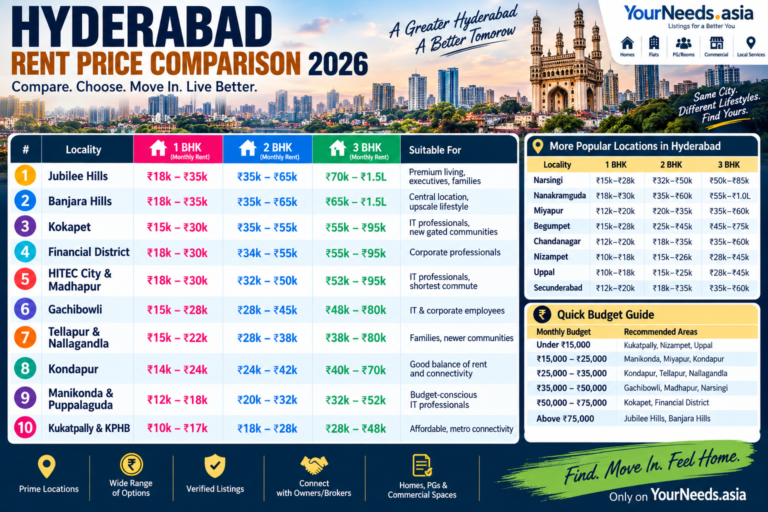
Flats for Rent in Hyderabad: Apartments, Tolet, Villas & Independent Houses 2026
Flats for Rent in Hyderabad: Apartments, To-Let Homes, Villas & Independent Houses – Complete 2026 Rental Guide Finding the right Flats for rent in…

Sara777 – Satta Matka Results and Chart Latest Records
Welcome to Sara777, an online platform created to provide easy access to Satta Matka results, charts, market records, and related information in one place.…

How to deposit on allpanel777?
Here is some steps to deposit on allpanel777 are:- Step 1: Start With Your Account To deposit, users should have an active AllPanel777 account.…

How Rhythm & Royalty Fitness Makes Dance Classes in Zirakpur Fun for Every Age Group
Dance has a unique way of bringing people together, no matter their age, fitness level, or experience. With everyone seeking a workout that doesn't…

Free JPG to PES Tools and Their Limitations
Turning a picture into an embroidery file sounds simple until you see what happens inside the machine. A JPG shows an image, while a…

Getting to Know Ciprofloxacin 500 mg: Uses, Safety and Important Information
[caption id="attachment_8302" align="alignnone" width="300"] Ciprofloxacin 500 mg: Understanding the basics in a simple way.[/caption] Ciprofloxacin 500 mg: Some Basic Points to Consider When one…