Why Intercity Food Delivery Is Ideal for Late-Night Office Teams

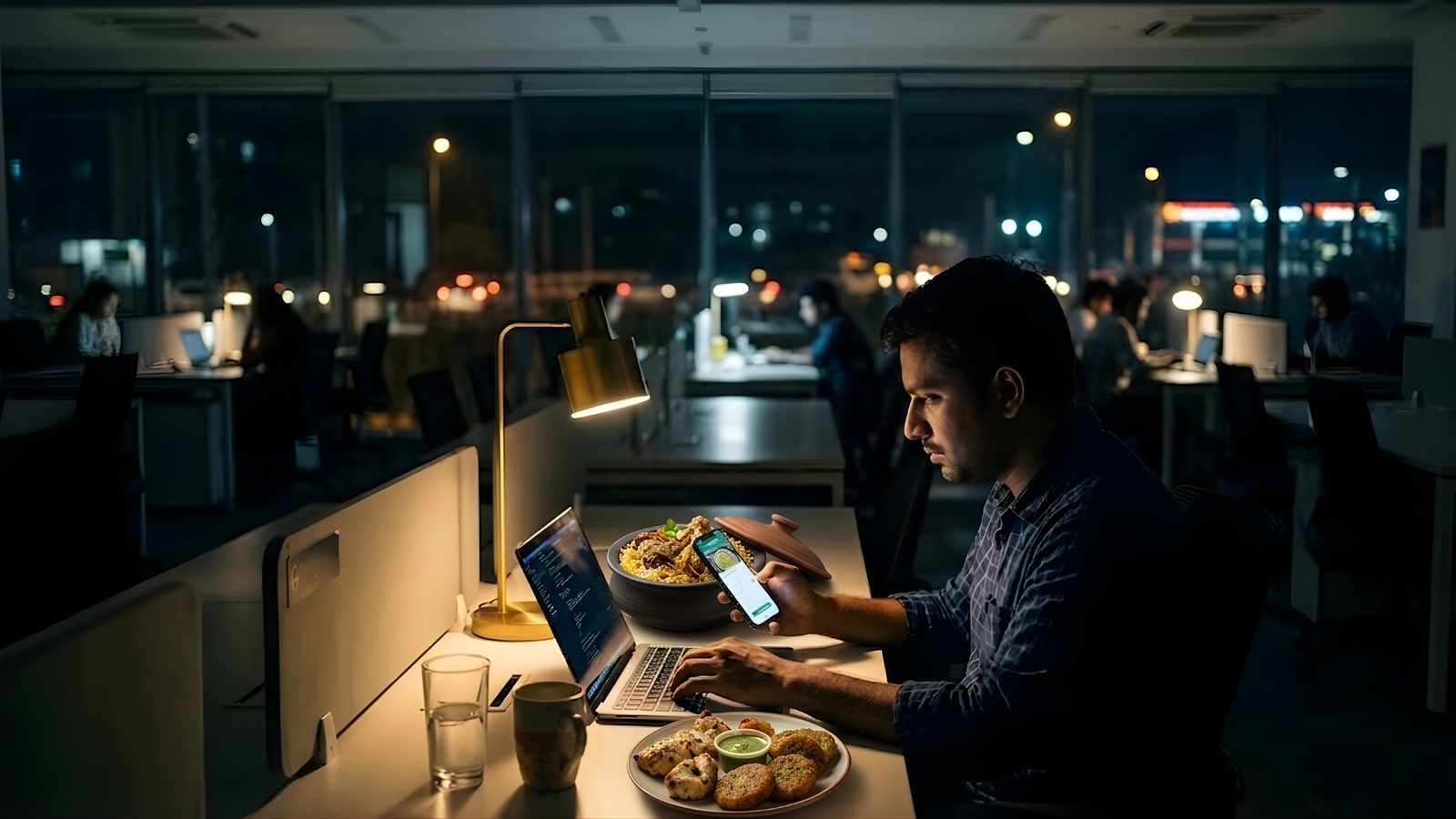
After midnight, the smallest things take on a larger meaning. A proper meal is one of them.
Picture an office floor somewhere in Bengaluru or Hyderabad at eleven-thirty at night. The building outside is quiet. Most of the city is winding down. But this floor is still lit up, still running, still full of people who came in when the sun was higher and will leave long after it returns. What they eat during the hours between is a question that most organisations have never quite answered well — and it is one that intercity food delivery is designed to answer properly, because it is the only kind of delivery built around the reality of how a night shift actually works.
The food problem for late-night office teams is not one of bad intentions. Most workplaces want to feed their people well. The issue has always been timing and availability. By the time a night shift needs food, the easy options have largely gone. Intercity food delivery removes this problem at its root — the order is placed the previous day, the food is prepared and dispatched on schedule, and the team receives their meal at a time that was confirmed before the shift began. No improvising. No settling for what happens to still be available at that hour.
“Late-night workers give more than their hours. The least a workplace can do is make sure the food is worth eating.”
Late-Night Work Is a Different World
There is a quality to a night shift that people who have only worked daytime hours do not fully appreciate until they experience it. The quietness of the floor is not emptiness — it is a kind of focus. The smaller team is not a lesser team — it is often a tighter one, held together by the shared understanding that they are all choosing to be there at an hour when most people are not.
In that environment, the care an organisation shows toward its people is more visible than it is during a crowded daytime floor. There is nowhere to hide the quality of the food, or the lack of thought behind it. A proper meal on a night shift is noticed, appreciated, and remembered in a way that a routine daytime canteen meal simply is not.
That is the opportunity, and also the responsibility, that comes with running a team through the night. The people on that shift are giving something significant. The food they are given is one of the clearest ways the organisation can signal that it understands and values that.
The Pre-Order Model Was Made for This
One of the reasons intercity food delivery suits late-night office teams so naturally is that it removes the problem entirely from the late-night hours themselves. The order does not need to be placed at ten in the evening when half the available options have already closed. It is placed the day before, during regular business hours, by whoever manages the team’s welfare.
The food is then prepared on the day of the shift, dispatched through a managed and tracked route, and arrives at the office within the window confirmed at the time of ordering. The team comes in knowing the food is sorted. The person who placed the order knows the same. Nobody is making calls at nine at night wondering what is still open and what can still be delivered.
For a night shift, where the margin for disruption is already thin, this kind of advance certainty is not a minor convenience. It is a genuinely meaningful part of how the shift is managed. One less variable. One less thing to figure out when the team is already focused on what they are there to do.
“A meal that arrives when it is supposed to is worth more than a meal that might arrive somewhere around midnight.”
Food That Actually Means Something at That Hour
Eating at midnight in an office, after hours of work and with hours still remaining, is not the same as eating lunch with a full afternoon ahead. The tiredness is present. The need for something real and satisfying is more direct. And the difference between food that was chosen for the team and food that was simply available nearby registers more clearly than it might at any other time of day.
Heritage kitchen food — from a restaurant that has been preparing the same dish for decades, from a city where it belongs — brings something to a late-night break that generic options cannot. It tells the team that someone made a decision specifically about them. Someone thought about where the people in this room are from, what food they might genuinely want at this hour, and made it happen.
That thought, expressed through food, changes what the break is. It becomes something the team looks forward to, gathers around, and remembers. On a long night, that kind of moment matters more than a daytime team might ever have reason to understand.
Regional Food Brings the Team Together
A night shift team of ten people in an Indian city is likely, quietly, to represent a remarkable range of backgrounds. The industries that run through the night in India — technology services, business process outsourcing, financial and customer operations — are among the most geographically diverse employers in the country. Any given floor, late at night, holds within it a collection of food histories that the daytime canteen has never acknowledged.
When intercity food delivery brings food from one of those backgrounds into the room — a heritage kitchen’s preparation from Hyderabad, something from Lucknow, a dish from Chennai that requires a very specific knowledge to prepare properly — the shift changes texture. The person from that city finds something familiar in an unlikely place. The rest of the team finds something new and is curious about it. The conversation that follows is the kind that does not happen over a reheated meal from a closing restaurant.
These conversations are quiet and unhurried, as conversations on night shifts tend to be. But they build something real — a sense of knowing the people you work with that goes a little deeper than the work itself. Food from a real place does that. Generic food does not.
“The team that eats well together at midnight stays together through the rest of the night.”
Safety and Quality Do Not Change After Dark
The duty of care an organisation holds toward its employees does not reduce after hours. The people working at midnight deserve food that was prepared safely, handled correctly, and delivered to a standard that any reasonable workplace would stand behind.
Intercity food delivery through Hungersate provides this without any reduction for shift timing. Heritage kitchens, FSSAI-compliant preparation, temperature-controlled packaging, managed logistics, tracked delivery. Every element of how the food is handled is the same whether the meal is planned for noon or for eleven at night.
This is not a detail that night shift workers should have to think about — but it is one that the organisations managing them should feel confident in. The consistency is there. The standard does not shift because the shift does.
A Gesture That People Carry With Them
The memory of a workplace, for most people, is not built from the large set pieces — the annual events, the formal recognition moments. It is built from the small, regular things. Whether the heating worked. Whether someone asked how things were going. Whether the food at midnight on a Tuesday was something worth eating or something to get through.
For night shift teams, food carries a particular weight because it is one of the most consistent points of contact between the organisation and the people working its least social hours. A team that is regularly given food that was planned for them, from a real kitchen, delivered with care, builds a relationship with the workplace that generic vending machine meals never create.
Intercity food delivery makes this possible with very little effort on the organisation’s part. A day’s notice. A considered choice of kitchen. A confirmed delivery window. For the team on the other end of that decision — working through the night, in a quiet building, with the city asleep outside — it is a gesture that lands far larger than it looks from the outside.