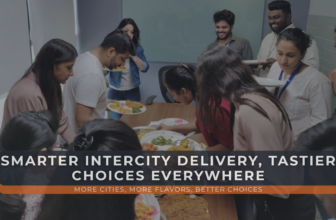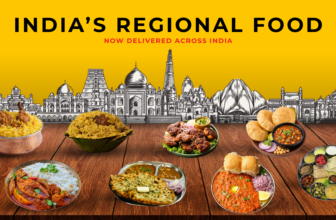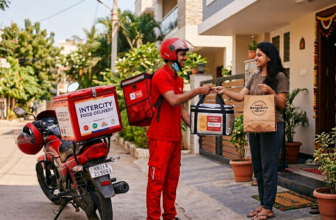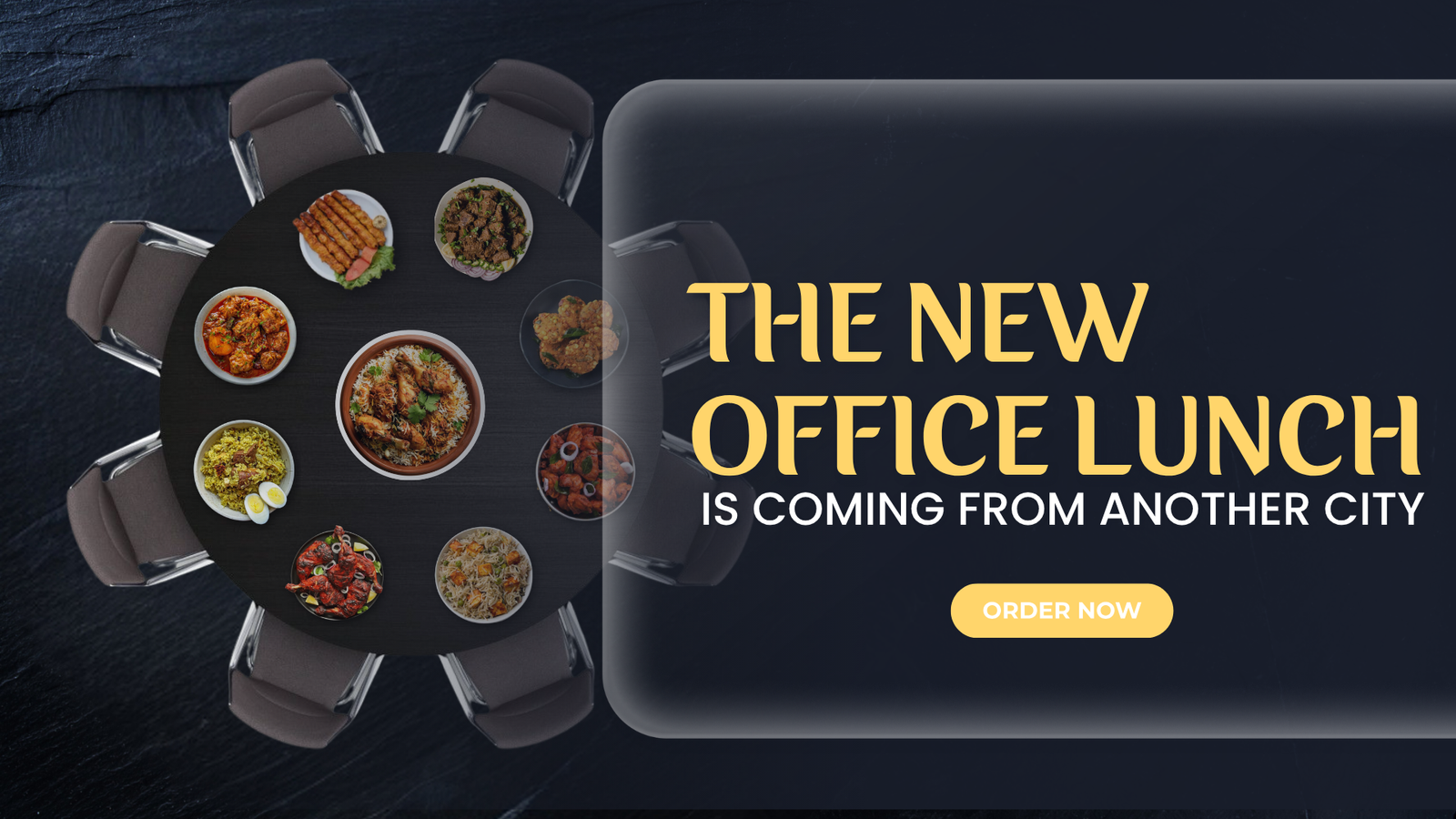
Indian offices have always had diverse teams. The food is only now starting to catch up.
Workplace food trends in India have historically moved slowly. The canteen model established itself decades ago and has remained largely unchanged — same structure, same local suppliers, same rotating menu that most employees navigate on autopilot. The reasons for its persistence are understandable: it is efficient, it is familiar, and it has never prompted enough complaint to justify rethinking it. Intercity food delivery is now providing a reason that is more compelling than complaint — a demonstrably better alternative that slots into existing processes without disruption and produces a response from employees that the standard approach has never managed.
The trend is visible in the pattern of adoption. Offices that have introduced intercity food delivery for one occasion — a celebration, a regional food day, a welcome lunch — tend not to stop at one. The team response is too clear and too consistent. People engage with the food in a way that is qualitatively different from their engagement with the usual canteen offering. They anticipate it, they remember it, and they ask when the next one is. Intercity food delivery, once experienced in a workplace, creates its own case for continuing.
“The offices that feed their people well are the offices people want to work in.”
Where the Trend Is Coming From
The structural reason for the rise of intercity food delivery in Indian workplaces is not complicated. India’s major employment centres are receiving cities — places that draw talent from across the country. The workforce in any large Bengaluru or Hyderabad office is not from Bengaluru or Hyderabad, mostly. It is from Tamil Nadu and UP and West Bengal and Maharashtra and a dozen other places, each of which has a food tradition the local canteen has never been equipped to represent.
This mismatch between the team and the menu has existed for as long as diverse teams have worked in Indian cities. What is new is the practical resolution. Intercity food delivery brings the heritage kitchens from those other cities into the office food calendar — not as a one-time gesture but as a regular and reliable part of how food is managed. The person from Hyderabad no longer has to accept the canteen’s version of their city’s food as the closest available option. The actual version is now an order away.
That practical resolution is what has given the trend its momentum. The problem was real and long-standing. The solution is now available and workable. The uptake, in offices that have tried it, has been immediate.
What Makes It Different From What Came Before
Previous attempts at food variety in workplaces have generally produced limited and temporary results — a themed day that the team acknowledges without particular enthusiasm, a new vendor rotation that becomes as familiar as the old one within a month. The reason these efforts plateau is that they are still drawing from the same local pool, offering different presentations of food that operates within the same geographic and culinary limitations.
Intercity food delivery draws from a completely different pool. Heritage kitchens in other cities — places that have built thirty or forty years of reputation on one specific tradition — send food that has no local equivalent. It is not a version of Hyderabadi biryani adapted for a Bengaluru kitchen. It is Hyderabadi biryani from a Hyderabadi kitchen. The distinction is fundamental and immediately felt.
This is why the team response is different from what previous food variety efforts generated. The food is specific in a way that speaks to specific people. The employee from Hyderabad recognises something. The colleague from Lucknow finds something that has been absent from their working lunches for years. That recognition produces engagement — genuine, sustained, and worth building a food programme around.
“Genuine regional food does not need to be explained. People from that region recognise it immediately.”
How Workplaces Are Using It
The practical applications of intercity food delivery in workplaces are varied enough to suggest that different organisations are finding their own natural entry points rather than following a single prescribed model. For some, the starting point has been occasions — using the food from a heritage kitchen to mark a team milestone or to welcome a new joiner in a way that acknowledges where they have just moved from. For others, it has been a standing feature — a monthly regional food day that the team has come to anticipate and plan around.
What is consistent across these different applications is the underlying logic — that food can be a vehicle for acknowledging the team’s diversity in a tangible rather than symbolic way. An office that uses its food programme to bring the cities of its employees to the table is not making a statement about diversity. It is demonstrating it, one lunch at a time, in the most direct and experienced way available.
The employees who feel this most acutely are the ones from cities that are rarely represented in local food options. For them, intercity food delivery is not a nice addition to the office experience. It is, in a small but real way, a recognition of who they are that the workplace had never previously offered.
The Pre-Order Model Fits Workplace Planning
The practical compatibility between intercity food delivery and workplace food management is one of the underappreciated reasons the trend is sustainable. Office food is not a spontaneous activity — it is planned, structured, and managed on a schedule. Intercity food delivery operates on exactly the same basis, and the pre-order requirement that some might initially perceive as a limitation turns out to be an alignment with how offices already work.
The order is placed a day ahead. The heritage kitchen prepares the food on the day it is needed. The delivery arrives within a confirmed and known time window. The food planner does not need to adopt a new process or manage new uncertainty. They simply have access to a category of kitchen that local sourcing has never included.
That compatibility is what separates a genuine trend from a temporary interest. If intercity food delivery required special handling, unusual lead times, or unpredictable delivery windows, adoption would remain limited to the most motivated offices. Because it does not — because it fits naturally into the existing planning structure — the barrier to making it a regular part of the food calendar is minimal. The decision to try it once is the main hurdle. Everything after that tends to take care of itself.
“Better food for the team, same planning process for the office. That is a trend with real staying power.”
What It Does for Workplace Culture
Culture in a workplace is built from small, consistent experiences more than from large, formal gestures. The way a desk is set up. The tone of an internal email. Whether the food on a given Thursday was chosen with any thought for the people eating it. These things accumulate into a feeling about the organisation that employees carry and share — consciously and otherwise.
Intercity food delivery contributes to that feeling in a particular and reliable way. It makes the office a place where the team’s actual backgrounds are present and acknowledged on a regular basis. Not through a policy or a programme launch, but through food — the most immediate and personal of daily experiences. An employee who finds food from their hometown on the office floor does not write a review or send a formal thank-you. They tell the person next to them. That is how workplace culture actually moves.
The offices building intercity food delivery into their culture are building something that compound over time — a food environment that employees actively engage with, that generates organic advocacy, and that creates the kind of daily texture that makes a workplace feel like somewhere worth being. That is a return on a food programme that most food programmes never come close to achieving.
Where This Trend Is Headed
Trends that are driven by genuine problem-solving rather than novelty tend to have a different trajectory from those that are not. Intercity food delivery solves a real problem that Indian workplaces have had for a long time — the mismatch between a diverse team and a geographically limited food programme. The trend is not built on the excitement of something new. It is built on the relief of something that works.
The offices adopting it now are the early ones — the ones whose teams will have been eating heritage kitchen food on ordinary workdays for years before it becomes the standard expectation. That early adoption builds something valuable: a food culture with depth and history, a team that has been consistently acknowledged through what it eats, and a workplace reputation that is shaped by the accumulated experience of being treated well.
Intercity food delivery will not remain a trend. It will become a baseline — the way that thoughtful workplaces feed diverse teams. The offices that recognise this now are not just ahead of the trend. They are defining what good looks like for the offices that will follow.