The canteen has had its time as the only answer to office food. Intercity food delivery is what comes next
Office food in India has not changed much in a long time. The local vendor, the canteen kitchen, the reliable rotation of dishes that people have learned to expect and stopped really noticing. It has been good enough — which is to say, it has been acceptable without being worth caring about. Intercity food delivery is changing that standard, and the offices that have adopted it are the clearest evidence that the old ceiling was lower than anyone needed it to be.
What makes this a trend rather than a passing interest is the consistency of the response it generates. Every workplace that introduces intercity food delivery — whether as a celebration tool, a monthly regional feature, or a standing part of the food calendar — finds the same thing. The team responds differently to this food than to anything the canteen has offered. They engage with it. They look forward to it. They bring it up in conversations that standard office food never inspires. That consistent response, across different offices and different team compositions, is what trends are made of.
“The offices that feed their people well are the offices people want to work in.”
Where the Trend Is Coming From
India’s major work cities are full of people who moved there from somewhere else. This is not a new observation — it has been true for decades. What is relatively new is the recognition that this demographic reality has food implications that offices have consistently failed to act on.
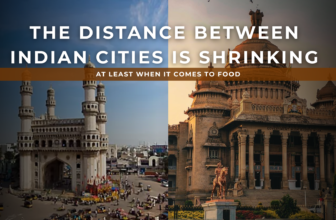
The workforce in a Bengaluru tech office carries within it the food traditions of Tamil Nadu, UP, Andhra Pradesh, Maharashtra, Rajasthan, and a dozen other states. The canteen serves Bengaluru food. The gap between these two things has always existed. Intercity food delivery is the first practical, reliable way to close it — by making heritage kitchens from the actual cities employees are from available on a plannable, regular basis.
The trend is coming from the gap. It was always there. The tool to address it is what is new.
What Makes It Different From What Came Before
Workplace food variety has been attempted in many forms over the years and has largely produced unremarkable results. The themed canteen day, the new vendor rotation, the occasional outside catering — all of these operate within the same local supply boundaries and produce food that is, at best, a well-executed approximation of something from somewhere else.
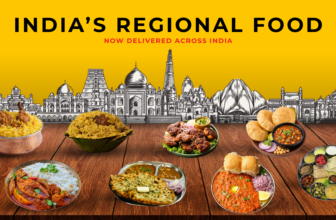
Intercity food delivery does not approximate. It sources. A heritage kitchen in Hyderabad sends its own food — not a version of it, not a Bengaluru kitchen’s interpretation of it, but the actual preparation from the actual kitchen that has been making it for forty years. That is a categorically different kind of food variety. It is not wider. It is deeper. And depth is what produces the response that workplaces are now seeing when intercity food arrives on the floor.
The employee from Hyderabad who has been eating the canteen’s biryani in resigned acceptance for two years tastes the difference immediately. So does everyone else at the table. The food does not need a sign or an announcement. It announces itself.
“Genuine regional food does not need to be explained. People from that region recognise it immediately.”
How Workplaces Are Using It
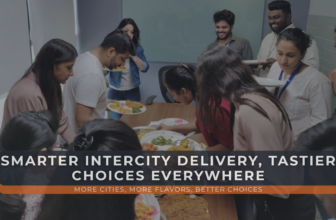
Different workplaces are finding different entry points into intercity food delivery, and the variety of applications is itself a sign of the tool’s flexibility. The most common starting point is occasions — a celebration, a milestone, a joiner’s welcome lunch. These are the moments where the food being chosen specifically for someone is most visible and most appreciated.
From there, many offices move toward a more regular structure. A monthly regional food day. A rotating city spotlight. A food calendar that, over a year, works through the cities represented in the team. Each iteration builds familiarity — the team knows that a certain day means a certain kind of food, looks forward to it in advance, and engages with it in a way that no canteen day has ever generated.
The shared logic across all of these applications is the same. Food is being used to acknowledge the team’s actual composition rather than its average preference. That acknowledgement is felt, valued, and returned — in the form of a team that is more engaged with the workplace food experience than it has ever had reason to be before.
The Pre-Order Model Fits Workplace Planning
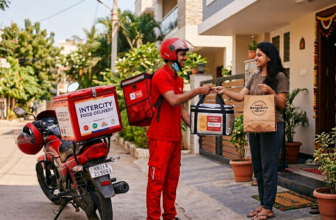
A practical concern that offices might have about any new food source is whether it requires new processes. The answer with intercity food delivery is straightforwardly no. The pre-order model — place the order a day ahead, receive a confirmed delivery window, plan the day around a known timeline — is identical in structure to how office food has always been managed.
The heritage kitchen receives the order, prepares the food on the day of delivery, and sends it through a managed logistics chain that arrives when the office expects it. The food planner is not navigating anything unfamiliar. They are using the same planning process they have always used, applied to a category of kitchen they could not previously access.
This is the compatibility that makes intercity food delivery a sustainable addition to an office food programme rather than an operational experiment. The result is better. The process is identical. That combination does not require persuasion — it requires only one experience for the case to make itself.
“Better food for the team, same planning process for the office. That is a trend with real staying power.”
What It Does for Workplace Culture
Workplace culture is made of the things that happen regularly, not the things that happen once. A town hall is not culture. A monthly heritage food day, consistently delivered, consistently engaged with by the team, is culture. It becomes part of what the office is — part of how employees describe it to people outside, part of what new joiners notice and appreciate, part of what makes the working day feel like more than just work.
Intercity food delivery builds this kind of culture in the most natural way possible — through food, which is daily, personal, and experienced rather than communicated. An office whose food programme acknowledges the diversity of its team is not making a statement. It is creating a daily reality. That reality, sustained over months and years, produces the kind of workplace belonging that no onboarding document or cultural initiative could manufacture.
The cultural return on getting office food right is not trivial. It shows up in retention, in advocacy, in the way people talk about the organisation when they are not being asked to. And it starts, simply, with deciding that the team deserves food that reflects who they actually are.
Where This Trend Is Headed
Trends driven by genuine utility do not peak and reverse — they become standards. Intercity food delivery is solving a real and long-standing problem in Indian workplaces, and the solution is practical enough to be adopted at scale. The momentum is not slowing. It is building.
The offices leading the trend now are establishing a food culture that will be the benchmark for what comes next. Their teams are eating better, more varied, more personally relevant food on ordinary workdays. Their food programmes have a depth and character that standard canteen operations cannot match. And their employees are experiencing, through something as simple as a Thursday lunch, what it feels like to work somewhere that paid attention.
That experience is what defines a workplace that people remember. Not the salary band or the benefits package — but the accumulated feeling of being known, regularly and consistently, in the daily texture of working life. Intercity food delivery is one of the clearest and most practical ways to create that feeling. The offices recognising this now are the ones that will not need to catch up later.