

Published: |Last updated:
Listen to this article
Show Quick ReadConcise summary from this article
https://dlineschooloflogistics.in/ Imagine knowing the exact location of every pallet in your supply chain — not once a day when a truck driver calls in, but continuously, with updates every few seconds. Imagine knowing the temperature inside a refrigerated container transporting pharmaceuticals from Kozhikode to Riyadh, and receiving an automatic alert if it rises above the safe threshold. This is what the Internet of Things has made possible in logistics. The…
Ask AI About This Article
Answers are limited to information in this article.
https://dlineschooloflogistics.in/
Imagine knowing the exact location of every pallet in your supply chain — not once a day when a truck driver calls in, but continuously, with updates every few seconds. Imagine knowing the temperature inside a refrigerated container transporting pharmaceuticals from Kozhikode to Riyadh, and receiving an automatic alert if it rises above the safe threshold. This is what the Internet of Things has made possible in logistics.
The Internet of Things in Supply Chain Management
The Internet of Things (IoT) refers to a network of physical devices embedded with sensors, connectivity hardware, and software that enables them to collect and transmit data in real time. In logistics, IoT devices are attached to vehicles, containers, pallets, individual packages, and even warehouse equipment — creating a continuous stream of operational data.
The global logistics IoT market is expected to exceed USD 75 billion by 2030, driven by growing demand for supply chain visibility and the rapid decline in sensor costs.
Key IoT Applications in Logistics
- GPS vehicle tracking — real-time location of every vehicle in a fleet, with geo-fencing alerts for route deviations
- Cold chain monitoring — continuous temperature and humidity sensors in refrigerated trucks and warehouses
- Smart containers — IoT-enabled shipping containers that report location, door open/close events, and shock or tilt
- Inventory sensors — shelf-level sensors in warehouses that automatically trigger replenishment when stock falls below threshold
- Predictive vehicle maintenance — engine sensors that monitor vehicle health and predict breakdowns before they happen
- Asset tracking — RFID and Bluetooth tags on returnable assets like pallets, crates, and trolleys
- Driver behaviour monitoring — telematics devices that track speed, braking, and fuel consumption
IoT and Cold Chain Logistics
For Kerala, which exports significant volumes of seafood, spices, and pharmaceuticals, cold chain integrity is critical. IoT-enabled cold chain monitoring ensures that temperature-sensitive goods maintain their quality throughout the journey from processing facility to international port.
Exporters who can provide real-time temperature logs to their buyers gain a significant competitive advantage and can command premium prices for certified quality products.
Data from IoT — The Opportunity for Supply Chain Professionals
IoT devices generate enormous volumes of data. The real value lies not in collecting this data but in analysing it to improve operations. Supply chain professionals who can work with IoT data platforms — interpreting dashboards, identifying patterns, and making data-driven decisions — are highly sought after.
Our logistics supply chain management courses in Calicut include modules on IoT applications and data interpretation, ensuring students can thrive in a sensor-rich operational environment.
https://dlineschooloflogistics.in/
Conclusion: IoT has fundamentally changed what is possible in logistics visibility and control. For students of diploma in logistics and supply chain management in Kozhikode, understanding IoT applications is no longer advanced knowledge — it is essential industry literacy.
Promote your articles nowCheck for details
Choose a promotion package
Choose a package below, scan the QR code and pay the displayed amount for 20 days.
After payment, email your article title and payment screenshot to info@yourneeds.asia. Once confirmation is received, one of our administrators will activate the promotion.
Choose where your promoted article receives extra visibility
Promotion changes presentation and placement for the selected period. It does not guarantee traffic, enquiries, search ranking or sales.
Priority visibility in the VIP Lounge, promoted shelves and highlighted article areas.
Top-style highlighting in article directories, homepage feeds and promoted article blocks.
Premium styling across supported article feeds, recommendations and directory placements.
Featured presentation in supported homepage, category, directory and related-article areas.
Build a stronger online presence for your business
Get Your Website for ₹15,000
Are you listed and don't have a website for your business? We can plan, design and launch a responsive website that makes your business easier to understand and contact.
Get My WebsiteSEO Starts from ₹10,000/Month
Improve how your business is presented across Google, local listings and AI-powered search results with ongoing SEO, content and authority-building work.
Improve My VisibilitySuggested Articles
View all articles
ISO 20000 Manual: A Complete Guide to Modern IT Service Management
Current businesses rely on efficient IT services for the successful functioning of day-to-day operations, customer requirements, communications, and growth of their business. In the…
Everyday Play for Children: 7 Powerful Ways to Build Life Skills
Children can benefit from simple play activities, such as working with blocks, drawing, and solving puzzles. Through play, children can explore their world and…
Integrated HSE Documentation Kit: Complete Guide to ISO 14001 and ISO 45001
Business organizations nowadays emphasize more on environment-related responsibility, employee safety at the workplace, compliance with the law, and sustainable operations. The integration of ISO…
ISO 22301 Documentation Kit: Complete BCMS Manuals, Procedures & Records
Disruptions within a business can occur out of the blue, regardless of whether they stem from a problem associated with cybersecurity, IT, logistics, natural…
Latest Blog Posts
View all articles
Emerging Business Opportunities That Are Shaping the Future Market
Due to continuous growth and development in the global economy, entrepreneurs are finding many ways to innovate, utilize advanced technology, and leverage strategic acquisitions…

Amit Malhotra: Simplifying Forex Trading for a New Generation of Investors
A new generation of investors is entering financial markets faster than ever before, driven by digital access, social media exposure, and a growing curiosity…
Seasonal Promotions for E-commerce: A Complete Guide to Planning, Marketing, and Growth
Seasonal promotions are one of the most effective ways for e-commerce businesses to increase sales, attract new customers, and create stronger engagement throughout the…
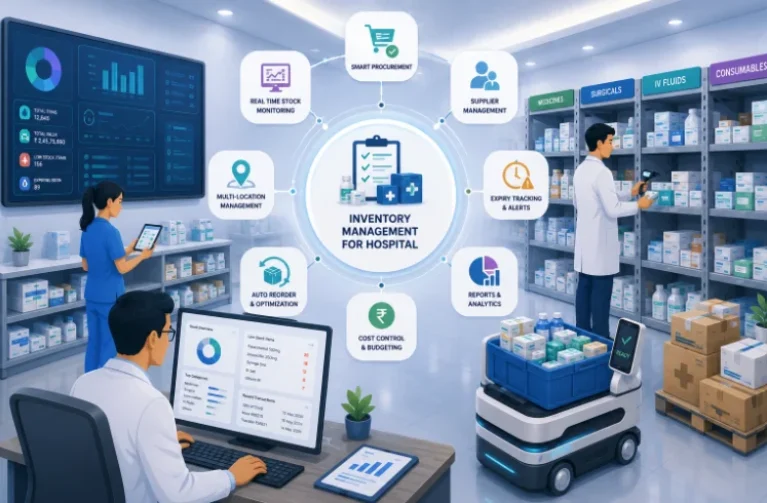
Inventory Management for Small Hospitals and Clinics in India: Where to Start and What to Automate
This is a condition most every small hospital and clinic in India have experienced: when a patient requires a medicine and the shelf is…

Calgary Safest Neighborhoods for Families, Seniors and Newcomers: A 2026 Guide
Where you live affects your life, how you sleep, how your kids get to school and how comfortable you are walking home at…
MedTripz Medical Tourism from Saudi Arabia to India
Your Trusted Partner for Medical Treatment in India For patients looking for Medical Tourism from Saudi Arabia to India, MedTripz provides comprehensive support to…