Better food choices at work are not a luxury add-on. They are one of the clearest ways a company can demonstrate it understands its people
The food a company provides to its employees is not a neutral thing. It communicates something about how the organisation thinks about the daily experience of working there — whether it considers that experience worth investing in, whether it notices the people inside it as individuals with specific backgrounds and preferences, whether it is willing to go beyond the functional minimum. Intercity food delivery is giving companies a new category of food choice through which to communicate all of this — one that draws from heritage kitchens across India and brings food of a depth and authenticity that local vendors have never been positioned to offer.
The practical case for better company food choices is well established in the experience of organisations that have acted on it. Employees engage more positively with a food environment that demonstrates thought. The team notices when food is chosen for them specifically, not just for a general group. And food that is genuinely regional, genuinely from heritage kitchens with decades of standing, genuinely different from what is available nearby — this kind of food generates a response that the standard canteen rotation has never produced. Intercity food delivery makes this quality of choice available to companies across India, regardless of their city or size.
“The food a company provides tells its people more about how they are valued than most company policies ever will.”
Why Food Choices at Work Matter More Than Companies Think
Among all the daily experiences that a company controls, food is one of the most consistent and most personal. It is there every working day. It is consumed by the body rather than processed by the mind. And its quality — or the lack of it — is felt in the most immediate way. A good lunch on a Wednesday afternoon produces a different set of hours than a mediocre one. This is not a small thing at scale.
The company that treats office food as a logistical necessity — something to manage efficiently rather than to consider thoughtfully — creates a food environment that employees move through without engagement. The rotation becomes invisible. The food is eaten without attention. And while the company may not be aware of what this communicates, the employees are absorbing the signal: the organisation has not thought about this particularly hard.
The company that treats food as a point of genuine investment creates a different signal entirely. The team looks forward to what is on offer. The food becomes a topic of conversation. And the daily experience of working there carries a warmth that the other company’s employees would not be able to identify but would immediately feel the absence of, if asked to compare.
What Intercity Food Delivery Adds to the Company Food Programme
Standard company food programmes are limited, structurally, by what is available in the city the office occupies. Canteen vendors operate locally. Restaurant partnerships draw from local establishments. The food that reaches the employee table is a reflection of the local food landscape, which means it reflects the city rather than the workforce.
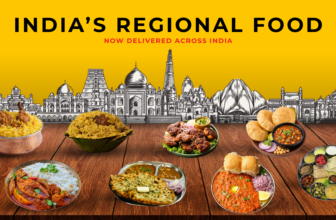
Intercity food delivery changes this at a fundamental level. The geographic boundary that has always defined company food programmes — whatever is nearby, whatever is local, whatever the city offers — is removed. Heritage kitchens in Hyderabad, Lucknow, Chennai, Kolkata, and across India become available. A company in Pune can bring food from a forty-year-old Hyderabadi institution to its team. A Bengaluru office can offer its employees the preparation of a heritage Chennai kitchen that has been making its dishes for decades.
This is a qualitative expansion of what a company food programme can be. Not more of the same local options — a genuinely different category of food, with origin and history and depth that local sourcing has never been able to provide. When companies introduce this into their food programme, they are not adding an option. They are adding a dimension.
“Adding heritage kitchen food to a company’s food programme is not a small upgrade. It is a different kind of offering entirely.”
Acknowledging the Diversity of the Team Through Food
The workforce in India’s major cities represents the country’s geographic diversity more completely than almost any other environment. Walk through a large office in Bengaluru or Hyderabad and the variety of states, food traditions, and culinary histories represented is extraordinary. What is almost never extraordinary is the food those people are offered — which reflects the city, not the team.
The employees from other regions carry their food backgrounds with them quietly. They adapt. They find acceptable local versions and treat the gap between those versions and the originals as a fact of their relocated working life. But the gap exists, and its persistence communicates something about the company — that the diversity it claims to value has not yet reached the lunch table.
Intercity food delivery gives companies a direct and practical way to extend their acknowledgement of team diversity into the food experience. Rotating regional food days. Welcome lunches built around the joiner’s home city. Celebration meals that reflect the person rather than the occasion. Each of these is a food choice that makes the team’s actual composition visible in the most immediate and appreciated way possible.
The Pre-Order Model Works Naturally for Companies
The logistics of any new food source matter as much as the quality of the food itself. A food programme that introduces uncertainty — unpredictable delivery times, unreliable quantities, processes that require special management — will not survive long in a corporate environment regardless of how good the food is. Intercity food delivery does not introduce any of this.
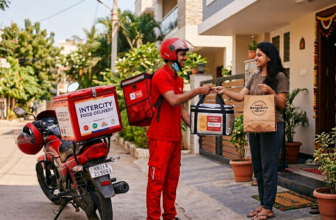
The pre-order model on which it is built mirrors exactly how office food is already managed. An order placed a day ahead. A confirmed delivery window. The food prepared on the day it ships, arriving at the office at the expected time. The company food planner does not learn a new process. They do not manage new uncertainty. They place an order through a familiar advance-booking model and receive food from a heritage kitchen that had not previously been available to them.
This structural compatibility is one of the most important reasons intercity food delivery becomes a regular part of a company food programme once it has been introduced. The food is better. The team engages with it more positively. The process is no different from anything already in place. The case for continuing is self-evident to anyone involved.
“Better food, same process. For companies thinking about what to improve, that combination is hard to argue with.”
Food as an Expression of Company Culture
The relationship between food and company culture is one that most organisations understand intuitively but few have made fully explicit. Food communicates culture in a way that is direct, regular, and experienced rather than read. An employee does not encounter the food programme through a policy document or a leadership communication. They encounter it at the lunch table, every working day, through the physical experience of eating what the company has chosen to provide.
What the food says depends on what was chosen and why. A food programme that has not changed in months, that cycles through familiar options chosen for cost and convenience, communicates a particular version of how the company values the daily experience of its people. A food programme that includes heritage kitchens from across India, that rotates through regions the team is actually from, that responds to the specific composition of its workforce — this communicates something different. Something more attentive, more invested, more reflective of the culture the company claims to have.
Companies that build intercity food delivery into their food culture find that it becomes part of the vocabulary employees use when they describe working there. Not the most important thing. But a detail that comes up — because details that demonstrate genuine thought always do.
Quality and Safety That Companies Can Rely On
No company food programme can include a food source it cannot trust. The standards required of any vendor in a professional food environment — consistent quality, verifiable food safety, reliable delivery — are the same regardless of where the food comes from. They apply equally to the local canteen and to a heritage kitchen in Hyderabad.
Intercity food delivery through Hungersate meets these standards without exception. The kitchens are FSSAI-compliant heritage establishments — institutions whose decades of consistent operation reflect the fact that their reputation has never been separated from the quality of their food. Temperature-controlled packaging maintains the conditions required by each dish through the full distance of the journey. The logistics are managed and tracked. The delivery window is confirmed in advance.
For companies, this means the decision to add intercity food delivery to their food programme is not a departure from their food safety obligations. It is a straightforward extension of the same standards they apply to every other food source — applied to a category of kitchen that happens to produce food of a quality and authenticity that local options have never matched.
A Better Food Programme Is a Better Workplace
The workplace food programme is not the most important thing about a company. But it is one of the most daily, and daily things carry weight that occasional things do not. The accumulated experience of eating well at work — of finding food that was chosen with thought, that represents something genuine, that occasionally brings a heritage kitchen from the other side of the country to a lunch table in a city far from its origin — is an experience that builds into something over time.
That something is a slightly different sense of the workplace. A slightly warmer relationship with the company. A slightly higher chance that, when asked how the job is going, the answer includes something about the food — not because the food is the most important thing, but because good things get mentioned when they are consistent and genuine.
Intercity food delivery gives companies a practical route to that outcome. Heritage kitchens from across India, available on a planned and reliable basis, adding genuine depth to a food programme that has been waiting for something worth adding. The investment is modest. The return, measured in how the team experiences working there every day, is not.