
Published: |Last updated:
Listen to this article
Show Quick ReadConcise summary from this article
How a single intercity food order quietly created a shared memory that no one at that table was expecting Some meals earn a place in a person's memory not because of the occasion surrounding them but because of what the food itself carried into the room. The setting was unremarkable — a Bengaluru home on an ordinary evening, people sitting together the way they do regularly, no particular reason to…
Ask AI About This Article
Answers are limited to information in this article.
How a single intercity food order quietly created a shared memory that no one at that table was expecting
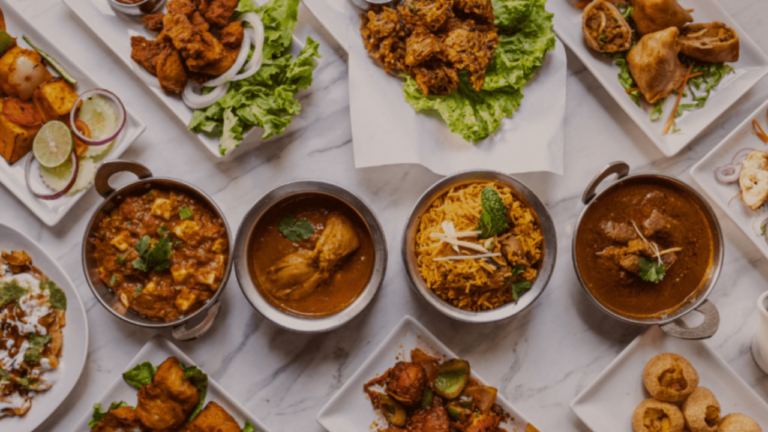
Some meals earn a place in a person’s memory not because of the occasion surrounding them but because of what the food itself carried into the room. The setting was unremarkable — a Bengaluru home on an ordinary evening, people sitting together the way they do regularly, no particular reason to expect anything other than a comfortable and forgettable dinner. And yet the meal that arrived that evening was none of those things. It arrived from four hundred kilometres away, from a Hyderabadi kitchen that has been cooking the same preparation since long before any of the people at the table were born, and it landed with a completeness and a character that changed the quality of the evening without anyone having planned for it to.
This is what intercity food delivery between Hyderabad and Bengaluru has quietly been producing — not extraordinary events, but extraordinarily good meals in completely ordinary settings. A dinner that was supposed to be simple becomes the dinner people reference for months. A weeknight becomes an evening worth remembering. And the person who placed the order does it again the following week, and then the week after that.
The Decision That Sets Everything in Motion
These evenings begin with a single decision made by a single person. Usually someone who carries Hyderabad in their food memory with a kind of specificity that only comes from having grown up there or spent enough time there that certain kitchens and certain dishes became part of how they understand comfort and occasion. This person, on an ordinary evening, chooses to place an intercity food order instead of ordering locally. They choose to reach for the real thing rather than for something close to it. They place the order, keep it to themselves or mention it casually, and then carry with them for the hours before the food arrives a particular kind of quiet anticipation — the anticipation of recognition.
That anticipation has a different quality from ordinary hunger. It comes from already knowing what the food tastes like. From having a precise and specific memory of a dish at its best, and from understanding that what is on its way is not an interpretation or an adaptation but the thing itself — prepared in the kitchen that produced the memory, packed and sent across the distance between two cities by a process that treats the quality of the food as the thing worth protecting most.
When the Food Arrives and the Room Changes
The arrival of Hyderabadi food from a kitchen that has been making it for decades has a physical character that begins before the first bite. Dum biryani from such a kitchen opens with a fragrance that belongs entirely to the specific combination of overnight-marinated meat, sealed slow cooking, and the aged basmati that has spent hours absorbing the spiced character of everything around it inside the vessel. This fragrance does not belong to a category. It belongs to a tradition. For the person who ordered it, the smell is an immediate return — to a place, to an occasion, to a version of this meal that lives in their memory with precise sensory detail. For everyone else at the table, it is something new that announces itself as significant before a word has been spoken.
When the food is tasted, the fragrance is confirmed in every detail. The rice is long and fragrant, carrying in each grain the depth of the preparation that produced it. The meat is exactly what a decade of patient refinement makes it — tender, deeply spiced, inseparable from the rice around it. The experience of eating this biryani in a Bengaluru home and finding it tasting the way a Hyderabad restaurant produces it is one that the people at that table carry with them. They do not always articulate precisely what is different about it. They do not need to. The quality communicates itself.
How a Meal Becomes a Conversation and a Conversation Becomes a Community
What follows a dinner like this is rarely the quiet drift into an evening that usually follows a meal. The conversation after an intercity food order that has been delivered properly tends to be alive in an unusual way. People ask specific questions. They want to know which kitchen the food came from. They want to know what else that kitchen makes. For those at the table who grew up in Hyderabad, the conversation becomes a sharing of personal geography — specific restaurants, specific streets, specific occasions that a dish like this one is tied to in their memory. For those encountering the cuisine at this level for the first time, it becomes the beginning of something — a food curiosity that has just found a reliable direction to point in.
The way the community of intercity food delivery users grows between Bengaluru and Hyderabad follows directly from these conversations. A table of five people has one intercity order to arrive through Hungersate. The meal is good enough that four other people at that table place their own first orders in the days that follow. No campaign produced this growth. The food did. This is the most durable form of recommendation that exists — the memory of a specific meal at a specific table that the people who were there carry forward and want to recreate.
What Makes the Food Arrive the Way It Should
The meal that produces this kind of evening depends on two things being handled correctly at every stage. The kitchen has to make the food the way the food has always been made — with the accumulated knowledge and the unhurried commitment to the preparation that decades of consistent cooking produces. And the platform connecting the kitchen to the Bengaluru table has to protect what the kitchen made through the full journey between the two cities.
Hyderabadi food makes this second task more manageable than many cuisines would, because the most celebrated dishes were built around patience from the very beginning. Dum biryani rests sealed in its vessel by design. Haleem deepens for hours after the cooking ends. Nihari was always meant to be eaten long after the stove was turned off. These dishes absorb the transit time rather than suffering from it. Hungersate has built its intercity food delivery service around the specific standards that complete this picture — fresh preparation timed to each order, packaging designed for multi-hour transit, and a kitchen selection process based on long track records with signature dishes. What arrives at the Bengaluru end of the journey is the food the kitchen made, protected and intact.
The Dinner Worth Having Again
The meals that stay in people’s memories from among the thousands of ordinary evenings in a life are rarely the planned ones. They are the evenings that arrived differently — where something on the table turned out to be more than expected, more specific, more deeply rooted in a place and a tradition than anything the occasion called for. The intercity food orders that have brought Hyderabadi kitchens to Bengaluru tables have been creating these evenings for a growing number of people. Not because the occasion was special. Because the food was exactly what it should have been, and that turned out to be more than enough.
Promote your articles nowCheck for details
Choose a promotion package
Choose a package below, scan the QR code and pay the displayed amount for 20 days.
After payment, email your article title and payment screenshot to info@yourneeds.asia. Once confirmation is received, one of our administrators will activate the promotion.

Choose where your promoted article receives extra visibility
Promotion changes presentation and placement for the selected period. It does not guarantee traffic, enquiries, search ranking or sales.
Priority visibility in the VIP Lounge, promoted shelves and highlighted article areas.
Top-style highlighting in article directories, homepage feeds and promoted article blocks.
Premium styling across supported article feeds, recommendations and directory placements.
Featured presentation in supported homepage, category, directory and related-article areas.
Build a stronger online presence for your business
Get Your Website for ₹15,000
Are you listed and don't have a website for your business? We can plan, design and launch a responsive website that makes your business easier to understand and contact.
Get My WebsiteSEO Starts from ₹10,000/Month
Improve how your business is presented across Google, local listings and AI-powered search results with ongoing SEO, content and authority-building work.
Improve My VisibilitySuggested Articles
View all articles
Best Tasting Sweet Potato Varieties: Which One Is the Sweetest?
Sweet potatoes are available in many varieties, each with its own balance of sweetness, texture, moisture, and flavor. Some varieties are naturally soft and…
How to Choose the Best Sweet Potato Variety for Your Needs
Sweet potatoes come in many varieties, and each one has different characteristics that make it more suitable for certain recipes, cooking methods, or food…
The Anniversary Dinner That Neither of Them Will Ever Forget
Anniversary dinners carry an expectation that grows heavier with each passing year. The first anniversary is forgiving — anything thoughtful feels significant simply because…
The First Order of Intercity Food to Bengaluru and the Silence That Followed It
There is a particular silence that good food produces — different from the silence of an empty room, different from the silence between people…
Latest Blog Posts
View all articles
Emerging Business Opportunities That Are Shaping the Future Market
Due to continuous growth and development in the global economy, entrepreneurs are finding many ways to innovate, utilize advanced technology, and leverage strategic acquisitions…

ISO 20000 Manual: A Complete Guide to Modern IT Service Management
Current businesses rely on efficient IT services for the successful functioning of day-to-day operations, customer requirements, communications, and growth of their business. In the…

Amit Malhotra: Simplifying Forex Trading for a New Generation of Investors
A new generation of investors is entering financial markets faster than ever before, driven by digital access, social media exposure, and a growing curiosity…

Everyday Play for Children: 7 Powerful Ways to Build Life Skills
Children can benefit from simple play activities, such as working with blocks, drawing, and solving puzzles. Through play, children can explore their world and…

Seasonal Promotions for E-commerce: A Complete Guide to Planning, Marketing, and Growth
Seasonal promotions are one of the most effective ways for e-commerce businesses to increase sales, attract new customers, and create stronger engagement throughout the…

Inventory Management for Small Hospitals and Clinics in India: Where to Start and What to Automate
This is a condition most every small hospital and clinic in India have experienced: when a patient requires a medicine and the shelf is…