

Published: |Last updated:
Listen to this article
Show Quick ReadConcise summary from this article
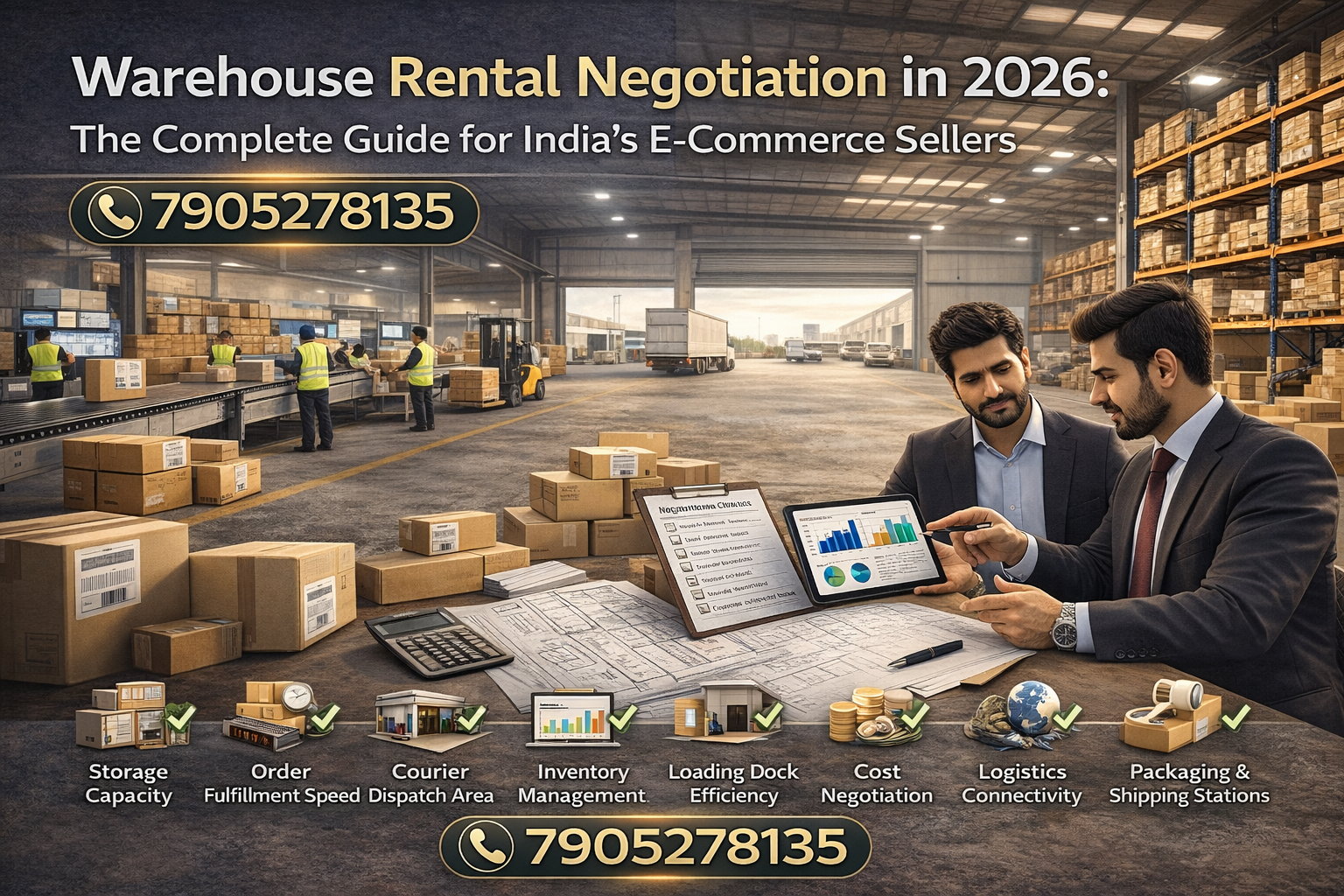
Your Warehouse Deal Directly Impacts Your Unit Economics If you're selling on Amazon, Flipkart, Meesho, or running your own D2C brand, your warehouse is not just a storage room — it's the operational core of your business. A bad lease deal doesn't just cost you extra rent. It costs you through poor location (higher last-mile costs), inadequate infrastructure (slower pick-pack, more returns), and inflexible terms (you're locked into space that…
Ask AI About This Article
Answers are limited to information in this article.
Your Warehouse Deal Directly Impacts Your Unit Economics
If you’re selling on Amazon, Flipkart, Meesho, or running your own D2C brand, your warehouse is not just a storage room — it’s the operational core of your business. A bad lease deal doesn’t just cost you extra rent. It costs you through poor location (higher last-mile costs), inadequate infrastructure (slower pick-pack, more returns), and inflexible terms (you’re locked into space that doesn’t fit your growth).
In 2026, Indian e-commerce logistics is extraordinarily competitive. Quick commerce, same-day delivery, and regional dark stores are changing what ‘good warehouse location’ means entirely. Your warehouse deal needs to be smarter than it’s ever been.
The 5 Things E-Commerce Sellers Must Non-Negotiate on Location
- Bluedart, Delhivery, Xpressbees, Shadowfax — your warehouse should ideally be within 5–10 km of their local hub. This directly determines your same-day/next-day cut-off times.Proximity to delivery partner hubs
- You need regular 14-wheeler and 22-wheeler access. Many low-cost industrial areas have weight restrictions or narrow roads that make large vehicle entry impossible — check this physically before signing.Road connectivity and truck access
- Analyse your top 20 delivery pincodes. Your warehouse should minimise the average distance to these — every extra km adds to your last-mile logistics cost.Distance from your primary customer pincode cluster
- Returns processing, conveyor systems, automated sorters, and barcode scanners need stable power. Areas with frequent load-shedding kill productivity and damage equipment.Availability of reliable 3-phase power
- WMS (Warehouse Management System) runs on cloud. Poor connectivity = delayed order processing = late shipments = negative seller metrics on marketplaces.Internet and telecom connectivity
The E-Commerce Seller’s Negotiation Playbook
Negotiate for Scalability, Not Just Today’s Rate
The biggest mistake e-commerce sellers make in warehouse leasing is optimising for current space requirements. Your business will grow. Negotiate the right to expand into adjacent units at pre-agreed rates. This expansion option — written into the lease — is worth far more than a ₹2/sq ft discount on current rent.
Push Hard for a Fit-Out Period — Your Setup Time Is Real Money
Setting up a fulfilment centre takes 15–45 days: racking installation, barcode system setup, WMS configuration, staff training, and integration with marketplace APIs. Every day of this setup during which you’re paying rent is pure cost. Ask for 30–45 days rent-free fit-out period. Grade A parks typically grant 30 days for leases above 15,000 sq ft without argument.
Shared Warehousing vs. Dedicated: The E-Commerce Math
| Factor | Shared/3PL Warehousing | Dedicated Lease |
| Min. Entry Volume | 500–2,000 orders/month | 5,000+ orders/month |
| Cost Structure | Pay per pallet/sq ft used | Fixed monthly rent regardless of usage |
| Flexibility | Month-to-month scaling | Locked-in for 2–5 years |
| Control | Limited — 3PL rules apply | Full operational control |
| Ideal For | New sellers, seasonal businesses | Established brands, own team |
| Key Providers in India | Delhivery, Shiprocket, Shadowfax, Ecom Express | IndoSpace, ESR, Welspun One, local parks |
For sellers doing under 3,000 orders per month, shared warehousing is almost always financially superior to a dedicated lease. The flexibility premium is real — you can scale down in slow months without paying for empty space.
The GST and Compliance Checklist for E-Commerce Warehouses
- GST registration in every state where you have a warehouse:If you warehouse goods in Maharashtra AND Karnataka, you need GST registration in both states — this is mandatory for interstate stock movement and marketplace compliance.
- GSTIN on the lease agreement:Ensure your GSTIN is correctly mentioned — enables ITC claim on rent GST.
- FSSAI registration if storing food products:Mandatory for any food, beverage, or nutraceutical products. Verify the warehouse itself has applicable food storage certifications.
- Fire NOC and electrical compliance:Marketplace seller accounts and insurance policies may require you to demonstrate warehouse safety compliance.
- State-specific Shops and Establishments Act registration:Required for employing staff in your warehouse — check local requirements.
Negotiating with Quick Commerce Dark Store Operators
If you’re a hyperlocal brand or a supplier to Blinkit, Swiggy Instamart, or Zepto, you may be considering small dark store leases in residential/mixed-use areas. These operate differently from traditional warehouses:
- Dark store leases are typically 200–800 sq ft — negotiate for monthly agreements initially
- Location premium is real: a dark store on a high-demand residential street justifies higher rent for last-mile advantage
- Verify zoning allows commercial storage — many residential zone leases are technically illegal for commercial use and can be shut down
- Negotiate power upgrade rights — dark stores need significant refrigeration capacity
FAQs for E-Commerce Sellers
Q: Should I use a 3PL provider or take my own warehouse lease as an Amazon/Flipkart seller?
The threshold is generally around 3,000–5,000 orders per month. Below that, a 3PL provider like Shiprocket, Pickrr (now Shiprocket), or Shadowfax Fulfil is almost always cheaper — you avoid fixed lease costs, staff overheads, and infrastructure investment. Above 5,000 orders per month consistently, a dedicated warehouse typically offers better unit economics, faster processing times, and more control over the customer experience. The break-even varies by category: high-volume, low-price commodities favour early warehousing; low-volume, high-value products can stay with 3PL longer.
Q: Can I run a warehouse in a residential area for my e-commerce business in India?
Technically no — commercial storage operations require commercial or industrial zone property. However, many small sellers operate from residential properties informally. The risks: local municipal complaints, Residents Welfare Association objections, and marketplace compliance checks that may require you to submit commercial premises proof. If you’re at early stage and using a small portion of a residential space, the risk is low. Once you’re hiring staff, receiving regular courier pickups, and storing significant inventory, transitioning to proper commercial space is strongly advisable.
Q: How do I negotiate warehouse rent near an Amazon or Flipkart fulfillment centre?
Proximity to a major marketplace FC is a double-edged sword — it’s convenient for replenishment but it also means high demand for nearby warehouse space, which drives up rents. To negotiate effectively in these micro-markets: compare rates in the next closest viable corridor (usually 5–15 km away) and use this as your benchmark; emphasise your tenancy stability and credit quality; and ask specifically about parks that offer seller-services infrastructure (labelling stations, re-packaging areas, quality inspection rooms) — these have higher headline rents but genuinely lower total operational costs.
Promote your articles nowCheck for details
Choose a promotion package
Choose a package below, scan the QR code and pay the displayed amount for 20 days.
After payment, email your article title and payment screenshot to info@yourneeds.asia. Once confirmation is received, one of our administrators will activate the promotion.
Choose where your promoted article receives extra visibility
Promotion changes presentation and placement for the selected period. It does not guarantee traffic, enquiries, search ranking or sales.
Priority visibility in the VIP Lounge, promoted shelves and highlighted article areas.
Top-style highlighting in article directories, homepage feeds and promoted article blocks.
Premium styling across supported article feeds, recommendations and directory placements.
Featured presentation in supported homepage, category, directory and related-article areas.
Build a stronger online presence for your business
Get Your Website for ₹15,000
Are you listed and don't have a website for your business? We can plan, design and launch a responsive website that makes your business easier to understand and contact.
Get My WebsiteSEO Starts from ₹10,000/Month
Improve how your business is presented across Google, local listings and AI-powered search results with ongoing SEO, content and authority-building work.
Improve My VisibilitySuggested Articles
View all articles
Apartment for Sale in Porvorim Goa: What to Check During a Property Visit
Finding an apartment for sale in Porvorim Goa can look simple when you browse listings online. The real decision starts when you visit the…

What Makes the Best Real Estate Developers in Delhi Stand Out?
[caption id="attachment_8264" align="alignnone" width="300"] best real estate developers in delhi[/caption] Buying property in Delhi is a significant financial decision, and choosing the right developer…

Velvet Vista Goa: A Practical Choice for a Second Home in North Goa
Velvet Vista Goa Porvorim offers an option worth considering for buyers who want a second home in North Goa without choosing a location based…

How Can You Find the Right Property for Sale in Calangute Goa?
Are you searching for a home, holiday residence, or investment opportunity in North Goa? Calangute is a popular choice because it offers a mix…
Latest Blog Posts
View all articles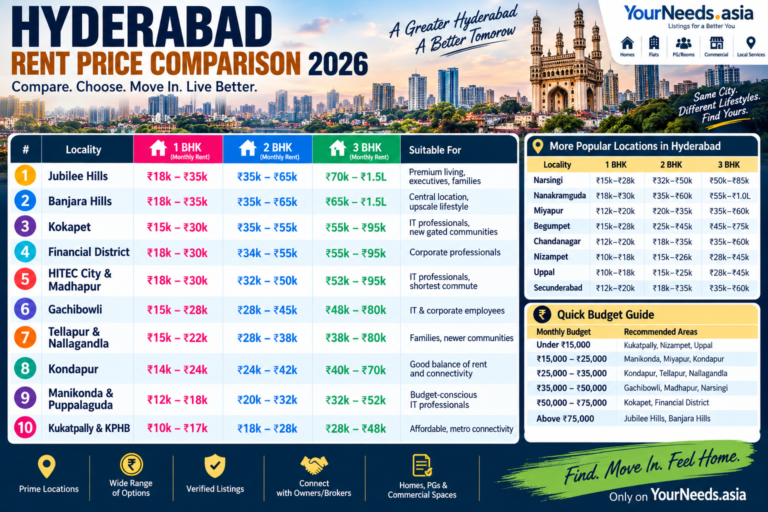
Flats for Rent in Hyderabad: Apartments, Tolet, Villas & Independent Houses 2026
Flats for Rent in Hyderabad: Apartments, To-Let Homes, Villas & Independent Houses – Complete 2026 Rental Guide Finding the right Flats for rent in…
Sara777 – Satta Matka Results and Chart Latest Records
Welcome to Sara777, an online platform created to provide easy access to Satta Matka results, charts, market records, and related information in one place.…

How to deposit on allpanel777?
Here is some steps to deposit on allpanel777 are:- Step 1: Start With Your Account To deposit, users should have an active AllPanel777 account.…

How Rhythm & Royalty Fitness Makes Dance Classes in Zirakpur Fun for Every Age Group
Dance has a unique way of bringing people together, no matter their age, fitness level, or experience. With everyone seeking a workout that doesn't…

Free JPG to PES Tools and Their Limitations
Turning a picture into an embroidery file sounds simple until you see what happens inside the machine. A JPG shows an image, while a…

Getting to Know Ciprofloxacin 500 mg: Uses, Safety and Important Information
[caption id="attachment_8302" align="alignnone" width="300"] Ciprofloxacin 500 mg: Understanding the basics in a simple way.[/caption] Ciprofloxacin 500 mg: Some Basic Points to Consider When one…