
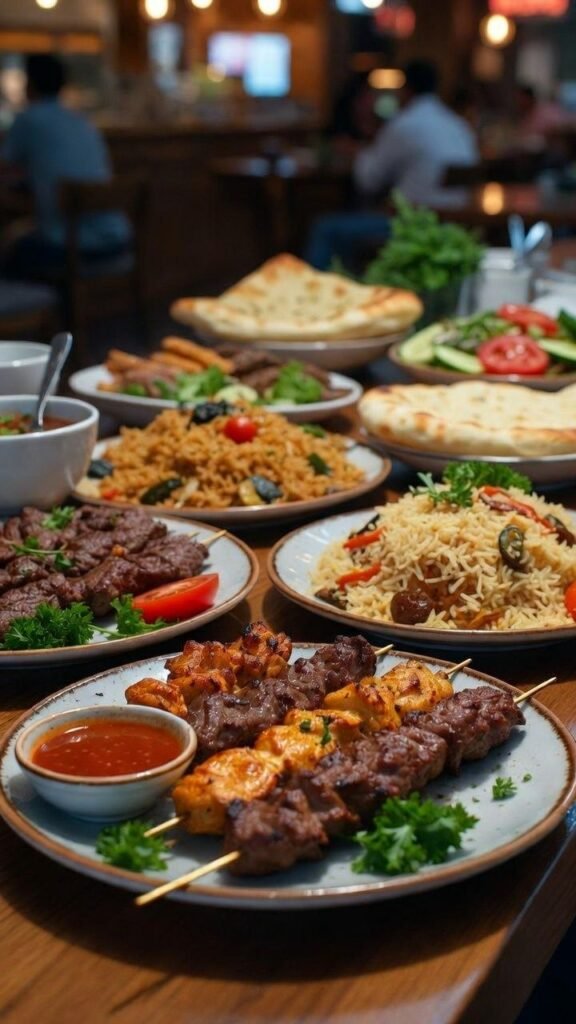
Inside the intercity food delivery platform quietly reshaping how Bengaluru and Hyderabad eat
Food in India is never just food. It is proof that a place exists in a particular way — that a specific combination of history, geography, and people came together and produced something worth sitting down for. The biryani that a Hyderabad restaurant has been making since long before anyone thought to write recipes down carries a kind of authority that cannot be replicated by instruction alone. The dishes that have shaped Bengaluru’s mornings and evenings over decades hold the same kind of earned trust. Both are real, both matter deeply, and both have historically been difficult to access beyond the boundaries of the city that created them. That difficulty is what one platform set out to remove.
The premise is uncomplicated: iconic food from iconic restaurants in one city should be genuinely available to people living in another. Acting on that premise with the reliability it demands is considerably more involved — and it is what separates a platform worth using from one that merely sounds like a good idea.
Why Bengaluru and Hyderabad Were the Right Place to Begin
The two cities share far more than a highway between them. Decades of economic interdependence, continuous migration in both directions, and a cultural familiarity that has grown organically over time have made Bengaluru and Hyderabad two of the most connected cities in southern India. People do not just move between them — they maintain identities in both places simultaneously. They carry memories, habits, and preferences that belong to whichever city shaped them, and they carry those things with them wherever they land.
Food sits at the center of that identity in both directions. The Hyderabadi who has built a life in Bengaluru holds onto specific food associations that local alternatives cannot fully replace. The Bengalurean who has spent time in Hyderabad or grown up hearing about its food from colleagues and friends develops a genuine curiosity that deserves a genuine answer. The demand that exists between these two cities is not manufactured — it has been there for years, waiting for a delivery infrastructure thoughtful enough to meet it properly.
Building Something That the Journey Demands
Intercity food delivery requires a completely different kind of discipline from standard city-level delivery. The distance between Hyderabad and Bengaluru introduces variables — time, temperature, transit conditions — that do not exist when a delivery is measured in minutes rather than hours. Every element of the process has to be designed around protecting the food across that extended journey, not just getting it moving.
Fresh preparation is non-negotiable. Every order is cooked specifically for that order, timed to the delivery schedule rather than produced in advance and held. The packaging is chosen and designed for multi-hour transit — thermally efficient, sealed to protect texture and moisture, and suitable for the specific characteristics of each dish being sent. The restaurants on the platform are not collected casually. Each kitchen has been selected because it has a proven track record with its signature dishes and understands the standard the food must meet before it travels. This is the combination that makes the difference between a food delivery platform and a reliable one.
What the Cities Are Sending Each Other
The food moving from Hyderabad to Bengaluru represents some of the most requested dishes in all of Indian regional cuisine. Dum biryani leads — the slow sealed cooking that fuses overnight-marinated meat with aged basmati into something deeply fragrant and layered is as close to irreplaceable as food gets. Haleem comes next, built over an entire day of simmering until its individual ingredients have merged into a single thick, warmly spiced presence. Nihari, shikampuri kebabs, Patthar ka gosht, and marag extend the offering into territory that many Bengaluru food lovers are encountering for the first time and returning to repeatedly.
Moving in the other direction, Bengaluru’s own most cherished food traditions are making their way to Hyderabadi tables — carried by the same platform, held to the same standards, and received by a community that has genuine appreciation for what the city produces at its best. The exchange is equal in spirit, and both cities are discovering something valuable in what the other sends.
The Ordinary People Making Extraordinary Orders
Behind every order placed through the platform is a person with a very specific reason for placing it. A Hyderabadi marketing professional in Bengaluru who orders biryani and Haleem every year during Eid because some occasions call for the real thing regardless of where one is living. A food journalist in Bengaluru working through a personal project to document India’s great regional dishes from her own kitchen table. A family in Hyderabad who discovered a Bengaluru restaurant through a relative and has been ordering from it monthly ever since. These stories repeat across thousands of users — each one representing a connection between a person and a dish that geography used to interrupt. Hungersate was built specifically to stop that interruption.
The Foundation Is Set. The Expansion Is Coming.
Every decision made in building out the Bengaluru to Hyderabad route — the kitchen selection process, the packaging approach, the logistics model, the quality standards — has been made with scale in mind. India has dozens of cities with iconic food cultures that belong to the world but rarely travel beyond their own borders. The model being refined between these two cities is designed to extend to all of them.
Hungersate’s longer ambition is a country where the most iconic dish from any major Indian city is within ordering distance of anyone in any other. That ambition is already partially real. The table is being set for the rest of it.