
Introduction
Video connections are an important part of modern CCTV surveillance systems, security cameras, televisions and other video equipment. A stable connection helps transmit video signals from one device to another without unnecessary interruptions. However, sometimes the available cable is not long enough, or you may need to connect two separate cables to complete an installation. This is where video couplers and jointers become useful.
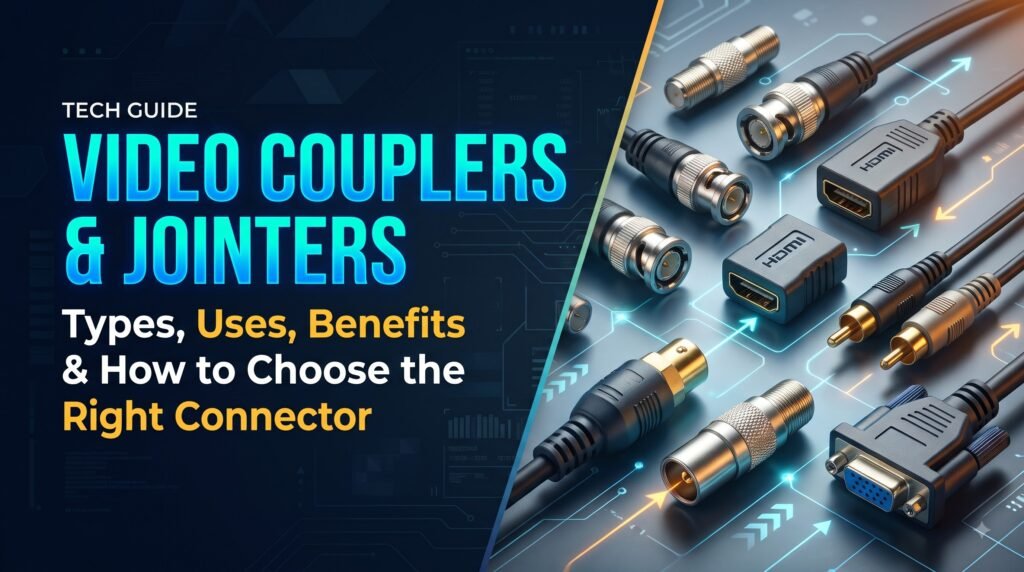
A video coupler is a small connecting accessory designed to join compatible video cables. It can help extend an existing cable, organise connections and make cable installation more convenient. These connectors are commonly used in CCTV systems and coaxial video setups.
In this guide, we will explain the different types of video couplers and jointers, their uses, benefits and the important factors to consider before choosing one.
What Is a Video Coupler?
A Video Coupler is a connector used to join two compatible video cables or connection ends. It provides a simple way to extend a cable without replacing the entire cable with a longer one.
Video couplers are available in different connector types, sizes and configurations. The correct option depends on the cable, connector and equipment being used. For example, CCTV systems commonly use BNC connections for video signal transmission.
These accessories are useful in homes, offices, shops, warehouses and commercial surveillance installations where cables may need to be extended or connected.
What Is a BNC Video Coupler?
A BNC Video Coupler is a connector designed for joining compatible BNC-ended coaxial cables. BNC connectors are widely used in CCTV surveillance systems and other video applications.
A typical BNC coupler has two compatible connection ends that allow two BNC cable connectors to be joined. It helps extend an existing cable run and can reduce the need to replace a cable when additional length is required.
Before purchasing one, check the connector gender and compatibility with your existing cables and equipment.
Different Types of Video Couplers and Jointers
Video connectors are available in several designs. Understanding their differences can help you choose the correct accessory for your setup.
1. BNC Female-to-Female Coupler
A BNC Female to Female Connector is designed to join two BNC male connectors. It generally has a female BNC connection on both ends.
This type of connector is commonly used when two coaxial cables have BNC male plugs and need to be connected together. It can be useful for extending CCTV cable connections or joining compatible video cables.
2. BNC Cable Joiner
A BNC Cable Joiner connects two compatible BNC cable ends to create a longer cable connection. It is a practical accessory for CCTV installations where the existing cable length is insufficient.
It can help avoid replacing an entire cable, provided that both cable ends and the joiner are compatible. A secure connection and suitable cable quality are important for reliable signal transmission.
3. CCTV Cable Coupler
A CCTV Cable Coupler is used to connect compatible cable ends in a surveillance camera setup. Depending on the cable type, it may support BNC coaxial connections or other connector formats used in CCTV installations.
These couplers are helpful when extending camera cables, arranging wiring or connecting existing cable sections during installation and maintenance.
4. BNC Coaxial Coupler
A BNC Coaxial Coupler is specifically designed for compatible coaxial cables that use BNC connectors. It provides a joining point between two cable sections.
Coaxial cables are commonly used to carry video signals in surveillance systems. Choosing a compatible coupler helps maintain a suitable connection between the cable sections.
5. CCTV Video Connector
A CCTV Video Connector is a broad term for connectors used to establish video connections in surveillance systems. Different CCTV setups may use BNC, RCA, DC power or other connector types depending on the camera and recording equipment.
It is important to identify the connector required by your system before selecting an accessory. A video connector and a power connector serve different purposes and should not be confused.
Common Uses of Video Couplers and Jointers
Video couplers and jointers are used in various applications where compatible video cables need to be connected or extended.
CCTV Camera Installation
CCTV systems often require cables to run from cameras to a DVR or other recording equipment. When the available cable is not long enough, a suitable coupler can join two compatible cable sections.
Extending Existing Video Cables
A CCTV Cable Extension Connector can help extend an existing cable connection without replacing the complete cable. This is useful when camera locations change or additional cable length is required.
Home and Office Surveillance
Small offices, shops, residential buildings and commercial properties may use CCTV cameras for security monitoring. Compatible couplers can make cable connections more convenient during installation and maintenance.
Cable Repair and Maintenance
If a cable installation needs modification, a coupler may provide a way to reconnect compatible cable sections. However, damaged cables should be inspected carefully, and severely damaged sections should be replaced instead of relying on a connector alone.
Organising Cable Connections
Jointers can help connect separate cable sections and make a wiring setup easier to manage. Proper cable routing and secure connections can also reduce accidental disconnections.
Benefits of Using Video Couplers and Jointers
Video couplers offer several practical benefits for cable installations.
1. Easy Cable Extension
One of the main benefits is the ability to join compatible cables. You may not need to replace an existing cable just because additional length is required.
2. Convenient Installation
Compact connectors are generally easy to use and can simplify cable joining during CCTV installation or maintenance.
3. Cost-Effective Solution
When compatible cables are already available, a suitable coupler may help avoid the expense of purchasing a completely new cable.
4. Flexible Cable Management
Jointers provide flexibility when modifying or expanding an existing cable layout. They can be useful in installations where cable routes or equipment positions change.
5. Reusable Connection Accessory
Many couplers can be disconnected and reused when they are in good condition and compatible with the cable setup. Always inspect the connector before reuse.
How to Choose the Right Video Coupler or Joiner
Choosing the correct connector is important for creating a suitable video cable connection. Consider the following factors before purchasing.
1. Check the Connector Type
First, identify the connector fitted to your cable. Common options include BNC, RCA and other video connector formats. The coupler must match the connection type at both ends.
2. Check Connector Gender
Connector gender matters when selecting a coupler. For example, a female-to-female BNC coupler is designed to join two BNC male connectors. Check both cable ends before ordering.
3. Confirm Cable Compatibility
Not every connector works with every cable. Check whether the coupler is suitable for the cable type and intended application.
4. Consider Build Quality
Look for a connector with a sturdy body and properly finished connection points. Good construction can support a more secure physical connection and regular handling.
5. Check the Application
Choose a connector based on whether you need it for CCTV cameras, coaxial video cables or another compatible video setup. Do not assume that every video coupler supports every video standard.
6. Review Installation Requirements
Consider where the connector will be installed. For outdoor or exposed installations, check whether the connector and any additional protection are suitable for the environment. Keep connections protected from moisture, dust and physical damage.
Common Mistakes to Avoid When Buying Video Couplers
Selecting the wrong connector can lead to installation problems. Avoid these common mistakes:
- Buying a connector without checking the cable’s connector type.
- Ignoring connector gender.
- Confusing BNC video connectors with DC power connectors.
- Assuming every coaxial connector is compatible with every cable.
- Using a damaged or loose connector.
- Leaving outdoor connections exposed to water or dust.
- Expecting a coupler to fix a damaged cable or an unrelated signal problem.
Checking compatibility before purchasing can help prevent unnecessary replacements and installation delays.
Video Coupler vs Video Cable Joiner: Is There a Difference?
The terms coupler and joiner are often used for similar accessories. Both can connect compatible cable ends, but the exact design and purpose depend on the product.
A coupler usually refers to a connector that joins two matching connection ends. A joiner is a general term for an accessory used to connect two cable sections.
For example, a Video Cable Joiner may refer to a BNC female-to-female connector used to join two BNC male cable ends. Always check the product’s connector configuration rather than relying only on its name.
Tips for Maintaining Video Cable Connections
Proper maintenance can help keep your video connections in good condition.
- Check connectors periodically for looseness or visible damage.
- Keep cable connections clean and dry.
- Avoid pulling cables directly from their connectors.
- Use suitable cable clips or ties to manage wiring.
- Protect outdoor connections with appropriate weather protection.
- Replace damaged connectors instead of continuing to use them.
- Test the video feed after making any cable changes.
These simple steps can help maintain a properly organised CCTV installation.
Conclusion
Video couplers and jointers are useful accessories for connecting compatible video cables in CCTV and other video installations. They can make cable extension, maintenance and wiring arrangements more convenient without requiring a complete cable replacement every time additional length is needed.
Before choosing a connector, check the cable type, connector format, gender, build quality and installation environment. For CCTV applications, ensure that the selected BNC or other video connector matches your camera and recording equipment.
Selecting the right coupler can help create a secure and organised cable connection for your surveillance setup.
Frequently Asked Questions (FAQs)
1. What is a video coupler used for?
A video coupler is used to connect two compatible video cable ends, helping extend an existing cable connection.
2. What is a BNC video coupler?
A BNC video coupler is a connector designed to join compatible BNC-ended coaxial cables, commonly used in CCTV systems.
3. Can I use a BNC coupler to extend a CCTV cable?
Yes, if the cable ends and coupler have compatible BNC connectors. Check the connector gender and cable type before use.
4. What is a BNC female-to-female connector?
It is a connector with female BNC sockets on both ends, generally used to join two BNC male connectors.
5. Do video couplers affect signal quality?
A properly matched, good-quality coupler can provide a suitable connection. Poor-quality, loose or damaged connectors may cause signal issues.
6. Are BNC connectors used in CCTV cameras?
Yes, BNC connectors are commonly used in CCTV systems that transmit video over compatible coaxial cables.
7. Can I connect two different types of video cables?
Only when you use a suitable adapter or converter designed for those specific connection types. A simple coupler does not convert signals.
8. How do I choose the correct CCTV cable coupler?
Check the cable type, connector format, connector gender and compatibility with your CCTV equipment.
9. Can a video coupler repair a damaged cable?
It may help join two properly prepared cable sections, but severely damaged cables should be replaced or repaired correctly.
10. Are BNC couplers easy to install?
Most standard BNC couplers are simple to connect when the cable ends are compatible and in good condition.
11. Can I use a BNC coupler outdoors?
Only if the connector and its installation have suitable environmental protection. Keep the connection protected from moisture and dust.
12. Is a BNC coupler the same as a BNC connector?
A BNC coupler is a type of BNC connection accessory, generally used to join two compatible BNC connectors.
13. Do all CCTV cameras use BNC connectors?
No. CCTV cameras may use different connection types depending on their design and technology.
14. Can a coupler extend a power cable?
A video coupler is designed for video connections, not power cables. Use a suitable power connector for electrical applications.
15. Why is my CCTV video not working after connecting a coupler?
Possible reasons include incompatible connectors, loose connections, damaged cables, incorrect wiring or equipment issues. Check each connection and test the cable separately.