
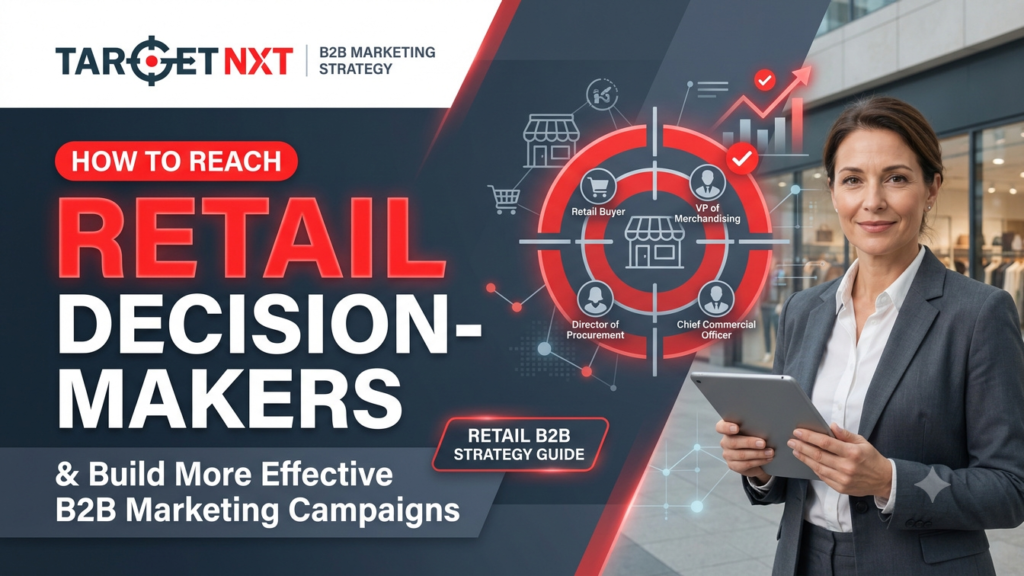
The retail industry is made up of businesses with different operating models, product categories, store formats, and customer segments. From independent retailers and specialty stores to large multi-location retail chains, each organization has its own operational priorities and purchasing requirements.
For companies selling retail technology, inventory management solutions, payment systems, logistics services, or business consulting, reaching the right decision-makers is an important part of developing successful B2B relationships.
However, identifying relevant businesses is only one part of the process. Marketing and sales teams must also understand who influences purchasing decisions, how retail organizations operate, and what information helps them develop relevant outreach campaigns.
Understanding the Importance of Retail Decision-Makers
Retail organizations involve several professionals responsible for different business functions. Store managers, regional managers, operations directors, purchasing managers, and senior executives may all participate in evaluating business solutions.
Their responsibilities vary depending on the size and structure of the organization.
For example:
- Store managers oversee daily store operations, employee performance, customer service, and inventory availability.
- Regional managers coordinate operations across multiple store locations and monitor regional performance.
- Retail operations directors develop operational strategies and improve processes across retail networks.
- Purchasing managers evaluate suppliers, negotiate commercial terms, and manage procurement activities.
- Marketing managers coordinate promotional campaigns, customer engagement, and brand communication.
Understanding these roles helps B2B marketers identify the professionals most relevant to their products and services.
Why Store Managers Matter in Retail B2B Outreach
Store managers play an important role in maintaining operational efficiency at the individual store level. They regularly deal with staffing requirements, inventory issues, customer experience, merchandising, and sales performance.
Businesses offering workforce management software, point-of-sale solutions, retail security systems, and inventory technologies may find store-level managers relevant to their outreach strategies.
A well-organized store managers email list can help sales teams identify professionals associated with retail locations and develop more focused communication campaigns.
However, store managers are not always the final purchasing authorities. In larger retail organizations, technology investments and supplier agreements may require approval from regional or corporate management.
Therefore, businesses should consider the organizational structure before selecting their target audience.
How to Identify the Right Retail Prospects
Building a relevant prospect database requires more than collecting business email addresses. Companies should evaluate several attributes to understand whether an organization matches their ideal customer profile.
Here are some useful segmentation criteria:
1. Retail business category
Identify the specific retail segment that matches your offering. Potential categories include grocery stores, clothing retailers, electronics stores, furniture businesses, department stores, and specialty retailers.
2. Company size
Employee count and organizational scale can help distinguish independent retailers from regional and national retail chains.
3. Geographic location
Location-based segmentation allows businesses to organize prospects by country, state, region, or city. This is particularly useful for companies running territory-specific campaigns.
4. Job title and responsibility
Focus on professionals whose responsibilities align with your solution. For example, inventory software providers may prioritize inventory managers and retail operations professionals.
5. Business requirements
Consider the operational challenges your product addresses. A company providing retail analytics software may prioritize organizations interested in improving sales visibility and inventory planning.
These criteria help marketing teams develop more meaningful prospect segments.
Using Retail Contact Data for Targeted Marketing
A structured retail contact list can support several B2B marketing activities when the information is accurate, relevant, and appropriately sourced.
For example, a company offering payment processing solutions may focus on retailers with multiple store locations. A logistics technology provider may prioritize businesses with complex distribution requirements.
Similarly, suppliers of workforce management platforms may approach retail organizations where employee scheduling and labor planning are important operational considerations.
A retail industry email list can help businesses organize potential prospects based on professional roles and company characteristics.
The objective should not be to contact the largest possible number of people. Instead, sales teams should identify organizations and professionals with a reasonable connection to their products or services.
Improving Campaign Performance Through Audience Segmentation
Sending identical messages to every retail professional can reduce campaign relevance. Different decision-makers have different priorities, so communication should reflect their responsibilities.
Consider the following examples:
- Store managers: Focus on daily operations, employee scheduling, inventory availability, and customer service.
- Regional managers: Discuss multi-location performance, operational consistency, and reporting.
- Procurement professionals: Highlight supplier evaluation, purchasing efficiency, and cost management.
- Retail executives: Emphasize business growth, operational visibility, and strategic improvements.
This approach makes outreach more relevant and gives recipients a clearer reason to engage.
Businesses using retail industry mailing lists should also maintain accurate records, remove invalid addresses, respect unsubscribe requests, and comply with applicable email marketing and privacy regulations.
Building a Sustainable Retail Prospecting Strategy
Effective B2B prospecting requires continuous research and database maintenance. Retail organizations change their management structures, expand into new markets, and adopt different technologies over time.
Sales and marketing teams should regularly review their prospect information and prioritize the following activities:
- Verify professional contact information before launching campaigns.
- Review company details and retail business categories.
- Update job titles and organizational information.
- Segment prospects according to business requirements.
- Monitor engagement and adjust messaging based on campaign performance.
A reliable data management process helps businesses avoid outdated records and maintain better communication with their target audiences.
Conclusion
Reaching retail decision-makers requires a clear understanding of retail business structures, professional responsibilities, and purchasing priorities.
By identifying relevant job titles, segmenting companies according to their characteristics, and maintaining accurate contact information, B2B businesses can develop more focused prospecting strategies.
Rather than relying on broad, untargeted campaigns, companies should build meaningful connections with retail professionals whose responsibilities align with their solutions.
Resource Box
TargetNXT provides B2B contact data, company intelligence, and professional audience information to support targeted business prospecting. Businesses looking to connect with retail professionals can explore the Retail Managers Email List to learn more about relevant retail management contact data.