

Every pitch for AI marketing software eventually reaches the same slide. It says the tool saves your team ten hours a week, and it usually has a small clock icon on it.
I have sat through that slide many times, and I have also bought some of those tools. The hours are usually real. The slide is still the weakest argument in the deck, because saved time is not a business outcome. It is a raw material, and most teams waste it.
Where the reclaimed hours actually go
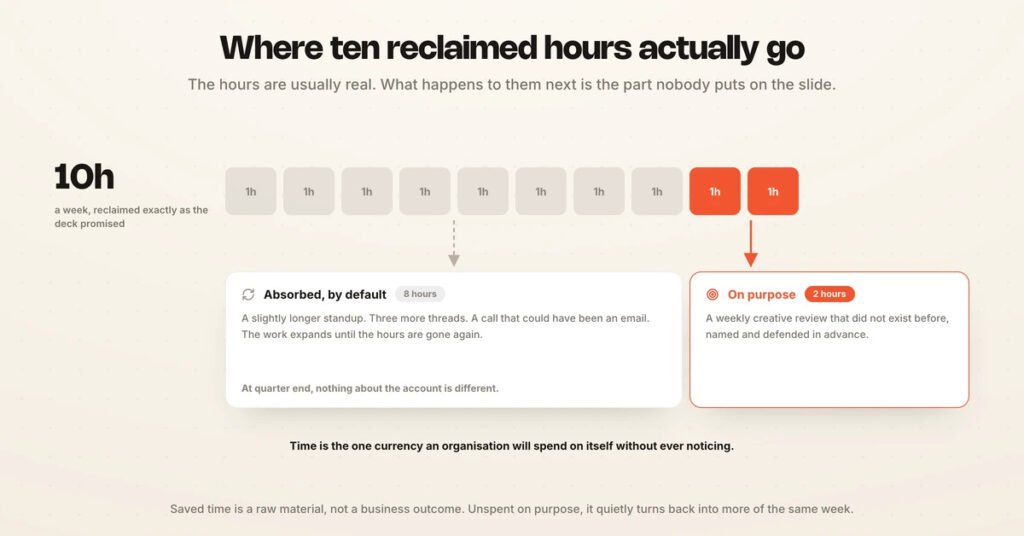
Here is the uncomfortable thing nobody puts on the slide. When you hand a team ten hours back, the default is that the ten hours disappear.
They get absorbed. The buyer who no longer spends Monday morning assembling a report now spends Monday morning in a slightly longer standup, answering a few more Slack threads, taking a call that could have been an email. The work expands. At the end of the quarter, the tool has genuinely saved the time it promised, and absolutely nothing about the account is different.
If you have ever tried to point at the ROI of a tool everyone likes and found yourself unable to name a single decision it changed, this is why. The value was delivered as time, and time is the one currency an organisation will spend on itself without noticing.

The change worth paying for
The interesting change is not that the work takes less time. It is that questions that were never worth asking become worth asking, and the answers reach the moment where a decision is actually being made.
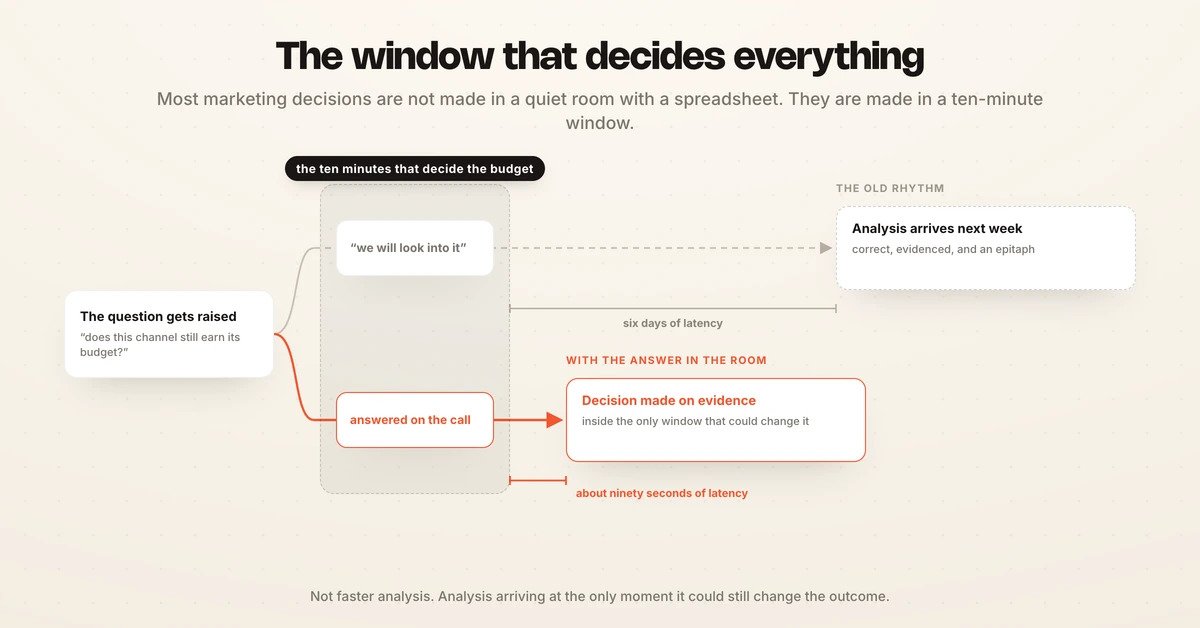
That second half matters more than it sounds. Most marketing decisions are not made in a quiet room with a spreadsheet. They are made in a meeting, in a thread, in a ten-minute window before a budget has to be committed. In the old rhythm, a question raised in that window could not be answered inside it, so the decision got made on whoever had the strongest instinct, and the analysis arrived a week later as an epitaph.
The first time I watched that invert, we were on a call debating whether to keep funding a channel. Someone asked how the creatives there compared with the ones carrying our best market. Instead of promising to look into it, I asked Hawky’s copilot while the call continued, and read out the answer with the rows behind it about a minute later. The decision was made in the meeting, with evidence, rather than a week later by memory.
Nothing about that was faster analysis. It was analysis arriving at the only moment it could change the outcome.

Turning saved time into something that shows up
Since the hours evaporate by default, the teams that get value from these tools do something deliberate with them. Three things work, in my experience.
Name what the time is for before you buy. “We will use the reclaimed Monday to run a proper weekly creative review” is a commitment you can check. “It will free the team up” is a wish, and wishes lose to inbound requests every time.
Move the questions into the rooms where decisions happen. The value of an instant answer is almost entirely a function of whether it arrives before the choice is made. If your analysis still gets presented after the fact, you have bought speed and kept the old rhythm.
And raise the standard rather than the volume. The wrong reaction to cheaper analysis is doing the same work faster. The right one is refusing to accept the answers you used to accept: “revenue is down” becomes “which market, which creative, since when, compared with what.”
The honest counterargument
There are cases where saved time is genuinely the whole point, and I do not want to pretend otherwise. A two-person team drowning in reporting does not need a philosophy about decision latency. They need their evenings back, and a tool that gives them that has earned its money on the spot.
But those teams should know what they bought: relief, not leverage. Relief is valuable and it is finite. Leverage is what happens when the reclaimed hours get pointed at better questions, and that only happens on purpose.
Closing Thoughts: a better slide
If I were building that pitch deck, I would replace the clock icon with a decision.
Not “saves ten hours a week” but “the budget call you would have made on instinct last Tuesday gets made on evidence instead.” That is harder to put a number against, which is exactly why it is the honest claim, and why the tools worth buying should be judged on it.
Time saved is easy to measure and easy to lose. Decisions changed are hard to measure and impossible to lose, because they are already in the account, compounding.