
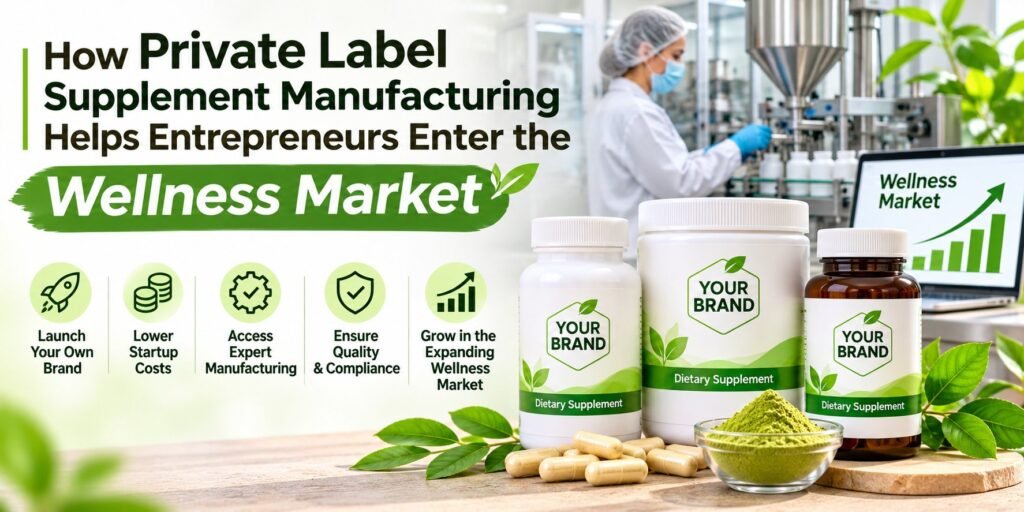
The wellness market offers opportunities for entrepreneurs who want to build brands around nutrition, convenience, and healthier routines. However, launching a supplement business from scratch can be expensive and complicated. Developing recipes, sourcing ingredients, purchasing equipment, and managing production all demand knowledge. Private label supplement manufacturing provides a practical alternative. By partnering with an experienced manufacturer, entrepreneurs can bring products to market without operating their own factory. This approach allows founders to focus on branding, customer relationships, and growth while production teams handle the technical work.
What Is Private Label Supplement Manufacturing?
Private label manufacturing allows businesses to sell supplements under their own brand while a manufacturing partner produces them. Depending on the agreement, entrepreneurs may select an existing formula, adjust ingredients, or request a completely new product. Manufacturers can assist with ingredient sourcing, production, packaging, and documentation. This arrangement reduces the operational burden on startups and established businesses exploring new categories. Rather than investing heavily in machinery and facilities, founders can direct more resources toward researching customers and creating a clear market position.
Lower Startup Costs and Faster Launches
Building an independent production facility requires significant capital, trained employees, and ongoing maintenance. Private label partners already have production systems and experienced teams in place. Entrepreneurs can often begin with smaller orders, although minimum quantities vary by manufacturer and product format. Ready to use formulas may shorten development timelines compared with designing everything from the beginning. Faster launches help businesses test demand before committing to inventories. Still, founders should account for samples, laboratory testing, design, shipping, marketing, and regulatory expenses when preparing realistic budgets.
Multiple Product Formats for Different Customers
A wellness brand needs products that fit its audience’s preferences. Capsules manufacturing remains popular because capsules are portable, easy to store, and convenient for customers who prefer familiar supplement formats. Gummy manufacturing offers a different experience, appealing to people who value taste and chewable products. However, gummies require attention to stability, sugar content, and ingredient compatibility.
Tea bag manufacturing can support brands focused on soothing rituals, botanical blends, or daily beverage routines. Powder manufacturing suits products intended for mixing into water, smoothies, or other drinks. Each format offers possibilities for serving sizes, packaging, shelf life, and customer experience. Choosing wisely means understanding how consumers plan to use the product rather than simply following trends.
Custom Formulation Creates Brand Differentiation
In a crowded category, offering the same product as everyone else can make differentiation difficult. Custom formulation gives entrepreneurs the opportunity to develop products around specific customer needs, ingredient preferences, and brand values. A manufacturer may help evaluate ingredient compatibility, dosage feasibility, taste, texture, and manufacturing constraints. Founders can explore options such as plant based ingredients or formulas without selected allergens, provided the final product meets applicable labeling requirements.
Customization is not automatically the best starting point for every company. Unique formulas may involve additional research, testing, minimum order quantities, and development time. The right choice depends on budget, positioning, and evidence of customer demand.
Quality and Compliance Build Customer Trust
Trust matters when products are intended for consumption. A responsible manufacturing partner should have documented quality systems, reliable ingredient suppliers, traceability procedures, and appropriate testing practices. Entrepreneurs should ask about certificates of analysis, contaminant screening, batch records, and the handling of quality complaints. They should also confirm which manufacturing standards and regulations apply in the markets where products will be sold.
Packaging and marketing claims deserve equal attention. Labels should accurately describe ingredients and serving information, while promotional materials must avoid unsupported promises. Manufacturers can provide useful documentation, but brand owners remain responsible for understanding their legal obligations and reviewing claims with qualified professionals.
Branding and Packaging Strengthen Market Identity
Manufacturing a reliable product is only part of building a successful wellness company. Packaging communicates the brand’s purpose before a customer tries the supplement. Clear names, readable labels, thoughtful colors, and practical containers can help products stand out. Entrepreneurs should also consider shipping durability, accessibility, disposal options, and protection against moisture or light.
A consistent brand identity across the website, product packaging, and customer communications makes the business easier to recognize. Rather than relying on exaggerated results, effective messaging explains who the product is for, how it fits into a routine, and what makes its formulation distinctive.
Focus More Energy on Marketing and Sales
Outsourcing production gives entrepreneurs more time to develop the business side of their brand. This includes researching customer questions, creating educational content, planning retail partnerships, and improving the online shopping experience. Useful blog articles, transparent ingredient explanations, and responsive customer service can all support credibility.
Customer feedback also becomes a valuable planning tool. Reviews, repeat orders, support questions, and product returns may reveal opportunities to adjust flavor, packaging, instructions, or product selection. Successful brands treat these signals as evidence for decisions, not as guarantees that every new product will succeed.
How to Choose the Right Manufacturing Partner
Selecting a partner requires more than comparing quotations. Entrepreneurs should examine manufacturing experience, product capabilities, communication practices, lead times, testing options, and willingness to share relevant documentation. Requesting samples helps teams evaluate quality and customer experience before ordering inventory. Written agreements should clarify formula ownership, confidentiality, payment schedules, minimum orders, change controls, and responsibilities if a batch fails specifications.
Some entrepreneurs searching for private label supplemen manufacturing prioritize the lowest unit cost. A better evaluation considers total landed cost, consistency, service, regulatory readiness, and the ability to support growth.
A Practical Path into the Wellness Market
Private label manufacturing can turn a promising wellness idea into a tangible product without requiring entrepreneurs to become factory operators. The model combines access to specialized production capabilities with flexibility in branding, formats, and product development. Whether a business chooses capsules, gummies, teas, or powders, long term success depends on thoughtful positioning, verified quality, compliant communication, and genuine customer value. Entrepreneurs who start with a clearly defined audience, test assumptions, and choose trustworthy partners are better prepared to build sustainable wellness brands.