
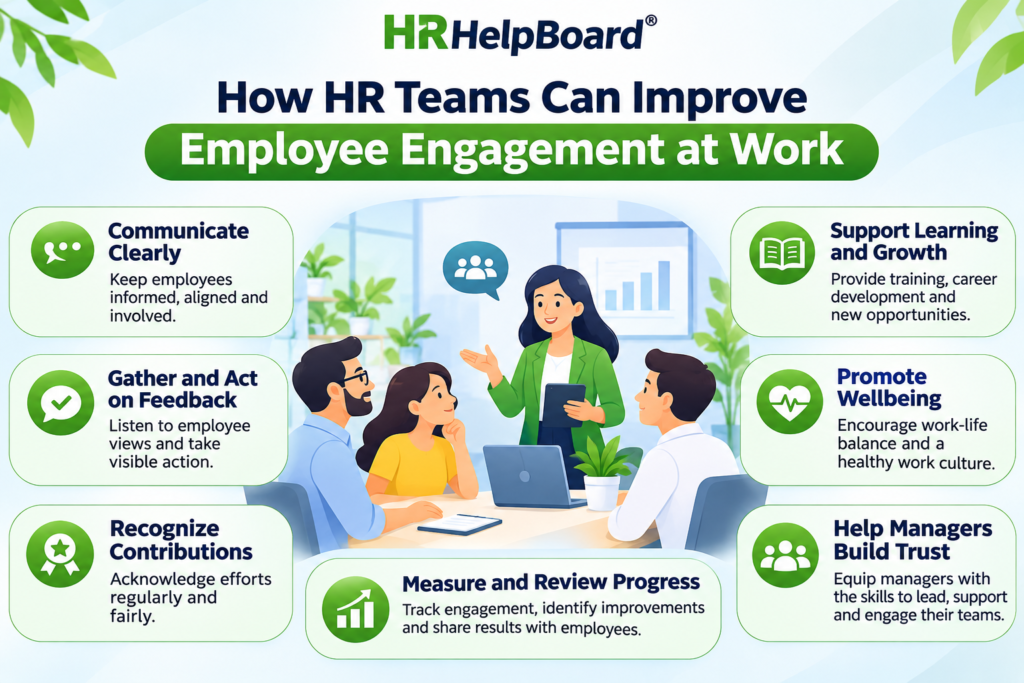
Employee engagement reflects how connected, motivated, and committed employees feel toward their work and organization. Engaged employees are more likely to contribute ideas, collaborate with colleagues, and understand how their work supports business goals.
HR teams can help strengthen engagement by creating a workplace where employees feel heard, supported, recognized, and able to grow.
1. Communicate Clearly and Consistently
Employees need to understand organizational goals, workplace expectations, and changes that affect their roles. HR teams can support clear communication through regular updates, manager briefings, employee meetings, and accessible policy information.
Communication should also allow employees to ask questions and share concerns rather than functioning only as a one-way announcement.
2. Gather and Act on Employee Feedback
Employee surveys, pulse checks, one-to-one conversations, and feedback channels can help HR teams understand workplace experiences.
Collecting feedback is only the first step. Employees should also hear what the organization learned and what actions will follow. When concerns cannot be addressed immediately, explain why and provide realistic next steps.
3. Recognize Employee Contributions
Recognition helps employees understand that their work is valued. It can include a manager’s personal appreciation, peer recognition, acknowledgement of team achievements, or opportunities to share successful work.
Recognition should be timely, specific, and fair. Avoid relying only on highly visible achievements; consistent contributions and collaborative behavior also deserve acknowledgement.
4. Support Learning and Career Development
Employees are more likely to remain engaged when they can see opportunities to develop their skills and progress in their careers.
HR teams can support development through training, mentoring, job shadowing, internal mobility, and regular career conversations. Managers should help employees identify realistic goals and connect them with relevant learning opportunities.
5. Promote Wellbeing and Work-Life Balance
Excessive workloads, unclear priorities, and constant after-hours communication can undermine engagement.
Organizations can support wellbeing by reviewing workload expectations, encouraging employees to take leave, providing flexibility where possible, and helping managers identify signs of sustained work pressure.
Wellbeing initiatives are most effective when they are supported by everyday management practices.
6. Help Managers Build Trust
Managers strongly influence employees’ daily work experiences. HR teams can provide manager training on communication, feedback, inclusion, conflict resolution, and supportive leadership.
Employees should receive clear expectations, constructive feedback, and opportunities to discuss challenges. Consistent and respectful management helps create a workplace where people feel safe contributing ideas.
7. Measure Engagement and Review Progress
HR teams can track engagement through survey results, participation, retention patterns, internal mobility, and qualitative feedback.
Metrics should be interpreted in context rather than used as isolated scores. For example, survey participation may be affected by trust, timing, or survey fatigue.
Review results over time, identify areas that need attention, and communicate progress to employees.
Conclusion
Improving employee engagement requires ongoing attention to communication, recognition, development, wellbeing, and leadership. HR teams can make meaningful progress by listening to employees, taking practical action, and reviewing whether those actions improve workplace experiences.
Organizations can also use HR resources and employee communication templates from HRHelpBoard to support consistent workplace practices.