
Underground installations are a regular part of agriculture, construction, landscaping, telecom work, and utility maintenance. Water pipes, irrigation lines, electrical conduits, communication cables, drainage pipes, and earthing connections all need properly prepared channels below ground level.
For many years, these channels were created mainly through manual digging. While manual work can be suitable for very small jobs, it becomes time-consuming when the trench must follow a longer route or maintain a consistent depth. Large excavators can speed up excavation, but they may be difficult to use in narrow locations, gardens, farms, pathways, and sites with restricted access.
This is where walk-behind trenching equipment becomes useful.
Why Accurate Trenches Matter
A trench is not simply a hole in the ground. Its width, depth, direction, and cleanliness can affect the quality of the complete installation. Pipes and cables need enough protection below the surface, while the trench should not be wider than necessary.
An uneven trench may create extra work during pipe laying, cable positioning, refilling, and surface restoration. By comparison, a narrow and consistent trench can help the installation team work more efficiently. It also reduces unnecessary disturbance to the nearby soil, plants, paving, or work area.
For projects involving planned utility routes, controlled trenching can make a significant difference in the speed and organisation of the job.
Benefits of a Walk-Behind Trencher
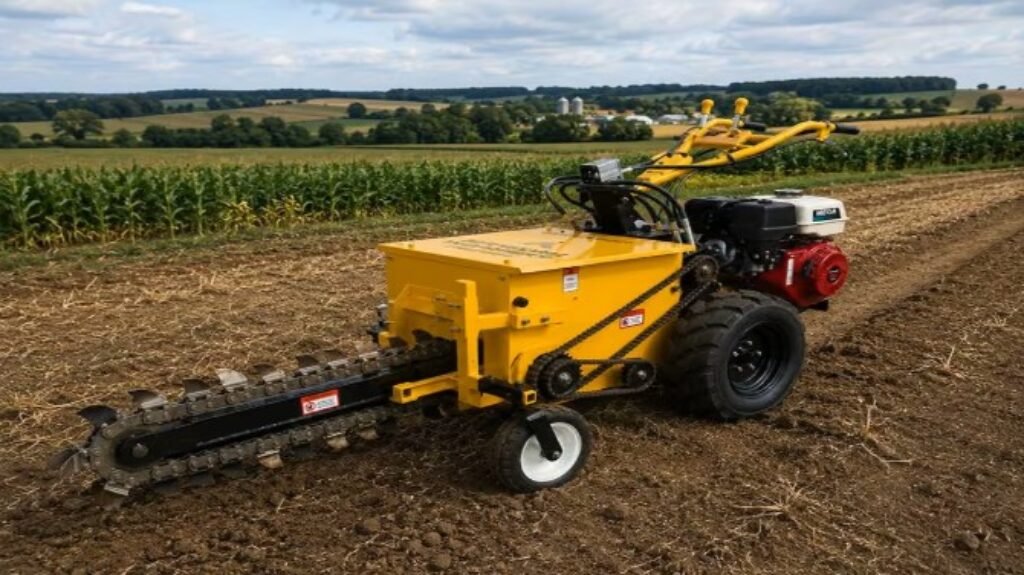
A walk-behind trencher is a compact machine that an operator guides from behind. It is designed for jobs that need mobility, precise trenching, and easier operation in limited spaces.
The key benefit is that it can create a defined trench without requiring a large machine to enter the site. This makes it particularly helpful for areas such as:
-
Agricultural fields requiring irrigation or water-distribution lines
-
Gardens and landscaped properties needing drainage channels
-
Construction sites with underground electrical or plumbing work
-
Telecom projects involving fibre-optic cable routes
-
Solar projects that require protected cable trenches
-
Residential sites with limited working space
-
Utility repair work near existing structures or pathways
A compact machine can also reduce the physical burden on workers compared with extended manual digging. This may help project teams complete repetitive trenching tasks more consistently.
Supporting Agricultural Irrigation Work
Reliable irrigation is important for modern farming, especially when water needs to be delivered efficiently across crops or plantations. Drip irrigation and sprinkler systems often require underground or partially buried lines to transport water to the required areas.
Creating these routes manually can take considerable effort, particularly on larger farms. A mini trencher can support the installation process by creating channels for irrigation pipelines with better consistency. After the pipe is placed, the trench can be backfilled, helping protect the line while maintaining a cleaner field layout.
The same approach can be applied to small farm drainage systems. Proper drainage channels help move excess water away from selected areas, supporting better soil management and reducing waterlogging risks.
Useful for Cables and Utility Lines
Compact trenchers are also relevant for electrical and communication infrastructure. Underground cable installation is common in residential developments, commercial properties, industrial sites, solar plants, and telecom networks.
Instead of leaving cables exposed on the surface, they can be placed in a planned trench for improved safety and site appearance. Narrow trenching is useful where the work requires a controlled path for electrical conduits, telecom ducts, fibre cables, or earthing lines.
For solar installations, cable trenches are often necessary to connect panels, inverters, control systems, and other components. A portable trenching machine can be especially useful when work must be completed between equipment rows or across areas where larger excavation machines cannot move easily.
Choosing Equipment for the Job
Before selecting a trenching machine, users should consider several project requirements. Soil condition is important because soft soil, dry soil, compact ground, and rocky surfaces may require different operating approaches. The required trench depth and width should also match the pipe, cable, or utility line being installed.
Other factors include the total trench length, available working space, operator experience, and the need to move the equipment between multiple locations. Choosing a machine that suits the actual site conditions can support better performance and help avoid unnecessary delays.
For compact utility and agricultural trenching, the Dhruva 100 is a self-propelled walk-behind mini trencher designed for tasks such as irrigation, pipeline routes, cable laying, drainage, landscaping, and utility work. It offers adjustable trench width options and can create trenches up to 500 mm deep, depending on the application requirements.
Final Thoughts
As more projects require organised underground installations, compact trenching equipment is becoming a practical choice for contractors, farmers, maintenance teams, and utility professionals. It helps create cleaner channels, reduces the reliance on manual digging, and provides a more manageable solution for sites with limited space.
A walk-behind trencher is not intended to replace heavy excavation equipment on every large project. However, for smaller and precision-focused trenching jobs, it can offer a useful balance of mobility, control, and productivity.