
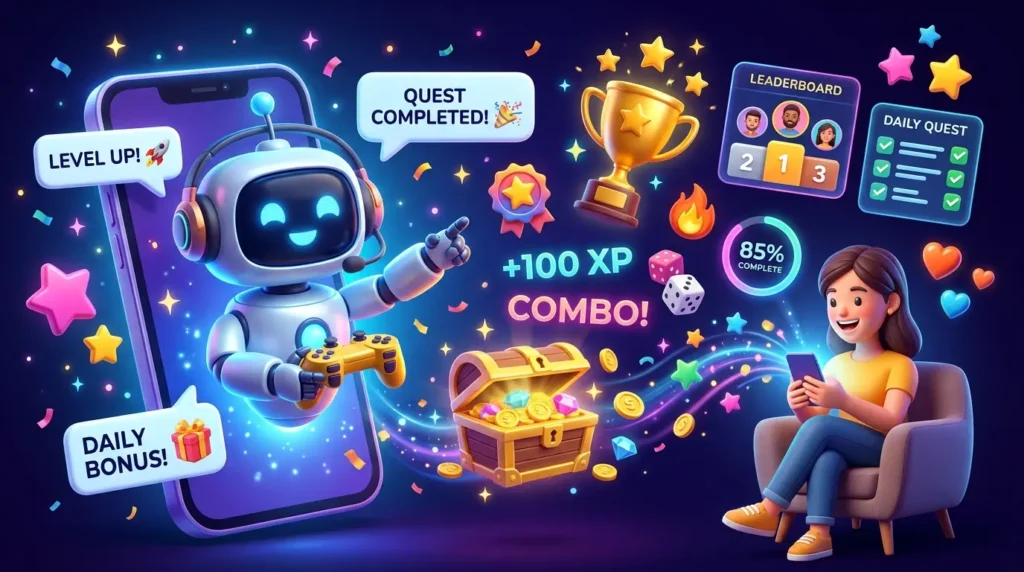
Businesses are constantly looking for ways to make digital interactions more interesting and encourage customers to stay connected with their brands. Chatbot gamification provides an effective approach by introducing game-inspired features into automated conversations. Elements such as points, badges, rewards, challenges, and progress tracking can transform ordinary chatbot interactions into experiences that motivate users to participate.
A traditional chatbot generally focuses on answering questions, sharing information, or guiding visitors through predefined processes. A gamified chatbot adds another layer by giving users activities to complete and achievements to unlock. This can make product discovery, customer feedback, promotional campaigns, and other interactions feel more rewarding.
When designed around customer expectations, gamification can support engagement, repeat participation, brand loyalty, and conversion objectives. However, businesses need to select appropriate mechanics and ensure that the experience remains simple, useful, and enjoyable.
Understanding Gamification in Chatbot Experiences
Gamification in chatbot experiences means applying selected game-design principles to conversational interactions. Instead of treating every conversation as a basic exchange of messages, businesses introduce goals, progress indicators, rewards, and recognition to encourage participation.
For example, an ecommerce chatbot might award points when a visitor completes a product quiz or explores a particular collection. An educational chatbot could recognize students for completing learning activities, while a customer service chatbot might use progress indicators to guide users through a multi-step process.
The central idea is to make participation more interactive without distracting users from their original purpose. A well-designed system provides clear instructions, immediate feedback, and rewards that have genuine value.
Game mechanics can also encourage users to complete activities they might otherwise ignore. A short challenge or achievement milestone may make a feedback request or product discovery process feel less repetitive.
Why Businesses Should Gamify Their Chatbots
Creating More Interactive Conversations
One of the biggest advantages of gamification is that it encourages active participation. Instead of simply reading chatbot responses, users can answer questions, complete challenges, collect points, and work toward specific achievements.
These activities can make a conversation more memorable. For example, a brand could introduce a short quiz that helps customers discover suitable products while awarding points for completing the experience.
The important consideration is relevance. Game elements should improve the interaction rather than add unnecessary steps to a customer’s journey.
Encouraging Repeat Participation
Customers may have stronger reasons to revisit a chatbot when it offers ongoing activities and visible progress. Reward collections, recurring challenges, and achievement levels can encourage users to continue participating over time.
Businesses can connect these features with existing loyalty programs to provide a more consistent experience. Customers might earn rewards through selected interactions and redeem eligible benefits through the company’s existing system.
This approach can help maintain interest, especially when the activities remain varied and the rewards are achievable.
Supporting Conversions and Desired Actions
Gamification can guide users toward specific actions by introducing appropriate incentives. A chatbot might offer points for completing a registration, exploring a product category, or participating in a promotional activity.
Interactive quizzes can also help customers understand which products or services match their preferences. This can make the decision-making process more engaging while helping businesses understand customer interests.
Rewards should be presented transparently. Users need to understand the conditions associated with an offer and should not feel pressured into taking actions that do not suit their needs.
Strengthening Brand Perception
Positive digital experiences can influence how customers view a business. A chatbot that communicates clearly and offers enjoyable activities may create a more memorable brand interaction.
Consistent design, appropriate rewards, and helpful communication can make the experience feel connected to the company’s identity.
Gamification should not replace good customer service. Instead, it should complement useful information and reliable support, creating a more enjoyable way for customers to interact with the brand.
Collecting Useful Customer Insights
Interactive chatbot activities can help businesses understand customer preferences and behavior. Quizzes, optional surveys, and product-related questions may reveal what users are interested in and which topics require additional explanation.
Businesses can also examine which activities receive the most participation and where users tend to leave a conversation.
These insights can support improvements to marketing communication, product recommendations, and customer experience. Information collection should remain transparent, and users should know why requested details are necessary.
Game Mechanics That Can Improve Chatbot Engagement
Points and Reward Systems
Points provide a straightforward way to recognize user participation. Businesses can assign points to selected actions, such as completing a quiz, answering questions, submitting feedback, or participating in a campaign.
Accumulated points may unlock discounts, special resources, or other benefits. A visible points balance helps users understand their progress and gives them a reason to continue participating.
The earning structure should remain simple. If users cannot understand how points are awarded or what they can receive in return, the system may lose its appeal.
Badges and Achievements
Badges recognize specific milestones and provide users with a visible record of their participation. A chatbot might award a badge for completing an introductory activity, reaching a certain number of challenges, or finishing a learning module.
Achievements can provide recognition without requiring every interaction to include a financial reward. They are particularly useful when users value progress and accomplishment.
Businesses should connect badges with meaningful activities rather than distributing them randomly. This makes each achievement more relevant to the user.
Leaderboards and Social Competition
Leaderboards introduce a competitive element by displaying rankings based on points, completed activities, or other participation measures. They may be useful for campaigns where users enjoy friendly competition.
For example, a weekly challenge could recognize participants who complete the highest number of activities. A limited competition period can create a clear beginning and ending, making the experience easier to follow.
Not every audience enjoys public rankings. Businesses should consider privacy preferences and offer alternative ways to track personal progress without displaying individual performance publicly.
Challenges and Multi-Step Quests
Challenges give users specific activities to complete, while quests organize several tasks into a larger journey. These mechanics can be useful for product education, onboarding, promotional campaigns, and learning experiences.
A chatbot might guide a new customer through a sequence of product-related questions, offering feedback after each stage. Completing the full activity could unlock an achievement or another benefit.
Each step should have a clear purpose. Long or complicated challenges can discourage participation, so businesses should keep the process manageable.
Progress Bars and Completion Indicators
Progress indicators show users how much of an activity they have completed. They are particularly helpful when a chatbot requires several steps to finish a task.
For example, a progress bar can show that a customer has completed three out of five questions in a product recommendation activity. This makes the remaining work clear and helps users understand what to expect.
Visual progress should be accurate and easy to interpret. It should support navigation rather than create pressure to continue an activity that users no longer want to complete.
Planning a Gamified Chatbot Strategy
Establish the Purpose of the Experience
Businesses should begin by identifying the actions they want to encourage. These might include product exploration, newsletter subscriptions, customer feedback, learning activities, or repeat participation.
The objective determines which game mechanics are appropriate. A loyalty-focused chatbot may benefit from points and rewards, while an educational assistant may use quizzes and achievement badges.
Clear objectives also help businesses choose suitable performance indicators and evaluate whether the experience is delivering meaningful results.
Select Mechanics That Match the Audience
Different audiences may respond to different forms of motivation. Some users enjoy collecting achievements, while others prefer practical rewards or personalized activities.
A professional audience may value useful resources and progress tracking more than competitive leaderboards. Retail customers may respond positively to product quizzes and relevant promotional benefits.
Businesses should use audience research and feedback to guide these decisions instead of assuming that every user enjoys the same game features.
Build Natural Conversation Flows
Game mechanics should fit naturally into the chatbot’s communication process. Users should understand why an activity is being offered and what they need to do next.
For example, a product quiz can begin with a simple explanation of its purpose before asking the first question. After each response, the chatbot can provide feedback and display progress.
Clear transitions are important because a confusing conversation can reduce participation even when the reward is attractive.
Create a Balanced Reward Structure
The value of a reward should be appropriate to the effort required. If an activity takes too long but offers little benefit, users may lose interest. On the other hand, rewards that are too easy to obtain may have limited perceived value.
A balanced structure can combine smaller achievements with larger milestones. This gives users opportunities to experience progress while maintaining interest in longer activities.
Businesses should also explain eligibility requirements, expiration periods, and redemption conditions.
Connect the Chatbot With Business Platforms
Integration can make gamified interactions easier to manage. A chatbot may connect with customer relationship management systems, ecommerce platforms, loyalty programs, and analytics tools.
These connections can help maintain accurate point balances, record completed activities, and associate eligible interactions with customer profiles.
Businesses should review data permissions and security requirements before connecting systems. Only necessary information should be shared between platforms.
Test and Refine the Experience
Testing allows businesses to compare different reward structures, challenge formats, and conversation styles. They can examine which features encourage completion and which activities cause users to abandon the interaction.
Customer feedback can reveal problems that performance data alone may not explain. Regular improvements help keep the chatbot relevant as audience preferences and business objectives change.
Best Practices for an Effective Gamified Chatbot
Keep the Experience Easy to Understand
Users should be able to understand how the chatbot works without reading lengthy instructions. Explain the rules, available activities, and reward conditions in straightforward language.
Avoid introducing too many mechanics at once. Starting with a simple points system or progress indicator can make it easier to understand how customers respond before adding more features.
Personalize Activities Responsibly
Personalization can make challenges and rewards more relevant. A chatbot may use customer-selected interests or previous interactions to suggest suitable activities.
However, businesses should avoid unnecessary data collection. Customers should have clear information about how their data is used and should not feel that personalization is intrusive.
Make Participation Accessible
Gamified chatbots should work smoothly across different devices and screen sizes. Instructions should be clear, interactive elements should be easy to use, and important information should not depend entirely on visual effects.
Businesses should also provide alternatives for people who prefer not to participate in competitive activities.
Communicate Rewards Transparently
The chatbot should explain how users earn points, unlock achievements, and redeem benefits. Any limitations or eligibility conditions should be communicated before customers participate.
Transparent reward rules help prevent misunderstandings and support trust.
Review Performance Regularly
A gamified chatbot needs ongoing evaluation. Businesses should examine engagement, completed activities, repeat participation, reward redemption, and conversion outcomes.
If a particular challenge receives little participation, the business can review its instructions, difficulty, and reward value. Regular analysis helps ensure that gamification continues to support the intended objectives.
Measuring the Success of Chatbot Gamification
Performance measurement should reflect the purpose of the chatbot. Engagement rate and completed activities can show whether users are participating, while return visits and retention measurements can help assess ongoing interest.
For marketing campaigns, businesses may examine qualified leads, registrations, completed purchases, and conversion rates. Reward redemption can also reveal whether users consider the benefits valuable.
Average session duration may provide additional context, but longer conversations do not automatically indicate a better experience. A chatbot that helps someone complete a task quickly may be more effective than one that creates unnecessary interaction.
Businesses should combine analytics with customer feedback to understand what users appreciate and where improvements are needed. This creates a more complete picture of the chatbot’s performance.
Connecting Gamification With Broader Chatbot Marketing
Gamification can become more valuable when it is part of a wider chatbot marketing strategy. Instead of operating as an isolated feature, interactive challenges and rewards can support product discovery, customer education, promotional communication, and loyalty activities.
Businesses can explore how AI Chatbot for Marketing supports automated communication, personalized interactions, and marketing activities. These capabilities can complement gamified experiences by helping organizations deliver relevant information during different stages of the customer journey.
Customers also interact with brands through multiple channels. A consistent experience across websites, messaging applications, and other communication platforms can make engagement easier to maintain. Exploring Omnichannel Chatbot Marketing can help businesses understand how conversational interactions can work together across different customer touchpoints.
The goal is to connect gamification with useful communication rather than adding game elements simply for entertainment.
Conclusion
Gamifying a chatbot can make digital communication more interactive by introducing points, rewards, badges, challenges, leaderboards, and progress indicators. These mechanics can encourage participation, support repeat engagement, improve product discovery, and create more memorable customer experiences.
Successful implementation starts with clear objectives and an understanding of the target audience. Businesses should select appropriate game features, design natural conversation flows, provide meaningful rewards, and protect customer information. Regular testing and performance analysis can then help refine the experience.
When game mechanics support genuine customer needs, a chatbot can become more than an automated communication channel. It can offer an engaging environment where users receive useful information, complete meaningful activities, and build stronger connections with a brand.
Frequently Asked Questions
1. What does it mean to gamify a chatbot?
Gamifying a chatbot means adding game-inspired features such as points, badges, challenges, rewards, and progress indicators to automated conversations to encourage participation.
2. What are the main benefits of chatbot gamification?
It can improve user engagement, encourage repeat interactions, support customer loyalty, make product discovery more interactive, and provide useful insights into customer behavior.
3. Which game mechanics should businesses introduce first?
Points systems and progress indicators are useful starting options because they are relatively easy to understand. Businesses can introduce badges, challenges, and leaderboards as the experience develops.
4. Can gamification help increase chatbot conversions?
Yes. Interactive quizzes, relevant rewards, and guided activities can encourage users to explore products or complete desired actions. Results depend on the audience and the quality of the experience.
5. How do badges improve chatbot experiences?
Badges recognize completed activities and milestones. They can give users a visible sense of achievement and encourage further participation.
6. Are leaderboards suitable for every chatbot?
No. Leaderboards are most suitable for audiences that enjoy friendly competition. Businesses should consider privacy preferences and provide noncompetitive alternatives.
7. How can businesses make chatbot rewards effective?
Rewards should be relevant, achievable, and proportionate to the effort required. Businesses should clearly explain how rewards are earned and redeemed.
8. What metrics help evaluate gamified chatbot performance?
Useful metrics include engagement rate, challenge completion, repeat visits, retention, reward redemption, conversion rate, and customer feedback.
9. Does chatbot gamification require advanced technology?
Not always. Basic points, badges, and progress tracking can be implemented with suitable chatbot platforms. More advanced experiences may require integrations with loyalty, ecommerce, CRM, or analytics systems.
10. How can businesses keep gamified chatbot experiences trustworthy?
They should communicate reward rules clearly, collect only necessary information, protect customer data, respect user preferences, and make participation voluntary.