
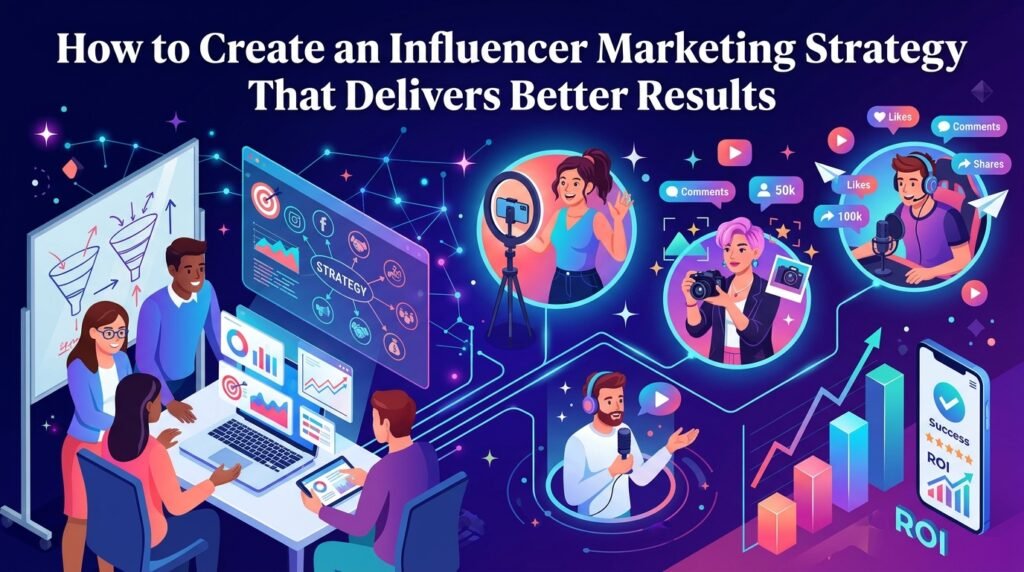
An effective influencer marketing strategy helps businesses connect with relevant audiences, build brand credibility, and achieve measurable marketing goals through creator partnerships. Rather than relying on occasional sponsored posts, brands need a structured approach that connects influencer selection, content development, campaign planning, and performance measurement.
Influencer marketing has become an important way for businesses to communicate with potential customers across platforms such as Instagram, TikTok, YouTube, and LinkedIn. Creators bring established communities, recognizable voices, and content styles that can make brand messages more relatable.
However, successful collaborations require more than choosing a popular influencer. Businesses must understand their target audience, establish clear objectives, select suitable creators, and develop content that feels natural to the platform. A thoughtful plan also helps marketing teams manage costs, maintain consistency, and evaluate campaign performance.
Learning how to create an influencer marketing strategy gives businesses a practical foundation for building partnerships that support both immediate campaign objectives and long-term brand development.
Understanding an Influencer Marketing Strategy
An influencer marketing strategy is a structured approach to working with content creators to promote a brand, product, or service. It defines the campaign’s purpose, identifies the intended audience, establishes creator selection criteria, and determines how promotional activities will be managed.
A well-developed strategy brings several elements together. The influencer should have an audience that matches the brand’s customer profile, while the creator’s communication style should complement the company’s identity. Content formats and publishing schedules should also suit the selected platform.
This alignment makes promotional messages feel more relevant and less like traditional advertising. Followers are often familiar with a creator’s opinions and content style, so a recommendation can introduce a brand through an established relationship.
A successful influencer marketing strategy for business growth goes beyond generating temporary exposure. It helps brands develop stronger audience connections, communicate their value, and create opportunities for meaningful engagement.
Why Businesses Need a Clear Influencer Marketing Plan
Influencer partnerships can generate attention, but without proper planning, businesses may struggle to understand whether that attention is producing useful outcomes.
One important advantage of a structured plan is improved audience targeting. Instead of promoting products to broad and unrelated groups, brands can collaborate with creators whose followers already show an interest in relevant subjects, industries, or lifestyles.
A clear strategy also improves campaign consistency. Marketing teams can establish expectations for messaging, content quality, publishing schedules, and creator responsibilities before the collaboration begins.
Another benefit is content development. Influencer partnerships can produce product demonstrations, reviews, tutorials, photographs, videos, and testimonials. With suitable permissions, some of these assets can support other marketing activities, including social media campaigns, advertisements, landing pages, and email communication.
Trust is equally important. Audiences may respond more positively when a product is introduced by someone whose content they already appreciate. By choosing relevant creators and allowing authentic communication, businesses can develop relationships that extend beyond a single promotional post.
Establishing Clear Influencer Marketing Goals
Every successful campaign begins with a defined objective. Businesses should decide what they expect from influencer partnerships before researching creators or discussing collaboration terms.
Brand awareness is a common objective, particularly when introducing a new business, product, or service. In this case, campaigns may focus on reach, impressions, video views, and audience relevance.
Other businesses may prioritize engagement. They want people to comment, share, save, discuss, or interact with promotional content. These campaigns often benefit from formats that encourage participation and conversation.
Conversion-focused campaigns have different requirements. Their purpose may involve generating website visits, product purchases, newsletter registrations, app installations, or qualified leads. Clear calls to action, trackable links, and relevant landing pages can help connect influencer content with these outcomes.
Businesses should identify one primary objective and, where appropriate, a secondary objective. This keeps the campaign focused and makes it easier to select creators, approve content, and evaluate results.
Understanding the Target Audience
Audience research is essential when developing an influencer marketing plan. Even a highly visible creator may be unsuitable if their followers do not match the people a business wants to reach.
Companies should consider customer interests, purchasing behavior, age groups, location, professional backgrounds, and common challenges. These details help identify the communities where potential customers are already active.
It is also useful to understand what information the audience needs before making a decision. Some people want detailed product explanations, while others look for demonstrations, comparisons, personal experiences, or recommendations.
This understanding should influence both creator selection and content development. A campaign becomes more relevant when its message addresses genuine audience interests instead of simply repeating promotional language.
Businesses should also consider the audience’s level of familiarity with the brand. People who have never encountered a product may need introductory content, whereas existing followers may respond better to detailed information or a specific offer.
Planning an Influencer Marketing Campaign
Influencer marketing campaign planning connects the campaign objective with the activities required to achieve it.
The first consideration is the customer journey. Businesses should determine what potential customers need to know before encountering the campaign, what information the influencer should communicate, and what action the audience should take afterward.
Platform selection is another important decision. Instagram may support visual storytelling and short-form video, while TikTok can provide opportunities for creative demonstrations and entertaining content. YouTube may be more appropriate for detailed reviews, tutorials, and longer product explanations. LinkedIn can be useful for professional audiences and industry-focused discussions.
Campaign duration should also be established. A product launch may require several publications within a short period, whereas an ongoing partnership may involve regular content over multiple weeks or months.
Before publication begins, businesses should confirm deliverables, content approval procedures, usage permissions, disclosure requirements, tracking methods, and reporting expectations. Clear preparation reduces confusion and helps creators understand what the brand expects.
Selecting Influencers Who Match the Brand
Choosing suitable creators is one of the most important parts of the process. Businesses should evaluate more than follower numbers when deciding who deserves consideration.
Audience compatibility should be the first priority. The creator’s followers should include people who are likely to have an interest in the product, service, or subject being promoted.
Content quality is another consideration. Businesses should review previous publications to understand the creator’s storytelling approach, visual standards, communication style, and ability to explain products naturally.
Engagement quality can provide additional insight. Meaningful comments, audience questions, shares, and consistent interaction may reveal a stronger relationship than follower numbers alone.
Professional reliability also matters. Creators should be able to communicate clearly, meet agreed deadlines, follow campaign requirements, and maintain consistent content standards.
Brands should look for genuine compatibility rather than forcing a partnership simply because a creator has a large audience. The strongest collaborations often involve people who already discuss subjects connected to the brand.
Developing Content That Connects With Audiences
Influencer content should be designed around the interests and expectations of the people who will see it. A message becomes more effective when it addresses a recognizable need, question, or problem.
Some audiences want to understand how a product works. Others may be more interested in convenience, affordability, quality, or its usefulness in everyday situations. Creators can present these benefits through demonstrations, personal experiences, reviews, or educational content.
The format should match the platform and the creator’s usual style. A detailed tutorial may be suitable for a longer video, while a short demonstration might work better as a Reel or TikTok publication.
Businesses should provide accurate product information and essential messaging guidelines without unnecessarily controlling every part of the creative process. Influencers understand how their audiences communicate, and allowing them reasonable creative freedom can make promotional content feel more natural.
The goal is to maintain brand consistency while preserving the creator’s recognizable voice.
Practical Steps for Creating an Influencer Marketing Strategy
Developing a repeatable process makes influencer campaigns easier to organize, manage, and improve.
Define the desired outcome
Start by identifying the business result the campaign should support. This could involve brand recognition, engagement, website traffic, lead generation, or product sales. The objective should guide every major campaign decision.
Research the intended audience
Understand the people the brand wants to reach, including their interests, preferences, challenges, and online behavior. This research helps identify relevant creators and suitable content topics.
Identify potential creators
Research influencers within the relevant industry or community. Compare their audience profiles, engagement, content quality, reputation, and communication style before preparing collaboration proposals.
Select suitable content formats
Determine whether the campaign requires product reviews, short videos, tutorials, Stories, live sessions, testimonials, or other formats. The selected content should support the campaign objective and platform requirements.
Establish the campaign schedule
Create a realistic timeline covering creator communication, content development, approval, publication, and performance review. A defined schedule helps maintain coordination between the brand and its partners.
Set performance indicators
Choose relevant metrics before the campaign starts. Depending on the objective, these may include reach, impressions, engagement, clicks, conversions, registrations, or revenue.
Evaluate and refine the approach
After the campaign, review the results and identify which creators, messages, and formats performed well. Brands can use the findings to improve their next influencer marketing strategy and make more informed partnership decisions.
Managing the Influencer Marketing Budget
Budget planning should take place before a business enters into creator agreements. The available investment needs to cover more than influencer compensation.
Businesses may need to pay for content production, product samples, shipping, campaign management, paid promotion, licensing, and performance tracking. These costs should be considered when comparing collaboration proposals.
The budget should reflect the campaign’s purpose. A broad awareness campaign may require several creators and multiple content pieces. A conversion-focused campaign may need fewer partnerships but more investment in tracking, landing pages, and promotional offers.
It is also useful to reserve some resources for testing. Businesses cannot always predict which creator or content format will produce the strongest results. A small testing allocation allows marketing teams to compare different approaches before expanding the campaign.
Companies with limited resources can still develop effective partnerships by focusing on relevant creators and clearly defined outcomes. A carefully selected collaboration can be more valuable than a larger campaign without a clear direction.
Building a Strategy for Small Businesses
Influencer marketing can provide small businesses with opportunities to reach established communities without depending entirely on expensive advertising.
Micro-influencers and nano-influencers may be suitable partners because they often focus on specific interests and maintain close connections with their followers. Their audiences can offer valuable opportunities for niche products, local services, and specialized businesses.
Smaller companies should begin with manageable collaborations. A focused campaign involving one product, a relevant creator, and a clear promotional objective can provide useful performance insights.
This approach also makes it easier to understand the practical requirements of influencer partnerships. Businesses can learn how to communicate with creators, prepare content, manage agreements, and track results before increasing campaign complexity.
Flexibility is another advantage for smaller organizations. They may be able to test different messages and adjust their approach without navigating extensive approval processes.
Developing Influencer Marketing for B2B Companies
Business-to-business influencer marketing requires a different communication approach because purchasing decisions often involve research, professional evaluation, and multiple stakeholders.
In this environment, creators may include industry specialists, consultants, analysts, educators, and experienced professionals. Their credibility and subject knowledge can help businesses explain complex products or services.
B2B collaborations may involve expert interviews, educational videos, webinars, industry discussions, product demonstrations, and professional opinions. Rather than focusing only on immediate purchases, these activities can help build awareness and support the buyer’s research process.
The campaign should reflect the different stages of the sales journey. Early-stage content can introduce an industry challenge, while more detailed material can explain possible solutions and demonstrate product value.
Selecting creators who understand the audience’s professional concerns is particularly important. Their ability to communicate relevant information can help a brand establish credibility within its industry.
Creating Promotional Content Without Losing Authenticity
Promotional content performs best when it feels consistent with the creator’s normal communication style. Audiences may become less interested when every collaboration appears overly scripted or disconnected from the influencer’s usual subjects.
Businesses should establish essential requirements, including accurate product details, brand guidelines, campaign messages, and appropriate advertising disclosures. However, creators should generally have room to present the information in a way that suits their audience.
A natural content structure might introduce a common problem, explain how the product or service addresses it, and share a relevant experience or demonstration. The creator can then guide interested viewers toward the next step through a suitable call to action.
Brands should also avoid exaggerated promises or unsupported claims. Honest communication helps protect audience trust and supports a more sustainable relationship between the creator and the business.
Measuring Influencer Campaign Performance
Campaign measurement helps businesses understand whether their strategy is producing the intended results. Without reliable tracking, it becomes difficult to identify successful partnerships or make informed decisions about future spending.
For awareness campaigns, useful indicators may include reach, impressions, video views, audience growth, and brand mentions. Engagement-focused campaigns can be evaluated through comments, shares, saves, interaction rates, and video completion.
Traffic and conversion campaigns require more specific tracking. Businesses can use UTM parameters, dedicated landing pages, referral links, discount codes, and conversion tracking to understand which creators generate valuable actions.
Quantitative information should be considered alongside audience feedback. Comments and questions can reveal customer concerns, product interests, and common objections that may not be visible through numerical metrics alone.
For a more detailed evaluation process, businesses can explore how to measure influencer marketing ROI. Regular performance reviews help identify opportunities to improve creator selection, messaging, and campaign allocation.
Common Influencer Marketing Strategy Mistakes
One frequent mistake is selecting influencers based only on follower count. A large audience does not automatically mean that a creator can reach the right customers or generate meaningful engagement.
Another problem is unclear campaign objectives. Without a defined purpose, businesses may struggle to determine whether a partnership has been successful. It can also lead to unsuitable creator selection and ineffective content decisions.
Overly restrictive creative instructions can weaken promotional content. When brands control every word or presentation detail, the creator’s usual personality may disappear from the final publication.
Poor communication is another challenge. Missing deadlines, unclear deliverables, and disagreements about content usage can create unnecessary problems during campaign execution.
Finally, influencer marketing should not be treated as a completely separate activity. Creator content can support other channels, including social media, paid advertising, email marketing, and search optimization. Connecting these activities can help businesses gain more value from their collaborations.
Building a Sustainable Influencer Marketing Program
Long-term success comes from treating influencer partnerships as an ongoing process of research, testing, evaluation, and improvement.
Businesses can begin by identifying creators whose audiences and content align with their objectives. Small campaigns then provide opportunities to evaluate communication, content quality, and performance before making larger commitments.
The next stage involves reviewing campaign data and identifying useful patterns. A particular content format may generate stronger engagement, while another creator may attract more qualified visitors. These findings can guide future decisions.
Successful partnerships can gradually be expanded through additional content, recurring collaborations, or broader distribution agreements. However, expansion should be based on actual performance and continued audience compatibility.
This process helps companies develop a more consistent influencer program without relying on assumptions or unnecessary spending. Over time, each campaign can provide information that improves the next one.
Conclusion
Learning how to create an influencer marketing strategy involves understanding the relationship between business objectives, audience interests, creator selection, content development, and campaign measurement.
A successful approach begins with clear goals and relevant audience research. Businesses then need to identify suitable influencers, agree on realistic deliverables, establish an appropriate budget, and create content that reflects both brand expectations and the creator’s authentic style.
Performance evaluation is equally important. By examining engagement, reach, website traffic, leads, and conversions according to campaign objectives, businesses can identify valuable partnerships and improve future activities.
Influencer marketing is most effective when creator relationships are built on relevance, communication, and shared expectations. With a consistent planning and evaluation process, brands can develop partnerships that strengthen audience trust, support business growth, and contribute to long-term marketing success.
Frequently Asked Questions About Influencer Marketing Strategy
1. What is the first step in creating an influencer marketing strategy?
The first step is defining the campaign objective. Businesses should decide whether they want to increase brand awareness, generate engagement, attract website visitors, collect leads, or drive sales before selecting creators.
2. How can a brand identify the right influencers?
Brands should evaluate audience relevance, engagement quality, content style, industry knowledge, professional reliability, and compatibility with their identity. Follower count should not be the only selection criterion.
3. Is influencer marketing suitable for small businesses?
Yes. Small businesses can collaborate with micro-influencers and niche creators to reach relevant communities. Focused campaigns with clear objectives can provide useful results without requiring a large marketing investment.
4. Which platforms are suitable for influencer marketing?
Instagram, TikTok, YouTube, and LinkedIn can all support influencer campaigns. The appropriate platform depends on the target audience, industry, content format, and campaign objective.
5. How much budget is required for an influencer campaign?
The required budget depends on creator fees, audience size, content deliverables, production requirements, campaign duration, and additional expenses. Businesses should allocate resources according to their goals and available funds.
6. Can B2B companies use influencer marketing?
Yes. B2B companies can work with industry experts, consultants, and professional creators to share educational content, explain solutions, and build credibility with business audiences.
7. How can businesses maintain authenticity in sponsored content?
Businesses can provide clear brand guidelines while allowing creators reasonable creative freedom. Content that matches the influencer’s usual style and provides relevant information is more likely to feel natural to followers.
8. What metrics should businesses track?
Relevant metrics may include reach, impressions, engagement, video views, website traffic, clicks, leads, conversions, and revenue. The selected indicators should match the campaign’s primary objective.
9. How long should an influencer marketing campaign run?
Campaign duration depends on its purpose and content requirements. Product launches may use shorter promotional periods, while awareness-building and ongoing partnerships may continue for several weeks or months.
10. How can brands improve their influencer marketing strategy over time?
Brands can improve their strategy by reviewing campaign results, comparing creator performance, studying audience feedback, testing different content formats, and adjusting future partnerships based on measurable findings.