
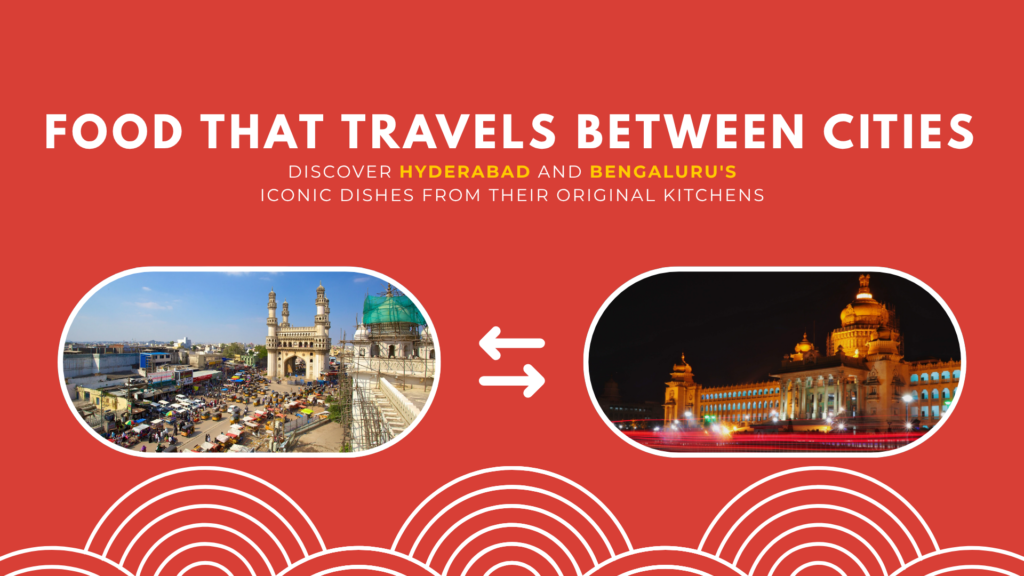
The real thing has always been worth having. Intercity food delivery is how it now reaches the people who miss it most
India’s regional food is specific in a way that cannot be generalised or replicated without something being lost. Every state, every city, every established kitchen carries a food tradition that developed in a particular place over a particular span of time — shaped by local ingredients, local methods, and the accumulated refinement of kitchens that spent decades getting it right. The person who grew up inside this tradition knows it with a certainty that no description can fully capture. And when they move to another city, they begin a relationship with the local version of their food that is never quite satisfying. Intercity food delivery is the direct answer to this — it delivers the original, from the kitchen that owns it, to wherever the person now lives.
The distinction between authentic and approximate is felt immediately and precisely by anyone with a genuine reference point. The biryani in Bengaluru is not the biryani of Hyderabad. The food in Delhi that references Chennai is not what Chennai produces. These are not quality failures — they are simply the natural result of food being made outside the tradition that created it. Intercity food delivery does not try to narrow this gap from the local side. It eliminates it from the source — by going to the original kitchen, in the original city, and delivering from there. That is what authentic means. And that is what this model delivers.
“Authentic food is not a higher standard. It is simply the original. And the original is worth delivering.”
What Authentic Regional Food Actually Is
Authenticity in food has a specific and defensible meaning that gets obscured when the word is applied loosely. In the context of India’s regional traditions, an authentic preparation is one made by a kitchen that has been part of the tradition for long enough to carry its complete depth — not a recently opened restaurant with a regional menu, but a heritage kitchen whose recipe has been built through decades of continuous refinement, whose quality is specific and unreplicated, and whose standing in its own city is built on the fact that the city trusts it.
What lives in these kitchens is not a recipe. Recipes can be documented and shared. What cannot be shared is the accumulated judgment — the knowledge of how the dish is supposed to behave at every stage of its preparation, built through thousands of repetitions, specific to the tradition and the kitchen that has been inside it. This is what determines whether the final preparation is right. And this is what intercity food delivery carries to the person ordering when it sources from a heritage kitchen.
Not a product made to a specification. A preparation made by people who understand it in full. That is the difference between authentic and everything that falls short of it.
Why the Distance Has Always Been a Barrier
Authentic regional food stayed local because the logistics did not exist to move it without compromising it. The preparation conditions that make a dish what it is are specific and perishable. Without careful management of temperature, timing, and packaging, the food that arrives at a distant destination is not the food that left the kitchen. The gap between preparation and receipt is where authenticity is lost — and for most of India’s history, that gap was simply too wide to manage reliably.
For people who relocated, this translated into a persistent and unaddressed absence. The local restaurant’s version was the best available option, and it was never quite right. The trip home offered the real thing briefly. Then the person returned to the city they now lived in, and the substitute versions resumed. The gap was real. It was accepted as inevitable. Intercity food delivery is what changed the terms of that acceptance.
Every element of the intercity delivery model is built to address the barrier that distance has always presented to authentic food. The preparation on the day of travel. The temperature management through the full journey. The managed logistics that keep the food in the conditions required from the point of packing to the point of arrival. Distance is no longer something the food absorbs. It is something the model manages.
“The gap between the food people miss and the food they can access has always been real. It is now, finally, closable.”
The Role of Heritage Kitchens
The entire value of intercity food delivery rests on the quality of the kitchens behind it. This is not a detail of the model — it is the foundation. The kitchens Hungersate works with are selected because they are the standard, not because they meet a standard. Heritage restaurants with decades of unbroken reputation in their own city, whose food is the preparation that every other version is judged against, whose identity in their city is built on consistent, specific, deeply earned quality.
These kitchens do not make approximations of regional food. They make the food that other kitchens are approximating. The difference is fundamental. When their preparation travels to another city, what travels with it is not just the ingredients and the method — it is the accumulated experience of making it correctly across thousands of preparations, over years, in the specific tradition it belongs to.
The logistics can be perfect and the result can still fall short if the kitchen is not the right one. The kitchens are the part that the logistics serve. And the kitchens are the part that cannot be replaced.
How the Food Makes the Journey
Delivering authentic food authentically requires a transit model that takes the food as seriously as the kitchen does. Temperature is the most critical variable — different regional dishes require different conditions, and the window of acceptable deviation is narrow. Food that leaves a heritage kitchen in optimal condition can arrive in diminished condition if the handling between the two points is not specifically designed for it.
Intercity food delivery through Hungersate uses temperature-controlled packaging built for long-distance food transport, prepares the food on the day it travels rather than holding it in advance, and moves it through a managed and tracked logistics route with a confirmed arrival window. The conditions the dish requires are maintained through the full journey. Nothing about the transit is left to a general freight standard that was not built for food of this specificity.
The preparation that arrives is the one that left. The texture, the aroma, the balance — the specific qualities that determine whether a person from that region accepts or rejects it in the first moment — are present as they should be. The journey was taken seriously. The food arrived accordingly.
What This Means for People Living Away From Home
For Indians living in cities other than the ones they grew up in, the authentic food of home has always been the clearest and most consistently present reminder of what was left behind. Not a difficult reminder — just a persistent one. The local version is available. It is eaten. And it is never quite the same as the real thing, in ways that do not diminish with time or familiarity.
Intercity food delivery changes this simply and directly. The kitchen in Hyderabad that a person’s family has trusted since before they were born can now deliver to them in Bengaluru. The preparation arrives as it should arrive — from the right source, managed correctly through transit, and tasting the way it is supposed to taste. The experience is not a reference to home. It is home, in the most tangible form available.
This is the core value of authentic regional food delivered across cities. It is not about the logistics or the model — it is about what the model makes possible for the person at the end of it. Access to something genuine that was previously only accessible through distance. The taste of where they are from, arriving where they currently are.
India’s Regional Food Deserves a Wider Reach
India’s regional food traditions are too good, too deep, and too specific to remain confined to the cities that produced them. Each tradition is the result of generations of accumulated knowledge, specific to a place and a set of conditions that exist nowhere else. It belongs to those places in the fullest sense. And it also deserves to be tasted, in its original form, by people who are not from those places but who would recognise its quality immediately if they could reach it.
Intercity food delivery makes this reach possible without asking anything of the traditions themselves. The kitchens continue making what they have always made. The logistics carry it further. The person receiving it gets the original — not a local kitchen’s best attempt, but the preparation from the heritage kitchen that has been making it the right way for decades.
Authentic regional food does not diminish by being delivered somewhere new. It arrives complete, carrying the full depth of the tradition it represents. Intercity food delivery is how that tradition now crosses the distances that previously kept it in place. The food stays what it always was. The reach is simply wider now