Patient records, lab results, prescriptions, billing hospitals churn through a huge amount of information every single day, and without something holding it all together, things inevitably get lost along the way. That’s exactly what a 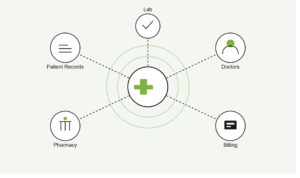

What a Hospital Information System Actually Is
At the most basic level, it’s one platform holding what used to be spread across five different departments. Nobody has to call another register or walk over to a different department anymore; patient registration, doctor consultations, lab results, pharmacy records, and billing all sit in the same place. This matters more the bigger a hospital gets, since the kind of informal coordination that worked fine with a smaller patient load tends to fall apart once things scale up.
Problems Hospitals Run Into Without One
Hospitals still working off disconnected systems or paper tend to hit the same walls repeatedly. A patient’s record reaches the right doctor too late, the bill doesn’t match what was actually given, and staff end up spending their day chasing down paperwork instead of actually helping patients. The more departments involved without something tying it all together, the easier it gets for small things to slip a lab result that goes missing, a prescription that doesn’t quite match what was ordered.
What to Look for in a Good HIS
Not every system out there covers the same ground, so a few things are worth checking before you pick one:
- Patient records stored centrally and shared across departments
- Solid integration with OPD, IPD, pharmacy, and lab workflows
- Billing that pulls automatically from actual treatment records
- Compliance support for regulations like ABHA and DPDPA
- Reliable enough to hold up in low-bandwidth areas
Skip any of these, and staff usually end up covering that gap by hand which kind of undoes the whole reason for having one system in the first place.
What Changes for Hospitals in India After Switching
Hospitals that make the switch tend to notice quicker patient processing almost right away, mostly because nobody’s sitting around waiting for a file to show up from another department. Doctors can see a patient’s full history the moment they need it, billing lines up better since it’s pulled straight from actual care given, and administrators get a live view of what’s happening instead of waiting for a report at the end of the month to tell them.
How I Can Care Flow Approaches Hospital Information Systems
I Can Care Flow pulls OPD, IPD, pharmacy, lab, radiology, and billing into one place, so departments aren’t stuck relying on separate tools that don’t talk to each other. Patient information updates the moment care happens, and the whole thing stays aligned with ABHA and ABDM requirements that matter a lot for hospitals in India right now. For a hospital trying to modernize without turning everything upside down at once, that kind of setup makes the whole shift a lot easier to manage.
Figuring Out What’s Right for Your Hospital
What works for a small clinic rarely works the same way for a large, multi-specialty hospital so be honest about where your hospital actually stands before choosing anything. Will it still make sense once you’ve grown, and does it fit the departments you’re already running? Check how long training actually takes too, since two months of staff struggling with new software is lost productivity. And don’t just look at today’s price and ask what it looks like once you’ve scaled.
Final Thoughts
When information actually moves smoothly through a hospital, patient care tends to follow right along with it. Picking the right HIS hospital information system usually means fewer delays, cleaner billing, and a clearer sense of how the hospital is running on any given day. That’s exactly why platforms like I Can Care Flow are built to make it easier for hospitals in India pulling every department into one system so nothing gets stuck working in isolation.
Contact i Can Care Flow
Email: info@icaninfotechsolutions.com
Phone: 8295782163
Location: K & B Tower F-465 Phase 8A Mohali Pin – 140307 India