
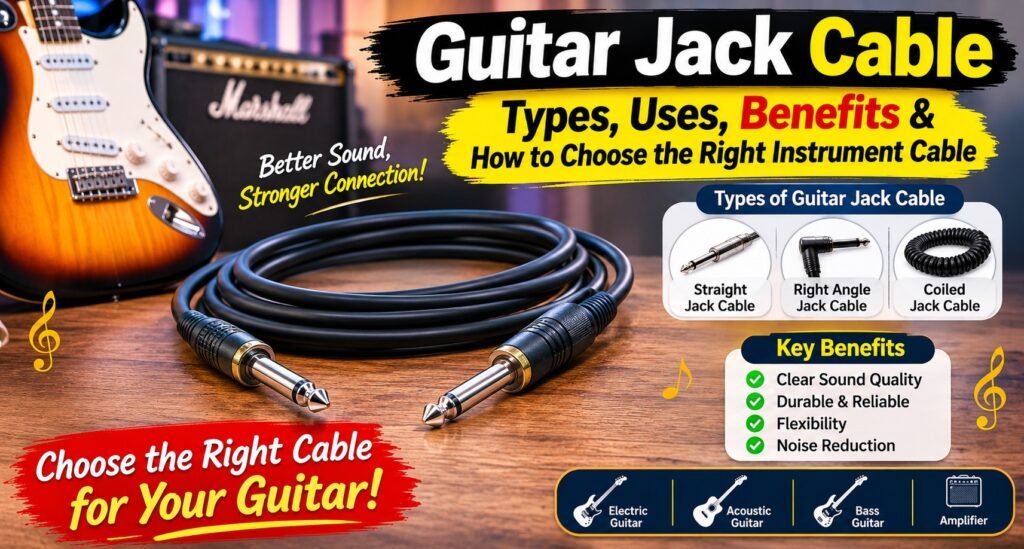
Music is all about clear sound, smooth performance and reliable equipment. Whether you are playing an electric guitar, bass guitar, keyboard or another musical instrument, choosing the right connecting cable is important for a stable audio setup. A suitable cable helps connect your instrument to an amplifier, speaker or compatible audio equipment.
A guitar cable may look like a simple accessory, but its connector type, construction, length and shielding can affect convenience and signal quality. Musicians, beginners, recording enthusiasts and performers should understand these features before selecting a cable.
In this guide, we will explore different cable types, common uses, important features and practical tips to help you choose the right instrument cable for your setup.
What Is a Guitar Jack Cable?
A Guitar Jack Cable is an audio connection cable used to connect electric musical instruments to amplifiers, speakers and other compatible audio equipment. It commonly features a 6.35mm (1/4-inch) plug, which is widely used with electric guitars, bass guitars, keyboards and various audio devices.
One end connects to the instrument’s output socket, while the other connects to the input of an amplifier or compatible audio device. This simple connection allows the instrument’s audio signal to travel through the cable to the connected equipment.
These cables are commonly used during practice sessions, live performances, music lessons, studio recordings and home music setups.
Different Types of Instrument Cables
Instrument cables are available in different connector configurations and designs. Understanding their basic types can help you select a suitable option.
1. Standard 1/4-Inch Instrument Cable
A 1/4 Inch Instrument Cable is one of the most common cable types used in musical equipment. It generally features a 6.35mm connector and is suitable for connecting instruments with compatible output sockets to amplifiers and audio equipment.
It is widely used by guitarists, bass players and keyboard users. Before purchasing, check the connector type required by both connected devices.
2. Electric Guitar Connection Cable
An Electric Guitar Cable connects an electric guitar to an amplifier or compatible audio input. It carries the instrument’s audio signal and is commonly used for practice, rehearsals, stage performances and home recording.
A well-made cable with suitable shielding can help reduce unwanted interference in environments where electrical noise is present.
3. Mono TS Connector Cable
A 1/4 Inch TS Cable uses a Tip-Sleeve connector with two contact sections. TS connectors are commonly used for unbalanced mono audio connections, including many electric guitar and bass guitar setups.
The connector has a tip contact for the audio signal and a sleeve contact for the ground connection. It is important to match the connector type with the input and output sockets of your equipment.
4. Guitar and Amplifier Connection Cable
A Guitar to Amplifier Cable is used to connect a guitar’s output to a compatible amplifier input. It is an essential accessory for musicians who use electric instruments during practice sessions, rehearsals and performances.
Select a suitable cable length according to your playing environment. A shorter cable can be convenient for a compact home setup, while a longer cable may provide more movement on stage.
5. Bass Guitar Connection Cable
A Bass Guitar Cable is designed for connecting an electric bass guitar to a compatible bass amplifier or audio input. It is commonly used by bass players during practice, recording and live performances.
Check the cable’s connector configuration and compatibility with your instrument and amplifier before connecting it.
6. Mono Audio Connection Cable
A Mono Jack Audio Cable carries a single-channel audio signal through a compatible mono connection. It is commonly found in musical instrument setups where TS connectors are used.
Remember that mono and stereo connections are not interchangeable in every situation. Always check the input and output requirements of your equipment to avoid connection issues.
Common Uses of Musical Instrument Cables
A Musical Instrument Cable can be used in several music-related applications, depending on its connector type and device compatibility.
Common uses include:
- Connecting electric guitars to guitar amplifiers.
- Connecting bass guitars to compatible bass amplifiers.
- Connecting electronic keyboards to suitable audio inputs.
- Connecting compatible audio equipment.
- Setting up instruments for home practice and music lessons.
- Connecting instruments during rehearsals and live performances.
- Creating basic audio connections in recording environments.
For keyboard connections, a Keyboard to Amplifier Cable may be used when the keyboard and amplifier support compatible 6.35mm mono connections. Some keyboards have stereo outputs or multiple output sockets, so check the manufacturer’s instructions before selecting a cable.
Key Benefits of a Good Instrument Cable
Choosing a suitable cable can make your music setup more convenient and reliable.
1. Reliable Audio Connection
A compatible cable provides a physical connection between your instrument and audio equipment. Properly fitted connectors help maintain a stable connection during regular use.
2. Convenient Setup
A standard 1/4-inch connector is used across many musical instruments and audio devices. This makes it convenient to connect compatible equipment without requiring complicated installation.
3. Flexible Usage
Depending on its specifications, one cable can be used with different compatible instruments and amplifiers. This is useful for musicians who work with multiple instruments.
4. Easy to Carry
Instrument cables are generally easy to store in a music bag or equipment case. They are practical accessories for home practice, rehearsals and performances.
5. Useful for Beginners and Professionals
Whether you are learning your first guitar chords or performing on stage, a suitable connecting cable is an important part of your audio equipment setup.
How to Choose the Right Instrument Cable
Before purchasing a cable, consider the following points:
1. Check the Connector Size
Most standard guitar setups use 6.35mm connectors. However, some devices may require different connector sizes. Confirm the connector specification of your instrument and amplifier.
2. Understand TS and TRS Connectors
TS connectors are commonly used for unbalanced mono instrument connections. TRS connectors have three contact sections and can support balanced mono or stereo connections, depending on the equipment.
Do not assume that every 6.35mm connector is suitable for every audio device.
3. Select the Appropriate Length
Choose a cable length based on the distance between your instrument and amplifier. Avoid unnecessarily long cables because excess cable can create clutter and may be less convenient to manage.
4. Look for Suitable Cable Construction
Check the outer insulation, connector fitting and overall build quality. A durable outer jacket and properly assembled plugs can help the cable withstand regular handling.
5. Consider Shielding
Shielding helps reduce electromagnetic and radio-frequency interference. This can be particularly useful when connecting instruments in environments with several electronic devices.
6. Check Device Compatibility
Make sure that the instrument’s output and the amplifier’s input support the same connector configuration. Checking the equipment manual can help prevent compatibility problems.
How to Connect a Guitar to an Amplifier
Follow these simple steps to connect your instrument:
- Turn down the amplifier’s volume before connecting.
- Insert one 1/4-inch connector into the guitar’s output socket.
- Connect the other end to the compatible amplifier input.
- Check that both connectors are properly fitted.
- Turn on the amplifier and gradually increase the volume.
- Play a few notes to check the audio connection.
Always follow the manufacturer’s safety instructions for your amplifier and other electrical equipment.
Why Choose FEDUS Guitar Jack Cable?
The FEDUS guitar connecting cable is designed for users who need a convenient audio connection between compatible musical instruments and audio equipment. Its 1/4-inch mono jack configuration makes it suitable for supported electric guitars, bass guitars, keyboards, mandolins and amplifiers.
Whether you are practising at home, preparing for a performance or setting up your musical equipment, choosing a cable with compatible connectors is important. Check the product specifications and required cable length before purchasing to ensure it suits your setup.
The Guitar Amp Cord is a useful accessory for musicians who want a simple wired connection between their instrument and compatible amplification equipment.
Conclusion
A suitable instrument cable plays an important role in connecting musical instruments to amplifiers and other audio equipment. Understanding connector sizes, TS and TRS configurations, cable length, shielding and construction can help you make a better purchasing decision.
Before selecting a cable, always check the connection requirements of your guitar, bass, keyboard or other instrument. With the right compatible cable, you can create a convenient setup for music practice, rehearsals, recording and live performances.
Frequently Asked Questions (FAQs)
1. What is a guitar jack cable used for?
It is used to connect an electric guitar or another compatible instrument to an amplifier or audio input.
2. What size jack is commonly used for electric guitars?
Most standard electric guitars use a 6.35mm (1/4-inch) output jack.
3. What does TS mean in an audio cable?
TS stands for Tip-Sleeve. It is a two-contact connector commonly used for unbalanced mono audio connections.
4. Can I use the same cable for a guitar and bass guitar?
Yes, if both instruments and the connected amplifier support the same connector configuration.
5. Can I connect a keyboard to an amplifier using a 1/4-inch cable?
Yes, if the keyboard output and amplifier input support the same 1/4-inch connection. Check whether your keyboard requires mono or stereo connections.
6. What is the difference between TS and TRS cables?
TS connectors have two contact sections, while TRS connectors have three. Their applications depend on the audio equipment and connection type.
7. Does cable length affect audio quality?
Cable length can influence signal performance, particularly in high-impedance instrument setups. Choose a suitable length and avoid unnecessary excess.
8. Is shielding important in an instrument cable?
Yes. Shielding can help reduce unwanted electrical interference and noise.
9. Can I use an instrument cable for a speaker connection?
Not necessarily. Instrument cables and speaker cables are designed for different electrical purposes. Use the correct cable specified for your equipment.
10. Can I use a guitar cable with a mandolin?
Some electric mandolins have compatible 1/4-inch outputs. Check the instrument’s output socket before connecting.
11. Why is my guitar producing unwanted noise?
Possible causes include poor connections, damaged cables, electrical interference, grounding issues or problems with the instrument or amplifier. Check each part of the setup to identify the source.