
A complete guide to Grade A and Grade B warehouses for Indian businesses. Understand what each grade means, what it costs, and how to choose the right one for your industry and budget.
What Nobody Tells You About Warehouse Grades in India
The terms Grade A and Grade B are used constantly in Indian real estate and logistics. But most people using these terms never explain what the grades actually mean in practice — what you get, what you do not get, and what difference it makes to your daily operations.
This guide covers all of that in straightforward language.
The Five Things That Define a Warehouse Grade
1. Ceiling Height
This is the single most important structural feature. Grade A warehouses have a clear height of 10 meters or more. Grade B typically has 6 to 8 meters. Higher ceiling height means you can stack more, use automated racking systems, and store more goods in the same floor area.
2. Floor Quality
Grade A floors are hardened, load-rated concrete — typically capable of carrying 5 tones or more per square meters. Grade B floors are standard concrete, which may be adequate for most goods but not for very heavy industrial items or forklift-heavy operations.
3. Loading Infrastructure
Grade A warehouses have dock levelers — mechanical platforms that bridge the gap between the warehouse floor and a truck. This speeds up loading significantly and reduces manual handling injuries. Grade B typically relies on manual loading, ramps, or portable dock boards.
4. Safety Systems
Grade A has full fire suppression — sprinklers, smoke detectors, fire doors. Grade B has basic fire extinguishers and may have partial detection systems. For some goods (textiles, paper, chemicals), sprinklers are not just a nice-to-have — they are essential.
5. Technology and Management
Grade A facilities often come with Warehouse Management System compatibility, energy-efficient lighting, CCTV systems, and professional property management. Grade B facilities have basic management and standard utilities.
The Indian Market Reality
In India, the Grade A vs Grade B split plays out differently than in western countries. Because most of India’s warehousing stock is old and poorly maintained, even a basic new-construction warehouse on a highway can represent a significant quality upgrade over what businesses are used to.
The practical line for most Indian businesses is not Grade A vs Grade B — it is old Grade B vs new Grade B. The new generation of purpose-built highway warehouses in cities like Lucknow, Kanpur, Agra, and Varanasi are providing a meaningful quality upgrade without Grade A price tags.
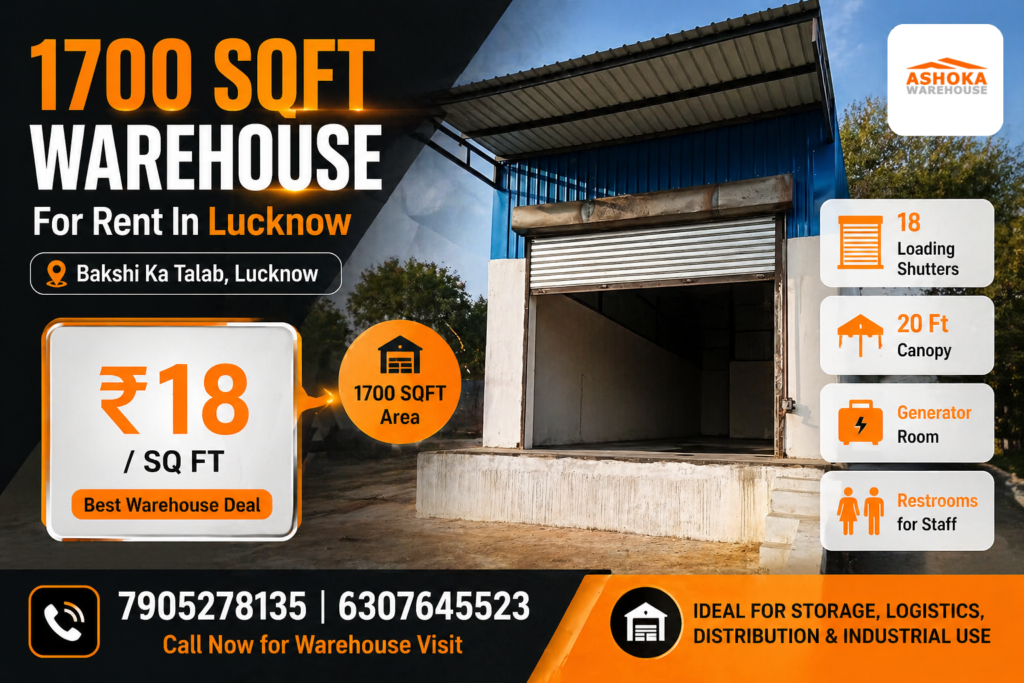
Ashoka Warehousing on Sitapur Road NH-24, Lucknow is one of these new-generation Grade B properties. 1,700 sq ft, newly constructed, with highway connectivity and a starting rent of just Rs 18 per sq ft — open to negotiation. This is the practical upgrade most Indian businesses are actually looking for.
Warehouse for Rent in Lucknow — Ashoka Warehousing
Located on the Sitapur National Highway, Ashoka Warehousing provides modern, ready-to-move warehouse space in Lucknow. 1,700 sq ft available at Rs 18 per sq ft. The rate is negotiable. Newly built, with direct highway access and suitable for a wide range of businesses.
Industry-by-Industry Guide: Which Grade Do You Need?
Pharma / Medical supplies: Grade A. Temperature control, compliance, and security are non-negotiable.
FMCG distribution: Grade B+ or Grade A. Depends on volume and client requirements.
E-commerce fulfilment: Grade A at scale. Grade B for small and medium sellers.
General trade / distribution: Grade B. Clean, dry, good access is sufficient.
Agricultural commodities: Grade B. Proper ventilation and pest control matter more than Grade A features.
Automotive parts: Grade B or Grade A depending on dust sensitivity and weight.
Textile and garments: Grade B. Fire safety is important; full sprinklers preferable but not always essential.
Building materials: Grade B. Strong floor and good access matter most.
Electronics and appliances: Grade A preferred. Dust control, security, and fire suppression all matter.
Why Ashoka Warehousing is the Best Choice for Your Business
Ashoka Warehousing combines everything a practical, growing Indian business needs. The Sitapur Road NH-24 location is one of the best logistics addresses in Lucknow — direct access to major national highway routes, no city truck restrictions, and a rapidly growing infrastructure corridor. The warehouse itself is brand new, so you start with good flooring, proper access, and reliable structure. And at Rs 18 per sq ft with room to negotiate, it offers genuine value that is hard to match anywhere else in the Lucknow warehouse market. It is a smart, honest choice for businesses ready to upgrade their warehousing without overspending.
Famous Warehousing Areas in Lucknow
- Chinhat Industrial Area — Lucknow’s traditional warehousing hub, varied quality
- Alambagh — city-side godowns, congested, higher cost
- Amausi Airport Corridor — specific to air cargo linked businesses
- Deva Road — agri and cold chain storage
- Kanpur Road — heavy goods and manufacturing supply
- Sitapur Road NH-24 — modern, purpose-built, highway-direct, best value in Lucknow
FAQ
Q. What is the standard lease period for Grade B warehouses in Lucknow?
Most Grade B warehouse leases in Lucknow run for 1 to 3 years. Longer leases may come with better rates. Always negotiate the lease renewal terms before signing the initial agreement.
Q. Does a Grade B warehouse affect my GST input claims?
No. GST input claims are not affected by warehouse grade. They depend on proper invoicing and documentation, not the physical quality of the storage facility.
Q. Can a Grade B warehouse in Lucknow support 3PL operations?
Yes, many third-party logistics (3PL) providers in UP operate from Grade B warehouses successfully. What matters most for 3PL is good location, truck access, organized operations, and reliable management — all of which a good Grade B highway warehouse can provide.