
The digital world is changing rapidly, and businesses of every size now depend on websites, web applications, e-commerce platforms, and cloud-based software. Behind these digital products are skilled developers who understand how to create both the visible parts of an application and the technology that powers it behind the scenes. This is where a Full Stack Web Development Course can make a major difference for students, graduates, and aspiring technology professionals.
A full stack developer is someone who can work across different layers of a web application. From designing an interactive user interface to building databases, APIs, authentication systems, and server-side functionality, a full stack developer understands how the complete application works.
For learners looking to develop practical and career-oriented skills, A2IT InternEdge offers an opportunity to learn full stack web development through a structured approach that connects programming concepts with real-world application development.

What Is Full Stack Web Development?
Full stack web development refers to the development of both the front end and back end of a web application.
The front end is the part users see and interact with. It commonly involves technologies such as:
- HTML
- CSS
- JavaScript
- React or other modern JavaScript frameworks
- Responsive web design
The back end handles the logic and functionality that users generally do not see. It may include:
- Server-side programming
- Databases
- APIs
- Authentication
- Application security
- Server and cloud integration
A full stack developer brings these components together to create a functional web application from start to finish.
Why Choose a Full Stack Web Development Course?
Learning individual programming languages can be useful, but modern web development requires an understanding of how different technologies work together.
A Full Stack Web Development Course provides a structured learning path. Instead of studying disconnected concepts, learners can gradually understand how a complete application is planned, developed, tested, and deployed.
For example, imagine an online food-ordering website.
A customer visits the website and sees restaurants, menus, prices, images, and an order button. These visible elements are part of the front end.
When the customer places an order, the application needs to send that information to a server. The server processes the order, communicates with the database, verifies the customer’s details, and stores the order information. This is where back-end development becomes important.
The database then stores information such as:
- Customer accounts
- Restaurant information
- Food items
- Prices
- Orders
- Payment status
- Delivery details
A full stack developer needs to understand how these components communicate with one another.
Real-Life Example: Building an Online Shopping Application
Consider a real-life scenario involving an online clothing store.
A customer opens the website and searches for a pair of shoes. The website displays product images, prices, sizes, reviews, and availability.
The customer selects a size and adds the shoes to the shopping cart.
At this point, several technologies are working together.
The front end displays the product page and shopping cart. JavaScript can handle interactions such as changing quantities or selecting sizes.
When the customer clicks “Place Order,” the application sends information to the back end through an API.
The back end receives the request, checks whether the product is available, calculates the order amount, and communicates with the database.
The database stores the order details.
The server then sends a response to the front end, which displays a confirmation message to the customer.
To the customer, this entire process may appear simple. Behind the scenes, however, multiple technologies are communicating with one another.
This is precisely why full stack development is valuable: developers learn how to understand and connect the different layers of a modern web application.
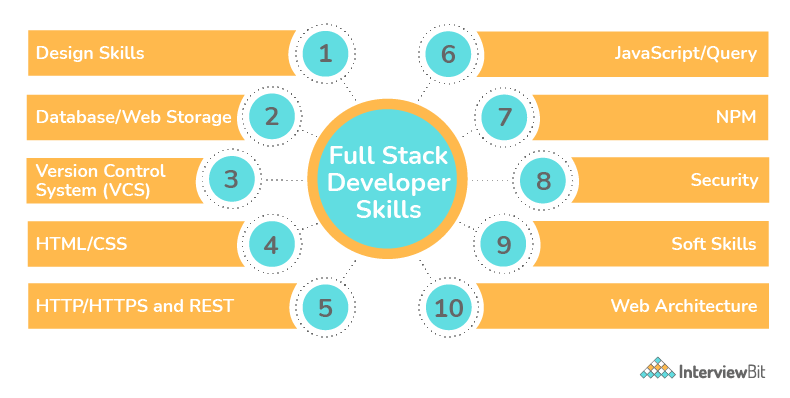

What Can You Learn in a Full Stack Web Development Course?
A comprehensive course generally introduces learners to the essential technologies and concepts required for modern web development.
HTML and CSS
HTML provides the structure of a webpage, while CSS controls its visual presentation.
Learners can understand how to create layouts, forms, navigation menus, cards, buttons, and responsive webpages that work across different screen sizes.
JavaScript
JavaScript makes webpages interactive.
For example, JavaScript can be used for form validation, dynamic content, interactive menus, calculations, and communication with APIs.
Understanding JavaScript is particularly important because it is widely used in modern front-end development and can also be used on the server side through technologies such as Node.js.
Front-End Frameworks
Modern applications often use frameworks and libraries to create scalable user interfaces.
A course may introduce technologies such as React, depending on the curriculum.
Instead of creating every interface element from scratch, developers can organize applications into reusable components.
For example, an e-commerce application could have reusable components for:
- Product cards
- Navigation bars
- Shopping carts
- Login forms
- Checkout sections
This component-based approach can make large applications easier to maintain.
Back-End Development
Back-end development is responsible for application logic and server-side operations.
Students can learn how servers receive requests, process information, communicate with databases, and return responses.
They can also understand important concepts such as APIs, authentication, authorization, and error handling.
Databases
Most real-world applications need to store information.
A full stack curriculum can introduce learners to database concepts and help them understand how application data is created, retrieved, updated, and deleted.
For example, a student management application may need to store:
- Student names
- Courses
- Attendance
- Assignments
- Examination results
Learning how applications communicate with databases is an important part of becoming a capable full stack developer.
Why Practical Projects Matter
One of the biggest advantages of project-based learning is that students can move beyond theoretical knowledge.
Suppose a learner studies how APIs work. Reading about APIs provides foundational knowledge, but creating an actual application that retrieves information from an API provides practical experience.
A project could be a weather application.
The learner creates a user interface where someone enters a city name. The application sends a request to a weather API, receives information about temperature and conditions, and displays the result.
The learner has now worked with several real development concepts:
- User input
- JavaScript functionality
- API requests
- JSON data
- Error handling
Dynamic webpage updates
Similarly, a more advanced project could involve creating an e-commerce platform, appointment-booking system, learning management system, or employee management portal.
These projects help learners understand how individual programming concepts fit together in practical situations.
How Full Stack Skills Can Help Your Career
Technology companies require professionals who can understand application development beyond a single layer.
A person with full stack development knowledge can explore career opportunities such as:
- Full Stack Developer
- Web Developer
- Front-End Developer
- Back-End Developer
- JavaScript Developer
- Software Developer
- Junior Application Developer
The exact role depends on a person’s skills, experience, portfolio, and knowledge of specific technologies.
For beginners, the goal should not simply be to collect certificates. Building a strong foundation and developing projects that demonstrate practical ability can be equally important.
Why Learn with A2IT InternEdge?
Choosing the right learning environment can make the development journey more organized.
A2IT InternEdge can be considered by learners who want to build their understanding of full stack web development through structured learning and practical exposure.
A useful learning journey should combine programming fundamentals with application development. Students should have opportunities to understand not only what a particular technology does, but also why and when it is used.
For example, knowing JavaScript syntax is useful. However, understanding how JavaScript connects a user interface to an API is much closer to what developers encounter when building real applications.
This practical perspective can help learners gradually develop confidence in solving development problems.
Who Should Enroll in a Full Stack Web Development Course?
A Full Stack Web Development Course can be suitable for several types of learners.
College Students
Students studying computer science, information technology, or related fields can use full stack development training to supplement academic knowledge with practical skills.
Fresh Graduates
Graduates who want to enter the software industry can use full stack development as a pathway toward building a technical portfolio and preparing for entry-level opportunities.
Beginners Interested in Coding
People who are new to programming can start with fundamentals and progressively move toward more advanced development concepts.
Professionals Looking to Upskill
Working professionals who want to transition toward web development or expand their technical capabilities can also benefit from structured learning.
Building a Portfolio Along the Way
A strong portfolio can help demonstrate what a learner can actually build.
Instead of having only a certificate, imagine a candidate who can show a recruiter three completed projects:
Project 1: Personal Portfolio Website
This demonstrates HTML, CSS, responsive design, and basic JavaScript.
Project 2: Task Management Application
This can demonstrate front-end development, user interaction, APIs, and database concepts.
Project 3: E-Commerce Application
This can demonstrate more advanced functionality such as authentication, product management, shopping carts, APIs, databases, and order processing.
When these projects are properly documented, they can give employers a clearer picture of the candidate’s practical capabilities.
The Future of Web Development
Web applications continue to evolve as businesses increasingly depend on digital platforms.
From banking and healthcare to education, retail, entertainment, and logistics, web technologies are used to deliver services to millions of users.
At the same time, development tools and frameworks continue to change. This means developers need to develop a habit of continuous learning.
A good foundation in programming, databases, APIs, web architecture, and problem-solving can help developers adapt as technologies evolve.
The goal of a Full Stack Web Development Course should therefore be more than learning a list of technologies. It should help learners understand the principles behind application development so they can continue learning new tools throughout their careers.
Conclusion
Full stack web development brings together front-end design, programming, back-end logic, databases, APIs, and application deployment. Learning these skills can help aspiring developers understand how modern web applications are built from the ground up.
The real value of a Full Stack Web Development Course comes from combining concepts with practical implementation. Building applications such as e-commerce websites, task management systems, booking platforms, and portfolio websites allows learners to experience the challenges developers face in real-world projects.
For students, fresh graduates, beginners, and professionals looking to develop their technical capabilities, A2IT InternEdge can be a starting point for exploring structured full stack web development learning.
If your goal is to move from simply learning code to understanding how complete web applications are created, full stack development can provide a practical and versatile path toward developing valuable technology skills.