
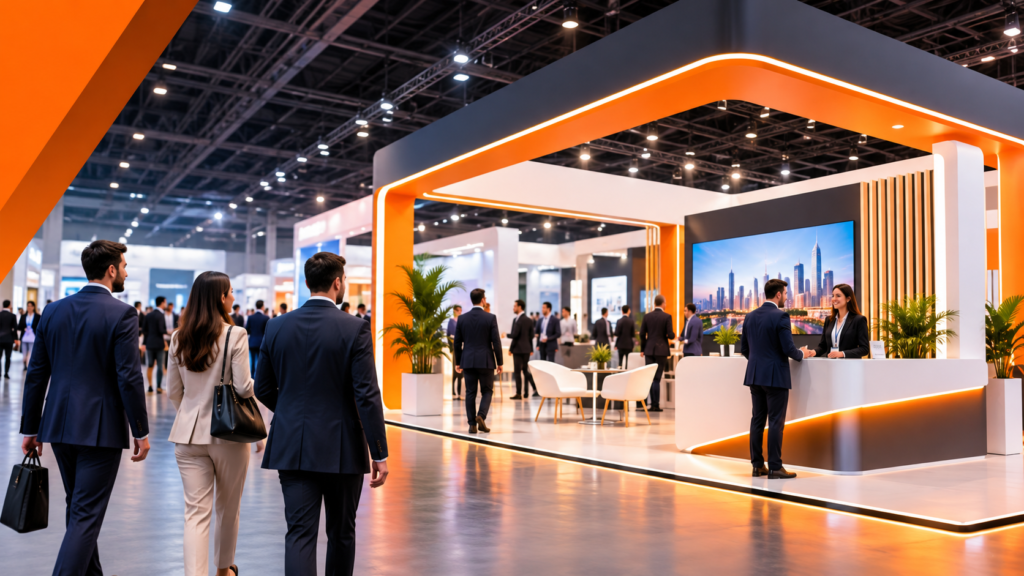
An exhibition gives businesses an opportunity to introduce their products, meet potential customers, build professional relationships, and strengthen their presence in the market. However, with several companies competing for attention in the same exhibition hall, attracting visitors is not always easy. A business may have an excellent product or service, but if its exhibition space fails to create interest, many potential opportunities can go unnoticed.
An effective exhibition stand does more than display a company name and its products. It creates a welcoming environment, communicates the brand’s message, and gives visitors a reason to stop and explore. From the layout and lighting to staff interaction and interactive displays, every element contributes to the overall visitor experience.
So, what makes an exhibition stand successful at attracting visitors? Let’s look at the important factors that can make a real difference.
1. A Clear and Attractive Design
First impressions matter at exhibitions. Visitors often walk through busy halls filled with different displays, promotional activities, and competing brands. A stand needs to capture attention without making the space look overcrowded.
A well-planned design uses appropriate colours, readable graphics, balanced layouts, and a clear visual identity. Instead of filling every available space with promotional messages, businesses should focus on communicating their most important information.
The design should also reflect the nature of the business. For example, a technology company may prefer a modern and minimal appearance, while a lifestyle brand might benefit from a more welcoming and visually expressive environment.
The objective is to create a stand that people can recognise, understand, and remember.
2. Strategic Layout and Space Planning
An attractive stand may catch someone’s attention, but its layout determines whether visitors feel comfortable entering and exploring it.
Poor space planning can create unnecessary congestion, block product displays, and make conversations difficult. A practical layout should provide enough room for visitors to move around while allowing staff members to interact with them comfortably.
Businesses should consider the following points when planning their exhibition space:
- Keep entry points open and accessible.
- Position important products where visitors can easily see them.
- Create separate areas for product demonstrations and discussions where space permits.
- Avoid unnecessary furniture and decorative elements.
- Make sure important displays are visible from the main visitor pathways.
Good space planning helps visitors explore the stand naturally instead of feeling restricted or confused.
3. Strong and Consistent Brand Communication
Visitors should be able to understand what a company offers without having to ask several questions. This is why clear brand communication is an essential part of exhibition stand design.
The company name, logo, key message, and product information should be presented in a simple and organised manner. Large, readable headlines can communicate the main offering, while supporting graphics and displays can provide additional details.
Consistency is equally important. The colours, typography, messaging, and overall appearance should match the company’s existing brand identity.
When the presentation is consistent across the stand, brochures, digital screens, and staff communication, it creates a more professional impression and makes the business easier to remember.
4. Effective Use of Lighting
Lighting influences how visitors perceive an exhibition space. Even a thoughtfully designed stand can lose its visual appeal if important areas are poorly illuminated.
Rather than using lights only for decoration, businesses should plan lighting according to the purpose of different sections.
For instance, focused lighting can highlight featured products, while softer lighting can make meeting areas feel more comfortable. LED lighting can also be incorporated into architectural elements to create visual interest.
A balanced lighting arrangement improves product visibility, highlights important features, and helps the stand maintain its appearance throughout the exhibition.
5. Interactive Experiences That Encourage Participation
Modern exhibition visitors often expect more than static product displays. They want to understand how a product works, explore its features, and experience what makes a company different.
Interactive elements can turn a simple visit into a more engaging experience. Depending on the business and available space, these may include:
- Live product demonstrations.
- Touchscreen presentations.
- Digital product catalogues.
- Augmented reality experiences.
- Short educational videos.
- Hands-on product trials.
However, technology should serve a clear purpose. Adding digital screens or interactive equipment without considering visitor needs can make the stand unnecessarily complicated.
The most effective approach is to select activities that help visitors understand the product or service more easily.
6. Knowledgeable and Approachable Staff
The people representing a business are just as important as the physical exhibition stand. Even an impressive display may fail to generate meaningful interest if visitors do not receive useful information or feel comfortable asking questions.
Exhibition staff should understand the company’s products, services, pricing structure where relevant, and key business advantages. They should also be able to explain information clearly without overwhelming visitors with lengthy sales presentations.
A friendly greeting, active listening, and relevant answers can make conversations more productive.
Staff members should also recognise that not every visitor has the same requirements. Some may be exploring the market, while others may be comparing suppliers or looking for a specific solution. Understanding these differences helps create better interactions.
7. Well-Positioned Product Displays
Product presentation plays a major role in attracting attention, particularly for businesses participating in product-focused exhibitions.
Instead of displaying every available item, companies should identify the products or services they most want visitors to notice. Featured products can be positioned in prominent areas with suitable lighting and clear supporting information.
Where possible, physical demonstrations can help visitors understand product quality, functionality, and practical applications.
For businesses offering services rather than physical products, case studies, project photographs, samples, and visual presentations can communicate their capabilities effectively.
A carefully selected display is often more useful than a large collection of items presented without a clear structure.
8. Comfortable Spaces for Meaningful Conversations
At exhibitions, attracting visitors is only one part of the objective. Businesses also need opportunities to understand customer requirements and develop professional relationships.
A small, comfortable discussion area can make a significant difference. It provides a suitable setting for longer conversations, product consultations, and business meetings.
Seating, appropriate lighting, and a reasonable level of privacy can improve the experience. The discussion area should be positioned so that it does not interrupt the movement of other visitors.
This is particularly valuable at business-to-business exhibitions, where discussions may involve technical requirements, project details, or future partnerships.
9. Location, Visibility and Exhibition Planning
The location of an exhibition stand can influence the number of visitors it receives. Businesses should consider the exhibition floor plan, nearby attractions, entrances, main walkways, and the positioning of other exhibitors.
While the most prominent locations may not always be available, a well-designed stand can still improve visibility through appropriate signage, clear messaging, and an inviting layout.
Planning should also begin well before the event. Businesses need sufficient time to finalise design concepts, approve graphics, arrange materials, coordinate installation, and check technical requirements.
Working with experienced Exhibition Stand Builders in Dubai can help businesses plan the design, construction, and installation process according to their exhibition objectives and venue requirements.
Early coordination also reduces the possibility of last-minute design changes and logistical problems.
10. Consistent Follow-Up After the Exhibition
The visitor experience should not end when someone leaves the exhibition stand. Businesses should have a clear process for maintaining contact with interested visitors after the event.
Collecting relevant contact details, recording discussion points, and understanding visitor requirements can make follow-up communication more meaningful.
For example, a visitor who requested product specifications should receive the relevant information rather than a generic promotional message. Similarly, a potential business partner may benefit from a follow-up meeting.
Companies can also review visitor interactions, enquiries, product interest, and feedback to understand which parts of their exhibition strategy worked well.
These observations can help improve participation in future events.
Conclusion
An effective exhibition stand is the result of thoughtful planning, clear communication, practical design, and meaningful visitor engagement. Its success should not be judged by appearance alone but by how well it supports the company’s objectives and creates a positive experience for visitors.
Businesses should focus on making their exhibition spaces accessible, informative, visually appealing, and comfortable. A combination of strong design, useful demonstrations, knowledgeable staff, and organised follow-up can turn visitor interest into valuable business opportunities.
With the right planning and execution, an exhibition stand can become much more than a temporary display. It can serve as an important platform for building brand recognition, establishing relationships, and creating lasting impressions in a competitive business environment.