
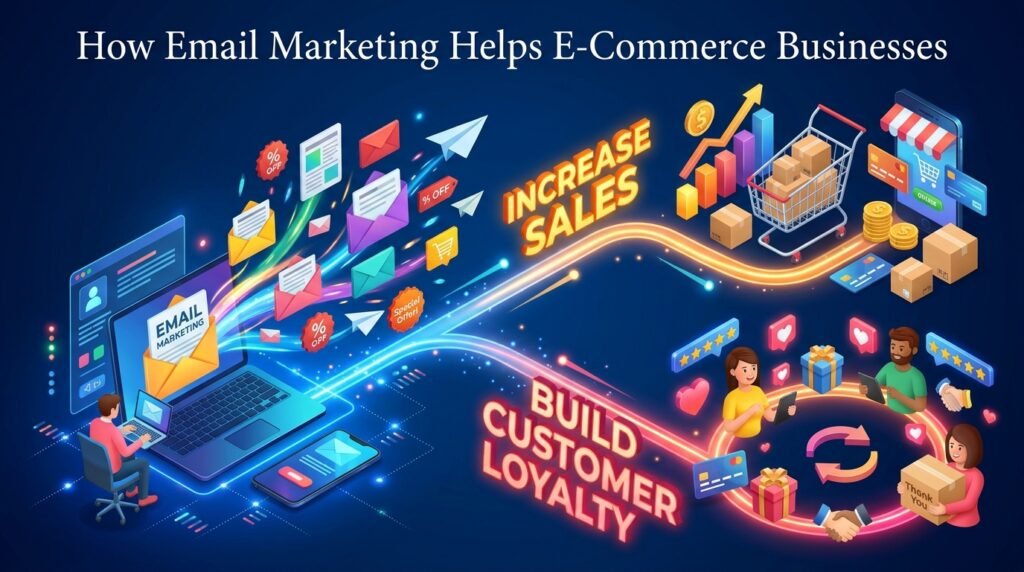
The world of online shopping has changed significantly over the past few years. Customers now have access to thousands of online stores, making competition more challenging for e-commerce businesses. Simply launching an online store and advertising products is no longer enough to achieve sustainable growth. Businesses must develop effective ways to attract potential buyers, maintain customer relationships, and encourage repeat purchases. One marketing channel that continues to deliver value is email marketing. It provides online retailers with a direct way to communicate with their audiences, introduce new products, share promotional offers, and deliver personalized shopping experiences.
Unlike social media platforms, where businesses depend on changing algorithms and advertising costs, email allows brands to communicate with people who have willingly subscribed to receive updates. When used strategically, email marketing can help businesses improve customer engagement, increase conversions, recover abandoned shopping carts, and build long-term customer loyalty.
Understanding the Importance of Email Marketing for Online Stores
Email marketing is an essential part of a modern e-commerce marketing strategy. It allows businesses to communicate with potential and existing customers at different stages of the buying journey. For example, someone visiting an online store for the first time may receive a welcome email after subscribing. A returning customer might receive personalized product recommendations based on previous purchases. These communications help create a consistent relationship between a business and its customers.
Some major advantages of email marketing include:
- Direct communication with interested audiences.
- Opportunities to promote new products and collections.
- Increased repeat purchases from existing customers.
- Personalized shopping recommendations.
- Automated customer follow-ups.
- Better customer retention.
- Opportunities to recover abandoned carts.
- Measurable campaign performance.
Email marketing also allows businesses to maintain communication after a customer completes an order. This creates opportunities to provide useful information and encourage future purchases.
Build an Email Subscriber List That Delivers Results
A successful email marketing campaign begins with a quality subscriber list. Businesses should focus on attracting people who genuinely want to receive their marketing messages rather than collecting large numbers of unrelated contacts. There are several ways to build an email list for an online store.
Website Subscription Forms
Adding a newsletter subscription form to your website allows visitors to receive updates about new products, special promotions, and company announcements. Place subscription forms in visible areas without interrupting the shopping experience.
Exclusive Discounts
Some online retailers encourage visitors to subscribe by offering a welcome discount or special promotional offer. This can motivate interested shoppers to join the mailing list and explore available products.
Checkout Subscription Options
Customers completing an order may also be interested in receiving future product updates. A clear, optional marketing subscription during checkout can help businesses connect with these buyers.
Useful Content and Shopping Guides
Businesses can attract subscribers by offering helpful resources such as buying guides, product comparisons, tutorials, and educational content. Always obtain appropriate permission before sending promotional emails and provide an easy unsubscribe option.
Create an Effective Welcome Email Sequence
The welcome email is often the first direct communication a subscriber receives from an online store. It creates an opportunity to introduce your brand and establish a positive first impression. Instead of sending only a discount code, businesses can create a short welcome sequence that introduces their products, values, and services. A simple welcome sequence may include:
First Email: Introduce Your Brand
Thank the subscriber for joining and briefly explain what your store offers.
Second Email: Highlight Popular Products
Showcase best-selling products or popular collections that may interest new subscribers.
Third Email: Share a Special Offer
If your business offers a welcome promotion, explain the terms clearly and provide a direct link to the relevant products. This approach helps new subscribers understand your business while encouraging them to explore your online store.
Use Email Automation to Improve Marketing Efficiency
Managing customer communication manually can become difficult as an online store grows. Email automation makes this process easier by allowing businesses to send messages automatically based on customer actions. Automation workflows can be created for different situations.
Welcome Automation
When someone subscribes to a mailing list, an automated welcome message can be sent immediately.
Abandoned Cart Automation
If a customer adds products to their shopping cart but leaves without purchasing, an automated reminder can encourage them to return.
Post-Purchase Automation
After completing an order, customers can receive order information, product instructions, review requests, and relevant recommendations.
Re-engagement Automation
Subscribers who have not interacted with emails for a long time can receive a re-engagement campaign featuring recent products or useful updates. These workflows reduce repetitive tasks and help businesses maintain communication throughout the customer journey.
Recover Lost Sales With Abandoned Cart Emails
Shopping cart abandonment is a common problem for online retailers. Customers sometimes add products to their carts but leave before completing the checkout process. There are many reasons for this behavior, including unexpected shipping costs, complicated checkout procedures, distractions, and comparison shopping. Abandoned cart emails provide an opportunity to reconnect with these potential buyers. An effective abandoned cart email should include:
- Clear product names and images.
- A reminder about the items left in the cart.
- A direct link to continue shopping.
- Helpful shipping and return information.
- A simple and relevant call to action.
Businesses can experiment with different reminder schedules to identify what works best for their customers. Offering a discount may sometimes encourage checkout completion, but it is not always necessary. Helpful reminders and transparent pricing information can also reduce purchasing hesitation.
Personalize Emails Based on Customer Behavior
Personalization is one of the most valuable techniques in modern e-commerce email marketing. Customers have different preferences, purchasing habits, and interests. Sending identical promotional emails to everyone may not generate the best results.
Businesses can use customer information to make their messages more relevant. For example, a clothing retailer can recommend products based on previous purchases. A technology store can suggest accessories that complement products customers have already purchased. Other personalization opportunities include:
- Product recommendations based on browsing activity.
- Special offers based on shopping preferences.
- Birthday and anniversary messages.
- Personalized loyalty program updates.
- Product replenishment reminders.
- Recommendations based on previous orders.
However, personalization should always respect customer privacy. Businesses should communicate transparently about how customer information is collected and used.
Develop Seasonal Email Marketing Campaigns
Seasonal promotions provide excellent opportunities for online retailers to increase product visibility and attract customers. Shopping events such as Black Friday, Cyber Monday, Christmas, Valentine’s Day, and other seasonal occasions can support targeted promotional campaigns. Rather than sending a single promotional email, businesses can create a campaign with several stages.
Pre-Launch Announcement
Introduce an upcoming promotion and let subscribers know when it will begin.
Product Showcase
Highlight relevant products, popular collections, and available discounts.
Campaign Reminder
Send a reminder before the promotion ends, making sure all deadlines and offer details are accurate.
Seasonal campaigns should be planned in advance to ensure that products, inventory, website pages, and promotional materials are ready.
Improve Customer Retention Through Email Marketing
Acquiring new customers is important, but retaining existing customers is equally valuable for long-term e-commerce success. Previous customers already know your brand and have experience with your products. This creates opportunities to develop stronger relationships through helpful communication. Businesses can improve retention by using:
Loyalty Program Emails
Inform customers about available rewards, membership benefits, and points they can redeem.
Exclusive Customer Offers
Provide special promotions or early access to new collections for loyal subscribers.
Post-Purchase Follow-Ups
Send useful product information, care instructions, and recommendations after an order.
Customer Feedback Requests
Ask customers to share their experiences and reviews. Their feedback can help improve products and customer service. These activities show customers that the business values their experience beyond the initial transaction.
Choose the Right E-commerce Email Marketing Software
Email marketing platforms help businesses manage subscribers, create campaigns, automate messages, and monitor performance. Several platforms offer features designed for different business requirements.
Klaviyo
Klaviyo is popular among e-commerce brands that need advanced segmentation, customer data integration, and purchase-based automation.
Mailchimp
Mailchimp offers email campaign creation, subscriber management, templates, and marketing tools for businesses of different sizes.
Omnisend
Omnisend focuses on e-commerce marketing and provides automation features for customer communication.
Brevo
Brevo offers email marketing, automation, and additional communication features.
ActiveCampaign
ActiveCampaign provides automation and customer relationship management capabilities that can support more advanced marketing workflows. Before selecting a platform, consider your budget, store integration, subscriber management requirements, reporting capabilities, and future growth plans.
Write Subject Lines That Encourage Customers to Open Emails
The subject line is one of the first things subscribers notice when they receive a marketing email. A clear and relevant subject line can help communicate the value of your message and encourage people to open it. Some useful approaches include:
- Highlighting a specific product benefit.
- Announcing a new collection.
- Introducing a seasonal promotion.
- Sharing exclusive subscriber information.
- Providing useful shopping advice.
Avoid misleading claims, excessive capitalization, and unnecessary promotional language. The email content should always match the promise made in the subject line.
Optimize Emails for Mobile Devices
Many customers use smartphones to browse products, check promotions, and complete online purchases. For this reason, mobile-friendly email design is essential.
A good mobile email should include readable text, properly sized images, clear buttons, and a simple layout. Avoid using too many graphics or placing multiple calls to action close together. Before launching a campaign, preview the email on different screen sizes to ensure that the message remains easy to read and navigate.
Measure Email Marketing Performance
Monitoring campaign performance helps businesses understand what works and where improvements are needed. Some important email marketing metrics include:
Delivery Rate: Measures how successfully emails reach recipients’ mail servers.
Open Rate: Provides an indication of email engagement, although privacy features can make this metric less reliable.
Click-Through Rate: Measures how many recipients click links within an email.
Conversion Rate: Tracks how many recipients complete a desired action, such as making a purchase.
Unsubscribe Rate: Helps identify whether subscribers are finding your communications relevant.
Revenue Per Email: Helps evaluate the revenue associated with individual campaigns.
Businesses should also use A/B testing to compare subject lines, content, layouts, and promotional approaches. Ultimately, measuring purchases and revenue is more valuable than focusing only on email engagement.
Maintain Email Deliverability and Customer Trust
Even a well-designed campaign cannot generate results if messages consistently land in spam folders. Email deliverability depends on several factors, including sender reputation, list quality, authentication, and subscriber engagement. Businesses should follow good email practices, such as:
- Sending emails only to appropriate subscribers.
- Maintaining accurate subscriber lists.
- Removing invalid and consistently bouncing addresses.
- Using proper email authentication.
- Avoiding misleading subject lines.
- Providing clear unsubscribe options.
- Following applicable privacy and marketing regulations.
Maintaining customer trust should always be a priority when planning promotional campaigns.
Combine Email Marketing With Other Digital Marketing Channels
Email marketing works particularly well when it supports a broader digital marketing strategy. Social media can introduce your brand to new audiences, search engine optimization can attract organic visitors, and paid advertisements can generate additional traffic. Email can then help nurture interested visitors and maintain communication with existing customers.
For example, someone who discovers your online store through a social media advertisement may subscribe to your newsletter before making a purchase. Later, you can send relevant product information and promotional updates to encourage that person to return. Combining different marketing channels creates more opportunities to connect with potential customers at different stages of the buying journey.
Final Thoughts
Growing an e-commerce business requires consistent communication, customer understanding, and a well-planned marketing strategy. Email marketing offers online retailers an effective way to introduce products, recover abandoned carts, deliver personalized recommendations, and encourage repeat purchases. By building a quality subscriber list, using automation, creating relevant campaigns, and analyzing performance, businesses can develop stronger customer relationships and improve their marketing activities.
The most important thing is to focus on customer value rather than sending promotional messages simply to increase email frequency. If you want to explore more practical techniques, automation ideas, and proven approaches, read this comprehensive guide on E-commerce Email Marketing Strategies to Boost Sales and Customer Retention. Learning and applying the right email marketing techniques can help your online store build customer trust, improve retention, and create sustainable opportunities for long-term business growth.