
Africa is home to some of the world’s most challenging agricultural environments. Large parts of countries such as Morocco, Egypt, Sudan, Namibia, Niger, Chad, Ethiopia, and South Africa experience desert or semi-arid climatic conditions where farming becomes extremely difficult due to water scarcity, high temperatures, dry soil, and unpredictable rainfall.
As climate change continues to increase desertification across the continent, African farmers are searching for modern agricultural solutions that can help improve crop production in dry regions. One agricultural technology that is gaining significant attention is mulch film technology.
Mulch film has become an effective solution for conserving water, protecting soil, and improving crop growth in harsh desert environments. Today, many commercial farms and modern agricultural projects across Africa are adopting agricultural mulch film to support sustainable farming practices.
Tilak Polypack, a trusted manufacturer of agricultural mulch film solutions, is helping farmers improve productivity even in challenging desert farming conditions.
Understanding the Challenges of Desert Farming in Africa
Desert farming is one of the biggest agricultural challenges in Africa. Farmers in arid regions often face:
- Extreme heat conditions
- Low rainfall
- Rapid water evaporation
- Poor soil fertility
- Sandstorms
- Limited irrigation availability
- Soil erosion
- Low crop survival rates
Traditional farming methods often fail in such conditions because crops cannot maintain enough moisture for healthy growth.
In countries like Sudan, Niger, and Namibia, many farmers struggle to produce stable crop yields because of harsh environmental conditions. Water shortages and dry soil can quickly damage crops and reduce profitability.
This is why modern farming technologies are becoming increasingly important for African agriculture.
What is Mulch Film Technology?
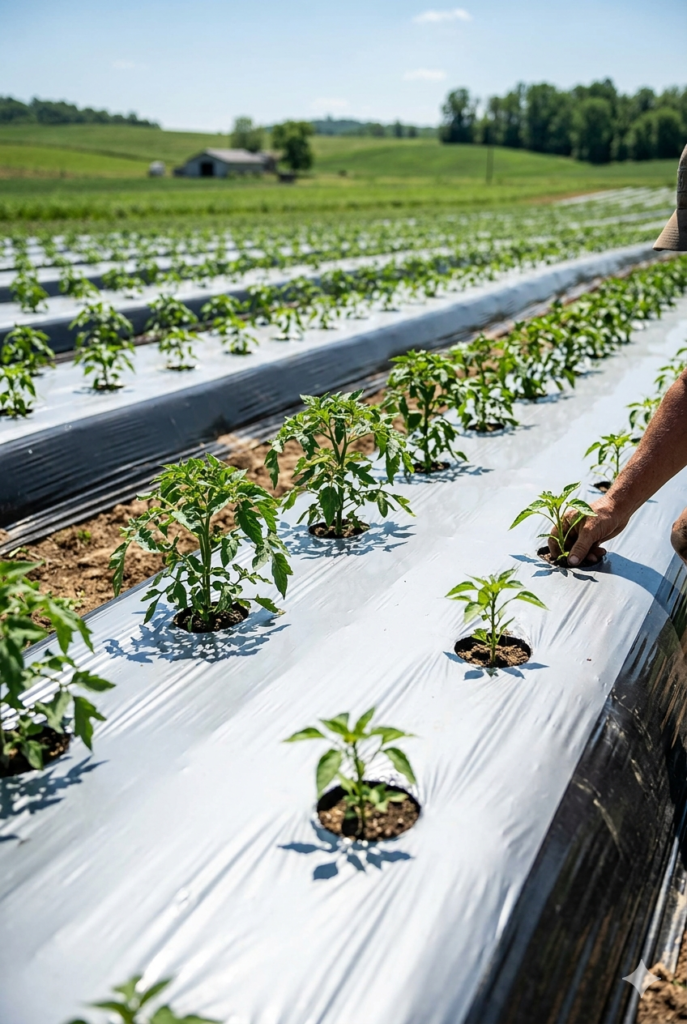
Mulch film is a thin protective plastic layer spread over the soil around crops. It is widely used in modern agriculture to create better growing conditions for plants.
Agricultural mulch film helps farmers:
- Retain soil moisture
- Control soil temperature
- Reduce weed growth
- Protect soil nutrients
- Improve crop quality
- Increase agricultural productivity
Mulch films are available in various types, including:
- Black mulch film
- Silver-black mulch film
- UV-resistant mulch film
- Biodegradable mulch film
- Colored mulch film
For desert farming in Africa, UV-resistant mulch film is especially beneficial because it can withstand strong sunlight and high temperatures.
Can Mulch Film Make Desert Farming Possible in Africa?
The answer is yes. Mulch film technology is making desert farming more practical and productive in many African regions.
By improving water efficiency and protecting crops from harsh climate conditions, mulch film allows farmers to grow vegetables, fruits, and commercial crops even in dry areas.
Let’s explore how mulch film supports desert farming in Africa.
1. Conserves Water in Dry Regions
Water scarcity is the biggest challenge in desert agriculture.
Under intense African sunlight, soil moisture evaporates very quickly. Crops often dry out before they can fully develop.
Mulch film acts as a protective barrier that reduces water evaporation from the soil surface. This helps maintain moisture for a longer period.
Benefits include:
- Reduced irrigation requirements
- Better water management
- Improved crop survival
- Lower water wastage
This is extremely important in countries where water resources are limited.
Farmers using drip irrigation combined with mulch film technology often achieve highly efficient water usage in desert farming systems.
2. Protects Crops from Extreme Heat
African desert regions regularly experience extremely high temperatures that can damage plant roots and reduce crop growth.
Mulch film helps regulate soil temperature by creating a more stable growing environment.
Silver-black mulch film is particularly useful because it reflects excess sunlight while protecting moisture inside the soil.
This helps:
- Prevent root stress
- Improve seed germination
- Support healthy plant growth
- Reduce heat damage
Temperature control is one of the main reasons why mulch film is becoming popular in African desert agriculture.
3. Improves Soil Quality
Desert soils are often dry, sandy, and low in nutrients.
Strong winds and heat can quickly reduce soil fertility, making farming difficult.
Mulch film protects the soil surface from direct exposure to sunlight and wind. This helps maintain:
- Soil structure
- Nutrient availability
- Moisture retention
- Organic activity in the soil
Healthier soil conditions lead to stronger crop development and better agricultural productivity.
4. Reduces Weed Growth
Weeds compete with crops for water and nutrients, which is especially harmful in desert regions where resources are already limited.
Black mulch film blocks sunlight from reaching weeds, reducing their growth naturally.
This offers several advantages:
- Lower labor costs
- Reduced herbicide usage
- Better crop nutrition
- Increased farming efficiency
For commercial farming projects in Africa, weed control is a major benefit of mulch film technology.
5. Supports Sustainable Agriculture in Africa
Sustainability is becoming a major focus in African agriculture.
Governments and agricultural organizations are encouraging farmers to adopt climate-smart farming technologies that improve water conservation and land productivity.
Mulch film supports sustainable farming by:
- Conserving water
- Reducing chemical usage
- Improving crop efficiency
- Protecting soil health
- Supporting climate adaptation
This makes agricultural mulch film an important tool for future farming development in Africa.
Best Crops for Desert Farming with Mulch Film
Many crops can successfully grow in desert regions when mulch film technology is used properly.
Vegetables
- Tomatoes
- Cucumbers
- Peppers
- Onions
- Eggplants
- Chilies
Fruits
- Watermelon
- Muskmelon
- Strawberries
- Papaya
Commercial Crops
- Cotton
- Flowers
- Horticulture crops
Farmers across Africa are increasingly using mulch film to improve crop quality and increase market value.
Why UV-Resistant Mulch Film is Important for African Desert Farming
Standard plastic materials may break down quickly under harsh desert sunlight.
UV-resistant mulch film is specially designed to withstand strong UV radiation and high temperatures.
Benefits include:
- Long-lasting durability
- Better heat resistance
- Improved field performance
- Lower replacement costs
- Better crop protection
Tilak Polypack manufactures high-quality UV-stabilized mulch films suitable for harsh African climatic conditions.
Desert Farming and Drip Irrigation: A Perfect Combination
One of the most effective modern farming systems in Africa combines drip irrigation with mulch film technology.
Drip irrigation delivers water directly to plant roots, while mulch film prevents evaporation.
Together, they help farmers:
- Save water
- Improve irrigation efficiency
- Increase crop yields
- Reduce operational costs
- Achieve better farming results
This farming method is becoming increasingly popular in dry African regions where water conservation is critical.
Tilak Polypack – Supporting Modern African Agriculture
As demand for advanced farming solutions increases across Africa, farmers need reliable agricultural product manufacturers.
Tilak Polypack is a trusted manufacturer and exporter of premium-quality agricultural mulch films designed for modern farming applications.
The company provides:
- UV-resistant mulch film
- Durable agricultural film
- Customized mulch film sizes
- High-performance farming solutions
- Export-quality products
Tilak Polypack focuses on helping farmers improve productivity through innovative and cost-effective agricultural technologies.
Its mulch film products are suitable for desert farming, commercial horticulture, greenhouse farming, and vegetable cultivation across African countries.
Future of Desert Farming in Africa
Desert farming is expected to become increasingly important as Africa’s population grows and climate conditions continue to change.
Modern agricultural technologies such as mulch film, drip irrigation, greenhouse farming, and smart farming systems will play a major role in improving food security across the continent.
With proper water management and soil protection techniques, many dry African regions can become productive farming areas.
Mulch film technology is helping farmers transform difficult desert environments into sustainable agricultural land.
Conclusion
Desert farming in Africa presents many challenges, including water shortages, extreme temperatures, poor soil conditions, and unpredictable climate patterns.
However, modern agricultural solutions like mulch film technology are making farming in dry regions more practical and profitable.
By conserving moisture, controlling temperature, reducing weeds, and protecting soil health, mulch film helps African farmers improve crop production even in harsh desert conditions.
As climate-smart agriculture continues to grow across Africa, the demand for high-quality agricultural mulch films will continue increasing.
Tilak Polypack is committed to supporting African farmers with durable, UV-resistant, and high-performance mulch film solutions designed for modern agricultural needs.
For farmers looking to improve desert farming efficiency and crop productivity, mulch film technology is becoming one of the most valuable investments in the future of African agriculture.