

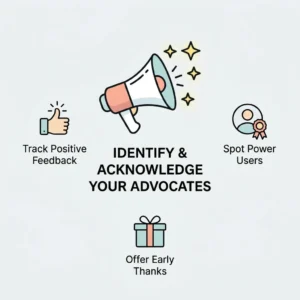

This is the foundation of customer advocacy.
Customer advocates are people who have positive experiences with a business and willingly share those experiences. They can recommend products, write reviews, provide testimonials, share social media content, or introduce potential customers through referrals.
Why Customer Advocacy Is Different
Traditional marketing is controlled by the company. Businesses decide what message to communicate and where to promote it.
Customer advocacy works differently.
The message comes from people who have actually interacted with the brand. Because they are speaking from personal experience, their opinions can provide an additional layer of credibility.
A simple customer recommendation can sometimes answer questions that an advertisement cannot.
For example, a potential customer may want to know whether a product is reliable, easy to use, worth the investment, or supported by a helpful team. Existing customers can provide real-world perspectives on these questions.
You can explore more about this approach in the complete customer advocates guide.
The Customer Advocacy Journey
Customer advocacy usually develops over time rather than happening instantly.
A typical journey may look like:
First Interaction → Purchase → Positive Experience → Satisfaction → Trust → Advocacy
After becoming satisfied, customers may start engaging with the brand more frequently. They might leave feedback, recommend the product, or share their experience online.
This means every stage of the customer journey can influence future advocacy.
Creating Customers Who Want to Speak About Your Brand
The best way to encourage advocacy is to give customers a genuine reason to talk about the business.
Companies can focus on several areas.
Deliver Real Value
A product or service should solve a real problem or provide meaningful benefits. Customers who see clear value have stronger reasons to recommend it.
Provide Helpful Support
Customer support can have a major impact on the overall experience. Fast, respectful, and useful assistance can turn difficult situations into positive experiences.
Listen to Feedback
Customers appreciate businesses that listen to their opinions. Feedback can also reveal opportunities to improve products and services.
Maintain Consistency
One excellent interaction is helpful, but consistent quality is more powerful. Customers are more likely to trust brands that repeatedly deliver what they promise.
Different Ways Customers Can Support a Brand
Customer advocates do not all behave in the same way.
Some may prefer writing reviews, while others may be more comfortable sharing social content or referring friends.
Common advocacy activities include:
- Writing online reviews
- Providing testimonials
- Making referrals
- Sharing social media posts
- Creating user-generated content
- Participating in case studies
- Joining brand communities
- Recommending products personally
Giving customers multiple options allows them to choose an advocacy method that feels natural.
Use Customer Feedback as a Growth Resource
Customer advocacy can provide more than promotional benefits.
Advocates often have valuable insights into the products they use. Their feedback can reveal what works well and where improvements may be necessary.
Businesses can use this information to improve:
- Products
- Services
- Customer support
- Website experiences
- Educational content
- Onboarding processes
- Communication strategies
This creates a continuous improvement loop where customer feedback contributes to better experiences, which can lead to stronger advocacy.
Make the Advocacy Process Easy
Customers may be willing to help but still avoid participating if the process is complicated.
Businesses should therefore reduce unnecessary friction.
For example, a company can provide:
Easy Reviews: Give customers a straightforward way to submit feedback.
Simple Referrals: Provide convenient referral links or instructions.
Testimonial Questions: Use short questions to help customers explain their experiences.
Social Sharing: Make it easy to share relevant content.
Community Opportunities: Allow customers to help and interact with others.
The objective is to make advocacy convenient without making it feel forced.
Recognizing Customer Advocates
Customers who consistently support a business should feel appreciated.
Recognition can take many forms depending on the business and its audience.
Examples include:
- Personalized appreciation
- Exclusive content
- Early access
- Community recognition
- Special events
- Loyalty benefits
Recognition helps demonstrate that the business values the relationship, not just the promotional benefit.
Measure the Impact
Businesses should monitor advocacy performance to understand whether their strategy is effective.
Useful metrics include:
| Referral Rate | Measures customer-generated referrals |
| Conversion Rate | Tracks how many referrals become customers |
| Review Growth | Measures increases in customer reviews |
| Advocate Participation | Shows engagement with advocacy activities |
| Social Mentions | Tracks organic brand conversations |
| Retention Rate | Indicates long-term customer loyalty |
These measurements can help businesses identify which activities deserve more attention.
Build a Community of Supporters
A strong customer community can make advocacy more sustainable.
Customers can share knowledge, answer questions, discuss products, and exchange experiences. Over time, highly engaged community members may become strong advocates for the brand.
Community-based advocacy can be especially useful because customers are not simply talking about the company—they are also helping other customers.
Keep Advocacy Genuine
Authenticity should remain at the center of every customer advocacy strategy.
Businesses should not pressure customers to leave positive reviews or make claims they do not personally support.
Instead, companies should focus on creating experiences that naturally encourage positive conversations.
Genuine advocacy is valuable precisely because it comes from real customer experiences.
Final Thoughts
Customer advocacy can transform satisfied customers into an important source of trust, social proof, referrals, and brand awareness.
The process begins with a simple principle: give customers a reason to believe in your brand.
Deliver valuable products, provide excellent support, listen to feedback, recognize loyal customers, and create simple ways for people to share their experiences.
Over time, these efforts can turn ordinary customer relationships into long-term brand advocacy.
For more information about developing an effective advocacy strategy, check out this guide to building powerful brand advocacy.
When businesses successfully create a community of satisfied and engaged customers, those customers can become some of the most authentic voices behind the brand.
Short Summary
Customer advocacy helps businesses turn satisfied customers into trusted brand supporters. Through reviews, referrals, testimonials, social sharing, communities, and genuine recommendations, customer advocates can strengthen credibility and contribute to long-term business growth.
Frequently Asked Questions
1. What is customer advocacy?
Customer advocacy is when satisfied customers voluntarily support a business by recommending, reviewing, referring, or sharing their positive experiences.
2. How can a business create customer advocates?
Businesses can create advocates by delivering consistent value, providing excellent support, listening to feedback, and creating positive customer experiences.
3. What are the most common advocacy activities?
Reviews, referrals, testimonials, social media sharing, user-generated content, case studies, and community participation are common forms of advocacy.
4. Why should businesses measure advocacy?
Measurement helps businesses understand how many referrals, reviews, recommendations, and other advocacy activities are contributing to customer acquisition and retention.
5. How can brands keep customer advocacy authentic?
Brands should encourage voluntary participation, avoid pressuring customers, and focus primarily on creating products and experiences that customers genuinely value.