
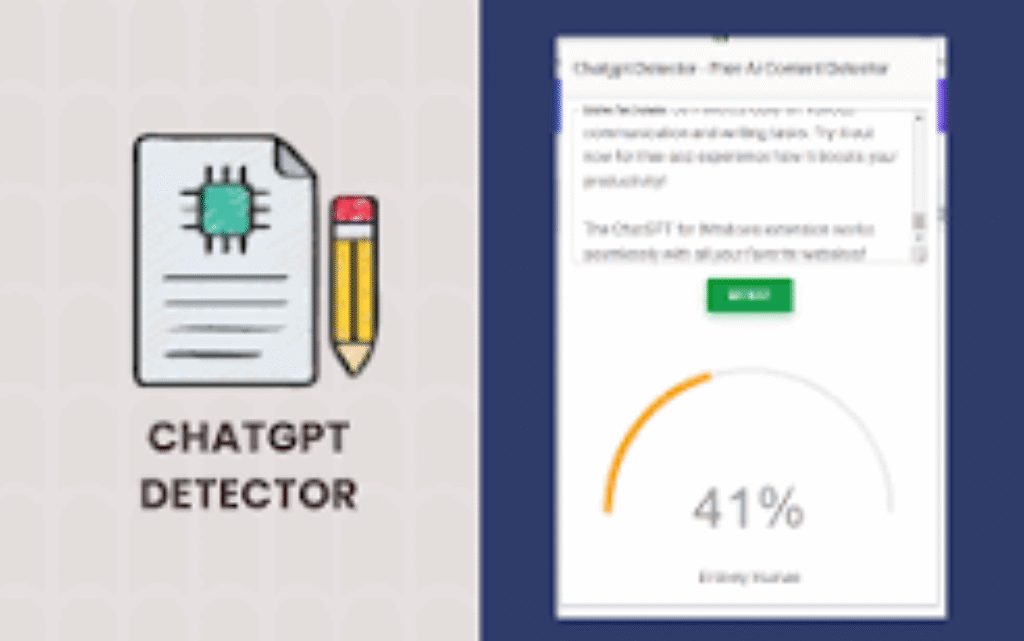
Last month, a hiring manager told me she’d received forty cover letters in a single morning, and thirty of them sounded eerily identical. Polished, balanced, and strangely soulless. That’s the new reality of content: AI can write anything, so the real skill is knowing what it wrote. A reliable ChatGPT detection tool like KI generierter Text erkennen helps you separate authentic voices from machine-made text before it costs you trust, grades, or rankings.
Why AI Text Detection Matters Now
Generative AI isn’t the problem. Undisclosed, unchecked AI content is. When readers can’t tell who or what wrote a piece, credibility erodes quickly.
For Educators and Students
Teachers need a fair way to check whether an essay reflects a student’s own thinking. Students, in turn, want proof that their original work won’t be falsely flagged. A good detector serves both sides by offering evidence rather than accusations.
For Publishers and SEO Teams
Search engines reward helpful, experience-driven content. Agencies and editors now scan freelance submissions to make sure they bring real insight rather than recycled, machine-averaged phrasing.
How a ChatGPT Detection Tool Actually Works
Detectors don’t “read” the way humans do. They measure statistical fingerprints that language models tend to leave behind.
Perplexity and Burstiness
Perplexity measures how predictable each word choice is. AI text often follows the most probable path, so it scores low. Burstiness looks at variation in sentence length and rhythm. Humans naturally mix short, punchy lines with long, winding ones. Models tend to stay suspiciously even.
Pattern and Stylometric Analysis
Beyond those two signals, modern tools examine repeated transitions, overly tidy paragraph structures, generic hedging phrases, and the absence of personal anecdotes or specific, checkable details. No single marker proves anything, but together they paint a convincing picture.
Detecting AI Text Beyond English
AI writing isn’t limited to one language, and neither should detection be. German-speaking students, marketers, and journalists increasingly ask how to approach KI generierter Text erkennen, meaning how to recognize AI-generated text in their own language. Tools built for multilingual analysis help here, and Isgen offers a dedicated page where you can KI generierter Text erkennen in German with the same speed and clarity as English. Language-specific patterns matter because German compound nouns, sentence structure, and formality differ greatly from English, and a detector tuned only for English can easily misjudge them.
What Makes Isgen Worth Trying
Isgen is built around a simple promise: paste your text, get a clear answer. Instead of a vague yes-or-no verdict, it highlights the passages that look machine-generated, so you can see why a score came out the way it did. That transparency is what separates a useful ChatGPT detection tool from a black box. It also supports multiple languages, which makes it practical for international teams and classrooms.
Tips for Getting Reliable Results
Even the best detector is an assistant, not a judge. A few habits will keep your results meaningful:
-
Test longer samples. Short snippets of a sentence or two give weak signals. Aim for at least a few hundred words.
-
Combine tools with context. Compare the text against the author’s earlier work, tone, and knowledge of the subject.
-
Treat scores as probabilities. A 70% AI score means “worth a closer look,” not “guilty.”
-
Edit with purpose. If you use AI for drafting, add your own examples, opinions, and lived experience until the piece truly sounds like you.
Conclusion: Authenticity Is the New Currency
AI writing tools aren’t going away, and that’s fine. What matters is transparency, accountability, and the human touch that no model can fully imitate. A trustworthy ChatGPT detection tool gives teachers, editors, and creators the confidence to keep that standard high. If your work reaches Chinese-speaking audiences, you can also explore Isgen’s Chinese-language detection to extend the same checks across borders. Whether you’re grading essays, vetting freelancers, or protecting your own brand voice, start checking your content today and let real writing stand out.