
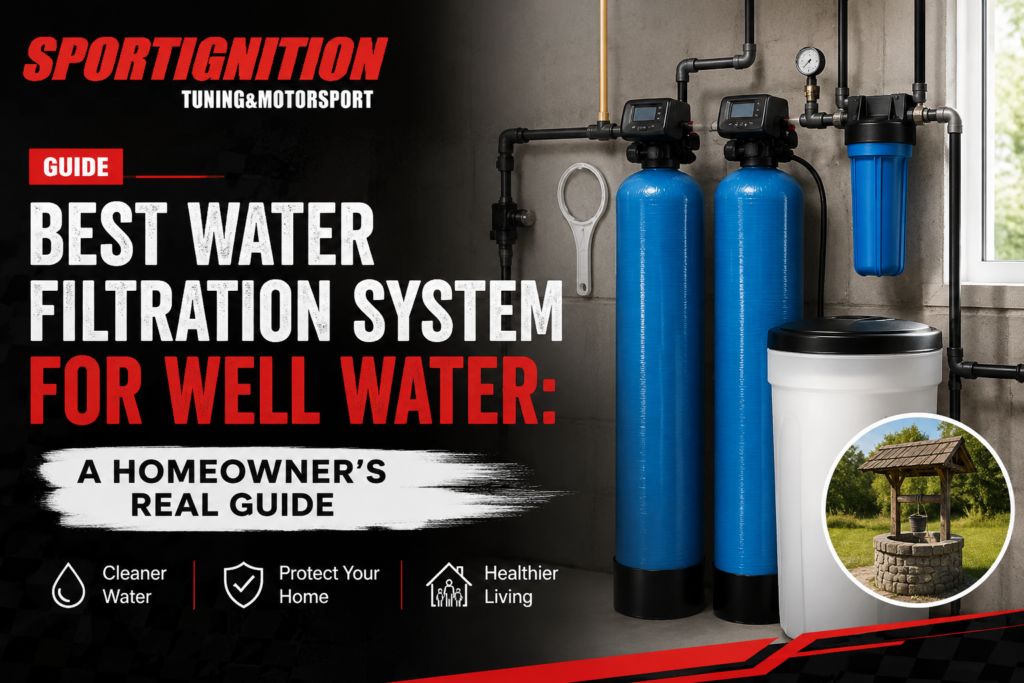
There’s no single “best” water filtration system for well water, and anyone who tells you otherwise hasn’t looked closely at how differently two wells a few miles apart can behave. One property might deal with iron staining and sulfur odor, while a neighbor down the road pulls water that’s hard as concrete but otherwise clean-tasting. Well water reflects the specific geology underneath a specific property, which is exactly why the first real step toward solving a well water problem is testing, not shopping.
Why Well Water Varies So Much From Municipal Supply
Municipal water systems treat water to a consistent regulatory standard before it ever reaches your tap. Private wells have no such uniform treatment step what comes out of the ground reflects whatever minerals, gases, and occasionally contaminants exist in the aquifer your well draws from. That can mean anything from naturally occurring iron and manganese, which cause staining and metallic taste, to hydrogen sulfide gas, responsible for that unmistakable rotten-egg smell, to genuinely concerning contaminants like arsenic or coliform bacteria, depending on your region and how close your well sits to agricultural runoff, septic systems, or industrial activity.
Start With a Real Water Test, Not a Guess
Homeowners often reach for a filtration system based on symptoms alone a smell, a stain, a taste and while symptoms are useful clues, they don’t tell the whole story. Iron and manganese both cause staining but require somewhat different treatment approaches depending on concentration and whether the iron is dissolved or already oxidized. Hardness doesn’t always announce itself through an obvious symptom until you notice scale buildup on fixtures or reduced water heater efficiency over time. A proper water test, ideally through a certified lab rather than a basic drugstore strip, gives you actual numbers to design a system around instead of a best guess.
Matching Treatment to What’s Actually in Your Water
Sediment and turbidity are usually the easiest fix, typically resolved with a sediment pre-filter ahead of anything else, since sediment left unaddressed will clog and shorten the life of every other stage in your system.
Iron and manganese, depending on concentration, often need an oxidizing filter or an air injection system to convert dissolved iron into a form that can be physically filtered out, rather than a standard carbon filter that won’t fully address it.
Hardness, caused by dissolved calcium and magnesium, is typically addressed with a water softener using ion exchange, which is a genuinely different technology from filtration and solves a different problem — softening prevents scale buildup, but doesn’t remove contaminants the way filtration does.
Hydrogen sulfide odor usually requires an oxidizing treatment step similar to iron removal, since simple carbon filtration alone often can’t keep up with ongoing sulfur off-gassing at meaningful concentrations.
Arsenic, nitrates, and other regulated contaminants typically call for reverse osmosis, since RO membranes are effective at rejecting a wide range of dissolved contaminants that simpler filtration methods can’t reliably remove.
Why Whole House Treatment Often Makes More Sense Than Point-of-Use
For well water specifically, treating water at the point it enters the home — a whole house system — usually addresses problems more comprehensively than a single under-sink filter. Iron staining affects laundry and fixtures throughout the house, not just drinking water. Hardness damages water heaters and appliances regardless of whether you drink from that tap. A point-of-use filter solves drinking water quality but leaves every other fixture exposed to the same underlying problem.
That said, many well water systems combine both approaches: whole house treatment for sediment, iron, hardness, and odor, paired with a dedicated reverse osmosis system at the kitchen tap for the highest level of drinking water purification.
The Layered Approach Most Well Systems Actually Need
Rarely does a single filter solve everything a challenging well presents. A typical layered setup for a well dealing with multiple issues might include a sediment pre-filter first, an iron/manganese oxidizing stage second, a water softener third if hardness is present, and finally a reverse osmosis system at the point of drinking water use for the most complete purification. Skipping the earlier stages and jumping straight to RO usually backfires, since sediment and iron will foul an RO membrane quickly without proper pre-treatment ahead of it.
Budgeting Realistically
Well water treatment is rarely a single upfront purchase and done. Filter media, cartridges, and softener salt all require ongoing replenishment, and the cost of that maintenance should factor into your decision as much as the initial system price. A cheaper system that requires frequent, expensive replacement media can cost more over five years than a well-specified system with a longer service interval.
Regional Patterns Worth Knowing, Without Relying on Them Entirely
Certain well water problems do correlate with geography — iron and manganese are more common across parts of the Midwest and Northeast where iron-bearing rock formations are prevalent, while arsenic contamination shows up more frequently in specific pockets of New England, the Southwest, and the upper Midwest due to underlying bedrock composition. Nitrate contamination tends to correlate with agricultural regions where fertilizer runoff can migrate into shallow aquifers. These regional patterns are useful context, but they’re not a substitute for testing your specific well, since two properties in the same county can draw from different depths or different local aquifer conditions with meaningfully different water chemistry.
Private wells also fall outside EPA regulation in the way municipal water systems are regulated under the Safe Drinking Water Act, which places the responsibility for testing and treatment entirely on the homeowner rather than a utility required to meet federal standards. This is worth internalizing fully: nobody is checking your well water for you on a regulatory schedule, which makes proactive testing a genuine responsibility rather than a nice-to-have precaution.
Well Maintenance Beyond Filtration
Filtration addresses what comes out of your well, but the well itself needs periodic attention independent of any filtration system installed downstream. Well casings can develop cracks allowing surface contamination to enter, pumps degrade over years of operation, and sediment can accumulate at the well bottom, all of which affect water quality regardless of how sophisticated your filtration setup is. An annual well inspection, separate from water testing, catches structural issues that no filtration system downstream can compensate for, and homeowners who focus entirely on filtration while neglecting well maintenance sometimes find themselves treating symptoms of a mechanical problem rather than addressing it directly.
Common Questions
How often should well water be retested after installing a filtration system? Annually at minimum, and more frequently if you notice any change in taste, smell, or appearance, since well water conditions can shift over time due to seasonal changes or nearby land use.
Can one system handle both iron removal and water softening? Some combination units exist, but many well systems perform better with separate, dedicated stages for iron and hardness, since combining both functions into one unit can reduce efficiency at treating either problem fully.
Is reverse osmosis necessary for well water, or is whole house filtration enough? It depends on what’s in your water. Whole house filtration handles sediment, iron, and hardness well, but RO is generally the most reliable method for contaminants like arsenic or nitrates that require near-complete rejection rather than reduction.
Why does my well water smell fine sometimes and not others? Hydrogen sulfide production and iron bacteria activity can fluctuate with groundwater levels, temperature, and seasonal changes, which is part of why well water problems can seem inconsistent even when the underlying geology hasn’t changed.
Choosing the right well water filtration system starts with knowing exactly what you’re dealing with, not with picking the most heavily marketed option. Apex Water Filters offers both whole house filtration systems built for iron, sediment, and hardness, and reverse osmosis systems for comprehensive drinking water purification, matched to the specific water quality challenges a well presents.