
Introduction
Choosing the right stand for your home appliances can help improve stability, simplify cleaning, and make better use of available space. Whether you want to place a washing machine, refrigerator, or another heavy appliance, selecting a suitable stand is important for everyday convenience. The right option can help keep appliances properly positioned while making floor cleaning and maintenance easier.
However, not every stand is suitable for every appliance. Factors such as load capacity, dimensions, material, wheel quality, floor type, and stability should be considered before making a purchase. This guide explains the different types, uses, benefits, and essential buying tips to help you make an informed decision.
What Is a Trolley Stand?
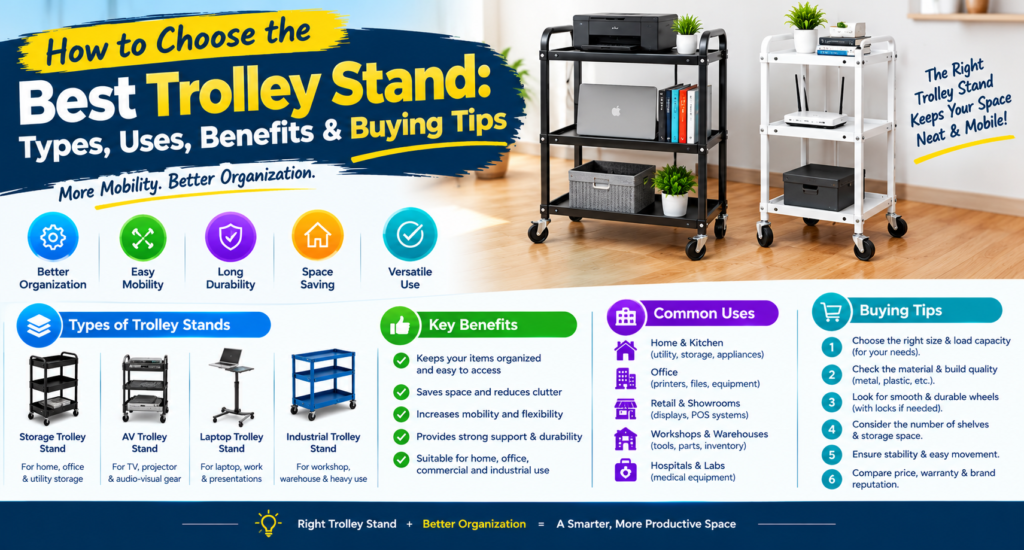
A Trolley Stand is a platform designed to support appliances or equipment above the floor. Depending on its design, it may feature a fixed frame, adjustable dimensions, wheels, locking mechanisms, or a combination of these features.
These stands are commonly used in homes, kitchens, utility areas, and workplaces. They can make it easier to clean underneath appliances, reduce direct contact with damp floors, and reposition compatible equipment when necessary.
Before choosing one, always check whether the stand is designed for your appliance’s weight, size, and intended use.
Different Types of Trolley Stands
Several types are available, each offering different features and benefits. Understanding these options can help you select the right one for your requirements.
1. Heavy-Duty Models
A Heavy Duty Trolley Stand is designed for appliances or equipment that require stronger structural support. Its frame and platform should be capable of handling the intended load without bending, shifting, or becoming unstable.
When selecting a heavy-duty model, check the manufacturer’s stated load capacity and ensure it is suitable for the appliance’s total weight. A higher load rating alone does not guarantee stability, so construction quality and the design of the support points also matter.
2. Stands for Washing Machines
A Washing Machine Trolley Stand can raise a washing machine above the floor and may help with cleaning and maintenance around the appliance. Some models include wheels for repositioning, while others use fixed supports for greater stability.
Washing machines can vibrate significantly during spin cycles. Therefore, the stand must be compatible with the machine’s dimensions and weight, and it must remain stable during operation. If a wheeled design is used, its locking system must be suitable for the appliance and securely engaged before use.
3. Stands for Refrigerators
A Refrigerator Trolley Stand is intended to support a refrigerator while providing clearance underneath. This can be useful for cleaning the floor and moving the appliance when necessary.
Before buying one, measure the refrigerator’s base and check its weight. The platform should support the appliance evenly without obstructing ventilation or interfering with its normal operation. Avoid moving a loaded refrigerator unless the stand is specifically designed for that purpose and the manufacturer’s instructions allow it.
4. Adjustable Designs
An Adjustable Trolley Stand allows the platform dimensions to be changed to accommodate different appliance sizes within its specified range. This flexibility can be useful when a household has multiple appliances or when precise fitting is important.
Check the minimum and maximum dimensions before purchasing. Make sure all adjustable sections can be locked securely and that the appliance’s feet will sit correctly on the support surface.
5. Portable Options
A Portable Trolley Stand is useful when equipment needs to be repositioned occasionally. Depending on its construction, it may include wheels, handles, or a lightweight frame to improve portability.
Portability should never come at the expense of stability. For heavy appliances, choose a model specifically designed for the load and make sure it can be secured safely in its operating position.
Benefits of Using a Trolley Stand
Using a properly selected stand can offer several practical advantages.
Easier Floor Cleaning
Raising an appliance can make it easier to access the floor beneath and around it. This helps remove dust, dirt, and spills that might otherwise collect in hard-to-reach areas.
Better Space Management
A stand can help position an appliance conveniently in a utility room, kitchen, or laundry area. Some designs also make occasional repositioning easier, provided the appliance and stand are compatible.
Improved Floor Clearance
Keeping an appliance slightly elevated can reduce direct contact between its base and minor floor moisture. However, a stand is not a substitute for fixing leaks or protecting appliances from flooding.
Convenient Maintenance
Additional clearance may make routine cleaning and inspection easier. Always follow the appliance manufacturer’s instructions before moving or servicing any equipment.
Flexible Placement
Models with suitable adjustment features can accommodate different appliance dimensions. This can be especially helpful when space is limited or the layout changes.
Which Material Should You Choose?
Material quality affects strength, durability, maintenance, and suitability for different environments.
Metal Construction
A Metal Trolley Stand can offer a sturdy frame for compatible appliances. Its actual strength depends on the metal type, thickness, joints, design, and rated load capacity.
For areas exposed to moisture, check whether the metal has a suitable corrosion-resistant finish. Inspect the frame regularly for rust, loose joints, or damage.
Plastic and Composite Designs
Plastic or composite stands may be lightweight and convenient for lighter applications. However, their load capacity and resistance to wear can vary considerably.
Always check the stated specifications rather than assuming a material is suitable based on appearance alone.
Is a Wheeled Stand the Right Choice?
A Trolley Stand with Wheels can make repositioning easier, especially during cleaning or when access to the surrounding area is required. However, wheels introduce additional considerations when supporting heavy or vibrating appliances.
Look for appropriately rated wheels, reliable locking mechanisms, a stable base, and compatibility with the floor surface. Lock the wheels before operating the appliance, and avoid placing the stand on uneven or sloping floors.
For washing machines and other equipment that vibrates during operation, a fixed or specifically approved anti-vibration support may be more appropriate than a freely rolling platform.
Buying Tips: What Should You Check?
Before making a purchase, consider the following points:
- Load capacity: Confirm that the stand can safely support the appliance’s weight.
- Dimensions: Measure the appliance base and compare it with the platform’s usable dimensions.
- Stability: Check the frame, joints, feet, and locking mechanisms.
- Material: Select a construction suitable for the appliance and the environment.
- Adjustability: Ensure the available size range fits your appliance securely.
- Wheel quality: If wheels are included, check their load rating and locking system.
- Floor compatibility: Confirm that the stand is suitable for your floor type and does not rock or slide.
- Maintenance: Look for easy-to-clean surfaces and finishes that suit the installation area.
- Instructions: Follow both the stand and appliance manufacturers’ guidance for installation and operation.
- Warranty and support: Review the warranty terms and availability of assistance before purchasing.
How to Maintain Your Stand
A Durable Trolley Stand depends on suitable construction as well as proper installation and maintenance. Clean the frame regularly and remove accumulated dust or moisture. Check fasteners, joints, feet, and wheels for signs of wear.
Do not exceed the rated load or place the appliance unevenly. If the stand bends, cracks, becomes unstable, or develops loose parts, stop using it until the issue is resolved. Recheck stability after moving the appliance or changing the stand’s dimensions.
Which Trolley Stand Is Best for Home Use?
The Best Trolley Stand for Home depends on the appliance you need to support, the available space, and how often you expect to move it. A refrigerator may require a different design from a washing machine, while lighter equipment may need a simpler support.
Start by checking the appliance’s weight and dimensions. Then compare load ratings, material, stability, adjustability, and any wheel-locking features. Choose a stand designed for the specific application rather than selecting one based on price or appearance alone.
Conclusion
Choosing the right stand involves more than comparing prices or appearance. Load capacity, dimensions, material, stability, floor compatibility, and the intended appliance should all guide your decision. By checking these factors and following the manufacturer’s instructions, you can select a suitable solution that supports everyday cleaning, maintenance, and space management.
Take accurate measurements, compare specifications carefully, and choose a design that is made for your particular appliance and usage conditions.
Frequently Asked Questions (FAQs)
1. What is a trolley stand used for?
It supports compatible appliances or equipment above the floor and may make cleaning, placement, and maintenance more convenient.
2. Can I use one stand for different appliances?
Only if its dimensions, load capacity, and design are suitable for each appliance.
3. Are adjustable stands useful?
Yes. They can accommodate different sizes within their stated adjustment range, provided the appliance remains securely supported.
4. Should I choose a stand with wheels?
Wheels are useful for repositioning, but the locking system and overall stability are especially important for heavy appliances.
5. Can a washing machine be placed on a wheeled stand?
Only when the stand is specifically designed for the machine’s weight and vibration, and its manufacturer permits that use.
6. Does a stand prevent floor damage?
It may help reduce direct contact with the floor, but correct installation and appropriate floor protection are still necessary.
7. How do I choose the correct size?
Measure the appliance’s base and compare it with the platform dimensions and adjustment range.
8. Is metal better than plastic?
Not always. Suitability depends on the material quality, construction, load rating, and intended application.
9. How can I check whether a stand is stable?
Place it on a level floor, inspect the supports and joints, and follow the manufacturer’s installation instructions before placing the appliance on it.
10. How often should I inspect a stand?
Inspect it periodically and whenever the appliance has been moved. Check for loose parts, corrosion, cracks, damaged wheels, and signs of instability.