
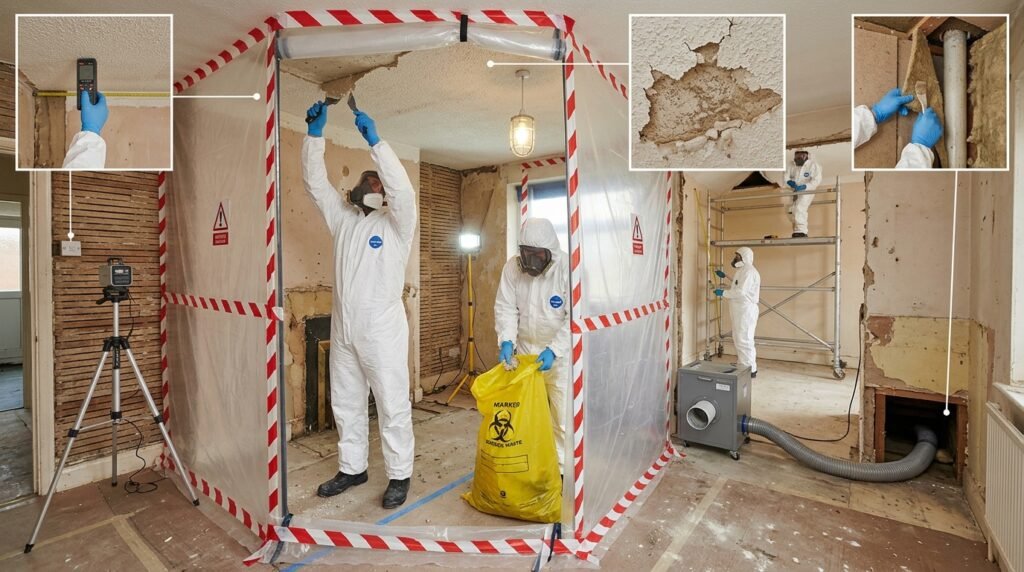
Older buildings can contain hazardous materials that require specialist attention during renovation, demolition, or property maintenance. Asbestos is one of the most important materials to consider because disturbing it can release microscopic fibres into the air, creating serious long-term health risks.
Proper asbestos management involves more than simply removing affected materials. It requires suitable assessment, careful planning, controlled removal, responsible waste disposal, and appropriate clearance procedures to ensure the affected area can be safely used again.
Understanding Asbestos Remediation
Asbestos remediation refers to the professional process of managing asbestos-containing materials to reduce exposure risks and protect people, buildings, and the surrounding environment.
Depending on the condition of the material and the project requirements, remediation may involve testing, controlled removal, containment, disposal, and restoration.
Asbestos can be found in several older building materials, including:
- Textured and popcorn ceilings
- Cement-based wall and ceiling sheets
- Roofing materials
- Exterior cladding
- Vinyl flooring and backing materials
- Insulation and pipe lagging
Identifying potential asbestos before renovation work begins is important because drilling, sanding, cutting, or breaking these materials can release hazardous fibres.
Why Professional Assessment Is Important
Asbestos is not always visible, and its presence cannot reliably be confirmed through appearance alone. Professional assessment and appropriate testing help determine whether building materials contain asbestos and what management approach is required.
Property owners should consider an asbestos assessment before undertaking renovations, demolition, ceiling restoration, or other work that may disturb older materials.
AR Plus provides asbestos testing and removal services for residential, commercial, and government projects. Its team can arrange site inspections, assess existing asbestos reports, and determine the appropriate removal requirements.
Early assessment helps project owners understand potential risks, plan the work properly, and avoid unexpected complications during construction.
Understanding Class A and Class B Asbestos Removal
In New Zealand, asbestos removal activities are regulated, and the required licence depends on the type of asbestos and the work involved.
There are two main classes of asbestos removal licences.
Class A Asbestos Removal
Class A licences cover the removal of all types of asbestos, including friable asbestos. Friable materials can be easily crumbled or reduced to powder, potentially releasing fibres into the air.
Examples include certain insulation materials, sprayed coatings, and pipe lagging.
Class B Asbestos Removal
Class B licences cover non-friable, or bonded, asbestos removal and associated dust. These materials commonly include asbestos cement roofing, wall cladding, and other bonded building products.
AR Plus holds both Class A and Class B asbestos removal licences, allowing its team to undertake a wide range of residential and commercial projects.
The Asbestos Removal Process
A properly managed asbestos project follows a structured process designed to