The best way to understand any system is to follow it from beginning to end. Abstract explanations of how intercity food delivery works can only take you so far. What really brings it to life is a story — a specific, grounded narrative of how a single order moves from a kitchen in one city to a table in another, through a sequence of decisions, technology, logistics, and human care that most people never stop to consider.
This is that story.
The Order That Started It All
Imagine a woman named Priya living in Hyderabad. She grew up in Mysore, and every Diwali her mother would make Mysore pak — the real kind, dense with ghee and chickpea flour, nothing like the overly sweet commercial versions sold at mithai shops that have never been within two hundred kilometres of Mysore. Her mother passed away two years ago. This Diwali, Priya wants that taste back. Not an approximation. The real thing.
She finds a listing on an intercity food delivery platform — a family-run sweet shop in Mysore, third generation, with reviews describing it in terms that make her heart quicken. The shop has been making Mysore pak the traditional way since her grandfather’s time. She places an order three days before Diwali, selects overnight delivery, and adds a note: “Please make sure it is the traditional firm variety, not the soft melt-in-mouth kind.”
That note is the beginning of a journey.
At the Mysore Kitchen
The shop owner, a man named Rajan, reads Priya’s note with appreciation. The firm variety is actually harder to ship because it requires a very specific moisture level — too much and it becomes sticky in transit, too little and it crumbles. He decides to make a fresh batch specifically timed to Priya’s dispatch window, adjusting the cooking time by three minutes longer than usual to achieve the drier, denser texture she wants.
The finished Mysore pak is cooled on a marble slab — the traditional method — and cut into precise pieces once it reaches exactly the right temperature. Rajan inspects each piece for texture and colour before approving it for packaging.
The pieces are layered in a food-grade box with parchment paper between layers to prevent sticking. A small desiccant pouch is placed in a corner of the box to absorb any ambient moisture. The box is sealed, wrapped in an insulated outer covering, and labelled with Priya’s name, delivery address, best-before date, and a note from the kitchen: “Best enjoyed at room temperature. Do not refrigerate.”
The Logistics Chain
The package is picked up from Rajan’s shop by a logistics partner of the intercity food delivery platform at 8 PM. It enters a consolidated dispatch system alongside several other packages heading toward various cities. By 9:30 PM, it is at a sorting hub where it is scanned, weighed, and assigned to a dedicated Hyderabad-bound consignment leaving at 11 PM.
The overnight drive from Mysore to Hyderabad takes approximately seven to eight hours. The package travels in a compartmentalised cargo vehicle where food packages are kept separated from other goods, in a dry and ventilated section of the vehicle. The driver is briefed on which packages have food contents that require careful handling.
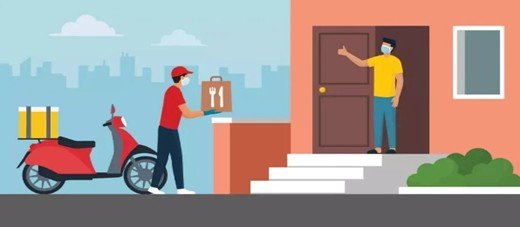
At 6:45 AM, the consignment arrives at the Hyderabad distribution hub. The package is scanned again, confirmed intact, and assigned to a last-mile delivery partner who begins their route at 7:30 AM.
The Moment of Arrival
Priya is awake when her phone buzzes with a tracking notification: “Your order is out for delivery.” Forty-five minutes later, there is a knock at her door.
She opens the package carefully. The outer insulation is intact. The inner box is sealed exactly as it left Mysore. She opens it and there — golden, fragrant, precisely cut — is the Mysore pak. She picks up a piece and takes a bite.
It is exactly right. The texture, the intensity of the ghee, the slight bitterness of the chickpea flour perfectly balanced by the sweetness. It tastes like Diwali in Mysore. It tastes like her mother’s kitchen.
This is what intercity food delivery actually is, at its most meaningful — not a logistics transaction, but a bridge between people and the food that carries their deepest connections.
The Invisible Effort Made Visible
What Priya experienced as a seamless delivery was actually the result of dozens of small decisions made by different people at different points in the chain. Rajan’s extra three minutes of cooking. The logistics partner’s careful handling. The sorting hub’s efficient processing. The last-mile driver’s timely route. And the platform’s technology that connected all of these pieces around Priya’s single request.
Intercity food delivery at its best is invisible in the best possible sense — all the complexity is absorbed by the system so the customer experiences only the joy of the food.
Platforms like HungerSate are built to create exactly these kinds of stories — where the right food finds the right person, no matter the distance, through a system designed to treat every order as the personal and meaningful thing it truly is.