The Household That Thought Intercity Food Delivery Was Expensive — Until the First Bill Arrived

Published: |Last updated:
Listen to this article
Show Quick ReadConcise summary from this article
Most assumptions about price are made before the price is known. This is how assumptions work — they fill the space where information would be, and they do so with a confidence that the actual information, when it arrives, sometimes supports and sometimes does not. The assumption that intercity food delivery must be expensive is exactly this kind of assumption. It is made before the menu is opened, before the…
Ask AI About This Article
Answers are limited to information in this article.
Most assumptions about price are made before the price is known. This is how assumptions work — they fill the space where information would be, and they do so with a confidence that the actual information, when it arrives, sometimes supports and sometimes does not. The assumption that intercity food delivery must be expensive is exactly this kind of assumption. It is made before the menu is opened, before the order is placed, before the bill arrives. It is made on the basis of logic — food from another city, specialist kitchens, packaging for a multi-hour journey — that sounds reasonable until the actual number arrives and turns out to be considerably more reasonable than the logic predicted.
For the Mehta household in Bengaluru’s Sadashivanagar neighbourhood — Vikram, a civil engineer, and his wife Ananya, a graphic designer, and their two children — the assumption had been held firmly enough to delay the first intercity order by four months. Four months of hearing about it from colleagues. Four months of Ananya’s friend Preeti sending messages about specific dishes and specific kitchens with a specificity that suggested she had been eating this food regularly and considered the experience non-negotiable. Four months of Vikram saying they should try it and then looking at the menu and closing the app without ordering because the logistics of an intercity order seemed like they would add up to something their weekly food budget was not designed to accommodate.
Then the children’s school had a holiday and the week had been long and Ananya ordered without overthinking it, and the bill arrived, and four months of assumption collapsed in approximately thirty seconds of looking at a number that was not what they had expected.
What They Had Assumed and Why
The Mehta household’s assumption about intercity food delivery pricing was not unreasonable. It was built from several components that individually make sense. A specialist kitchen in Hyderabad is producing food at a standard that local restaurants approximate but do not match — so the food itself must cost more. The packaging required for a multi-hour intercity journey is more sophisticated than standard delivery packaging — so that must add to the cost. The logistics of managing an intercity delivery are more complex than local delivery — so the platform’s margin must be higher. Add these together and the assumption reaches a price that feels appropriate to the quality and the distance involved.
What the assumption misses is what is not in the price. The Hyderabadi kitchen has no Bengaluru premises. No Bengaluru staff. No Bengaluru overheads of any kind. The forty-year establishment making the dum biryani has been operating from the same location in Hyderabad since before the concept of intercity food delivery existed. Its pricing reflects the cost of the preparation, the packaging, the delivery, and the platform’s margin. Nothing else. None of the restaurant economics that add to the cost of the same food when it is served from a Bengaluru premises are present in the intercity order.
The Bill That Arrived
Ananya placed the order through Hungersate on a Thursday morning — the dum biryani, the haleem, the shikampuri kebabs for the children who had been told about them by their school friend and had been requesting them with the persistence that children apply to the things they are curious about. She selected the dishes, confirmed the delivery window, and proceeded to the payment screen.
The number she saw was not the number four months of assumption had prepared her for. It was lower — specifically and meaningfully lower than the per-head cost of the last restaurant dinner the family had eaten together in Bengaluru, which had been a pleasant but ordinary occasion at a mid-range restaurant that had produced no particular memory and no particular desire to return.
She called Vikram at work. She told him the price. He was quiet for a moment and then said he would be home on time for dinner.
What Arrived and What It Cost Per Head
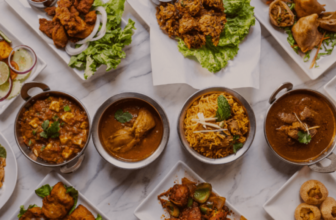
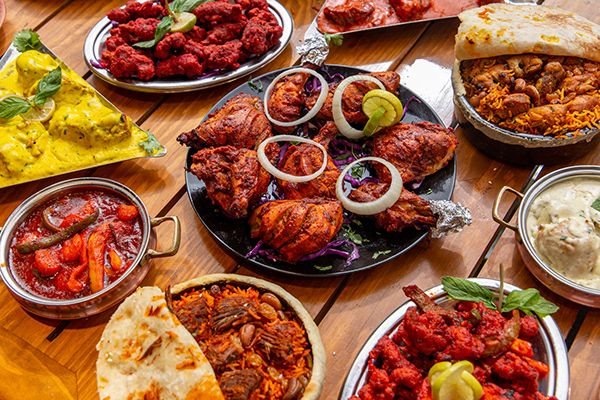
The delivery arrived at six forty-five. The freshness of the dum biryani — the fragrance of the overnight marinade and the sealed dum cooking preserved through the intercity journey — filled the kitchen before the containers had been fully opened. The haleem arrived with the silky depth that Ananya had heard Preeti describe and had quietly assumed was an enthusiast’s exaggeration. It was not. The shikampuri kebabs produced the reaction from the children that the school friend had apparently prepared for them — the cool filling inside the warm crust meeting exactly the expectation that had been built across weeks of anticipation.
Vikram, eating the biryani with the focused attention of someone whose assumption has just been revised in two directions simultaneously — the price lower than expected and the food better than expected — did the per-head calculation at the table without being asked. Four people, the full spread, the actual number that had appeared on the payment screen divided by four.
It was less than the per-head cost of the restaurant dinner. By a margin that surprised him enough to say so out loud. Ananya said she had already worked that out.
Why the Assumption Was Wrong in the Right Direction
The Mehta household’s four months of assumption had predicted that intercity Hyderabadi food delivery would be expensive and probably not worth the expense at the standard it was likely to produce. The first order disproved both parts of this simultaneously — the expense lower than predicted, the standard higher than predicted. This is the combination that converts a cautious first-time household into a regular one, because it addresses the two concerns that were delaying the first order and replaces them both with a single experience that makes the second order feel not like a decision but like an obvious continuation.
As the best intercity food delivery app on the Hyderabad-Bengaluru route, Hungersate has built its pricing around this conversion — the understanding that the household that discovers the right price and the right quality simultaneously will not need much persuasion for the second order. The budget-friendly structure of the platform’s intercity menu is not a marketing position. It is the practical expression of a pricing philosophy that starts with what the food costs to make and deliver correctly and arrives at a number that reflects that reality rather than the reality of restaurant economics that do not apply.
The Four Months That Did Not Need to Happen
Six weeks after the first order, the Mehta household has placed five more. The weekly intercity order has become a standing Thursday plan — the biryani or the haleem or sometimes both, depending on what the week has called for. Vikram has told three colleagues about the per-head calculation. Ananya has told Preeti that she should have sent the number alongside the descriptions of the food, because the number was the piece of information that four months of assumption had been waiting for.
The assumption had been wrong. The bill had said so, clearly and specifically, on a Thursday evening when a household of four had eaten the best meal of the week at a price that made the next one entirely easy to justify.
Four months had not needed to happen. The first order was the only thing required.
Skip the four months — open Hungersate, look at the price, place the order, and find out what the Mehta household discovered on a Thursday evening when the bill arrived.
Promote your articles nowCheck for details
Choose a promotion package
Choose a package below, scan the QR code and pay the displayed amount for 20 days.
After payment, email your article title and payment screenshot to info@yourneeds.asia. Once confirmation is received, one of our administrators will activate the promotion.

Choose where your promoted article receives extra visibility
Promotion changes presentation and placement for the selected period. It does not guarantee traffic, enquiries, search ranking or sales.
Priority visibility in the VIP Lounge, promoted shelves and highlighted article areas.
Top-style highlighting in article directories, homepage feeds and promoted article blocks.
Premium styling across supported article feeds, recommendations and directory placements.
Featured presentation in supported homepage, category, directory and related-article areas.
Build a stronger online presence for your business
Get Your Website for ₹15,000
Are you listed and don't have a website for your business? We can plan, design and launch a responsive website that makes your business easier to understand and contact.
Get My WebsiteSEO Starts from ₹10,000/Month
Improve how your business is presented across Google, local listings and AI-powered search results with ongoing SEO, content and authority-building work.
Improve My VisibilitySuggested Articles
View all articles
Best Tasting Sweet Potato Varieties: Which One Is the Sweetest?
Sweet potatoes are available in many varieties, each with its own balance of sweetness, texture, moisture, and flavor. Some varieties are naturally soft and…
How to Choose the Best Sweet Potato Variety for Your Needs
Sweet potatoes come in many varieties, and each one has different characteristics that make it more suitable for certain recipes, cooking methods, or food…
The Anniversary Dinner That Neither of Them Will Ever Forget
Anniversary dinners carry an expectation that grows heavier with each passing year. The first anniversary is forgiving — anything thoughtful feels significant simply because…
The First Order of Intercity Food to Bengaluru and the Silence That Followed It
There is a particular silence that good food produces — different from the silence of an empty room, different from the silence between people…
Latest Blog Posts
View all articles
Emerging Business Opportunities That Are Shaping the Future Market
Due to continuous growth and development in the global economy, entrepreneurs are finding many ways to innovate, utilize advanced technology, and leverage strategic acquisitions…

ISO 20000 Manual: A Complete Guide to Modern IT Service Management
Current businesses rely on efficient IT services for the successful functioning of day-to-day operations, customer requirements, communications, and growth of their business. In the…

Amit Malhotra: Simplifying Forex Trading for a New Generation of Investors
A new generation of investors is entering financial markets faster than ever before, driven by digital access, social media exposure, and a growing curiosity…
Everyday Play for Children: 7 Powerful Ways to Build Life Skills
Children can benefit from simple play activities, such as working with blocks, drawing, and solving puzzles. Through play, children can explore their world and…

Seasonal Promotions for E-commerce: A Complete Guide to Planning, Marketing, and Growth
Seasonal promotions are one of the most effective ways for e-commerce businesses to increase sales, attract new customers, and create stronger engagement throughout the…

Inventory Management for Small Hospitals and Clinics in India: Where to Start and What to Automate
This is a condition most every small hospital and clinic in India have experienced: when a patient requires a medicine and the shelf is…