
Why Bali Jewelry Is Still the World’s Most Sought-After Handcrafted Silver — And What Makes Samapura the Heart of It All

Published: |Last updated:
Listen to this article
Show Quick ReadConcise summary from this article
There's something about Bali jewelry that stops you mid-step. You're walking through a narrow lane, the smell of incense drifting from a temple doorway, and suddenly there it is — a tiny silver shop where an old man sits bent over a workbench, filing a piece of metal so thin you can almost see through it. His hands move like he's been doing this since before you were born. And…
Ask AI About This Article
Answers are limited to information in this article.
There’s something about Bali jewelry that stops you mid-step. You’re walking through a narrow lane, the smell of incense drifting from a temple doorway, and suddenly there it is — a tiny silver shop where an old man sits bent over a workbench, filing a piece of metal so thin you can almost see through it. His hands move like he’s been doing this since before you were born. And he probably has.
Bali jewelry isn’t just accessories. It’s a conversation between a craftsman and a tradition that stretches back centuries. And if you want to understand why the whole world keeps coming back for it, you need to start by understanding the island itself — and a quiet, extraordinary place called Samapura.
A Craft That Was Never About Mass Production
Let’s be honest. Most jewelry you buy today was made in a factory somewhere. A machine pressed it. A machine polished it. It came out perfect — and completely soulless. Bali jewelry is different. It has always been different.
The tradition of silversmithing in Bali is tied directly to the island’s Hindu-Balinese culture. For generations, jewelry wasn’t made to be sold to tourists. It was made for temple ceremonies, for royal families, for offerings to the gods. Every piece had a purpose beyond decoration. A silversmith in Bali wasn’t just a craftsman — he was considered a sacred artisan, someone whose work existed at the intersection of the spiritual and the physical world.
That’s why, even today, when you pick up a piece of genuine Balinese silver jewelry, it feels weighted with intention. There’s a reason for every twist of wire, every granule of silver, every carefully hammered surface.
Samapura: The Village That Keeps the Tradition Alive
About east of Ubud, tucked away in the Karangasem Regency, sits a place that most tourists never find on their maps — Samapura. And that’s a shame, because Samapura is one of the few remaining places on the island where traditional Balinese silversmithing is still practiced the way it was practiced hundreds of years ago.
The village isn’t flashy. There are no big signs, no tourist buses pulling into a parking lot. What there is: generations of families who have passed their skills from grandfather to father to son, each one learning the same techniques, the same tools, the same philosophy of craft.
In Samapura, you’ll find artisans working with a technique called filigree — the delicate art of twisting fine threads of silver into intricate, lace-like patterns. A single bracelet can take a craftsman several full days to complete. They work without templates. The pattern lives in their hands, in their memory, in their instinct.
This is the kind of craft that simply cannot be rushed. Samapura produces jewelry that carries the slow, deliberate energy of genuine handwork — and buyers who know what they’re looking at are willing to pay for it.
The Techniques Behind Balinese Jewelry
To truly appreciate Bali jewelry, you have to understand what goes into making it. There are several distinct techniques that define Balinese silversmithing, and each one requires years of training to master.
Filigree work is probably the most recognized. Thin silver wires are twisted, looped, and soldered together to create intricate open designs. Think of it like building lace out of metal. The finest filigree pieces are so delicate they look almost fragile — but they’re made to last a lifetime.
Granulation is another hallmark technique. Tiny spheres of silver, often smaller than a pinhead, are fused onto a silver surface to create texture and pattern. No glue. No shortcuts. Just heat, skill, and extraordinary patience.
Repousse and chasing involves hammering metal from the back to raise a design, then refining it from the front with small chisels. This is how you get those beautiful three-dimensional floral and deity patterns that are so distinctly Balinese.
Oxidized silver gives Balinese jewelry its famous dark, dramatic finish — silver that’s been intentionally treated to turn the recessed areas black, making the raised patterns pop. It’s bold, it’s moody, and it photographs beautifully.
Most Balinese silver is sterling silver though you’ll also find pieces in pure silver among the finer artisan collections, particularly in places like Samapura where craftsmen take great pride in material quality.
Why the World Keeps Buying Bali Jewelry
Every year, buyers from Europe, America, Japan, and Australia fly into Bali specifically to source jewelry. Boutique owners, independent designers, wedding stylists, collectors — they all come. And they keep coming back.
The reason is simple: you cannot replicate this elsewhere at this price point. What a Balinese artisan produces in a week, working by hand, for a fraction of Western labor costs, would take a European or American jeweler far longer and cost significantly more. The value is extraordinary.
But beyond price, there’s authenticity. People are tired of buying things with no story. Bali jewelry has a story embedded in every millimeter. When you wear a silver ring made by a craftsman in Samapura, you’re wearing something made by human hands, shaped by human culture, connected to a tradition older than most countries.
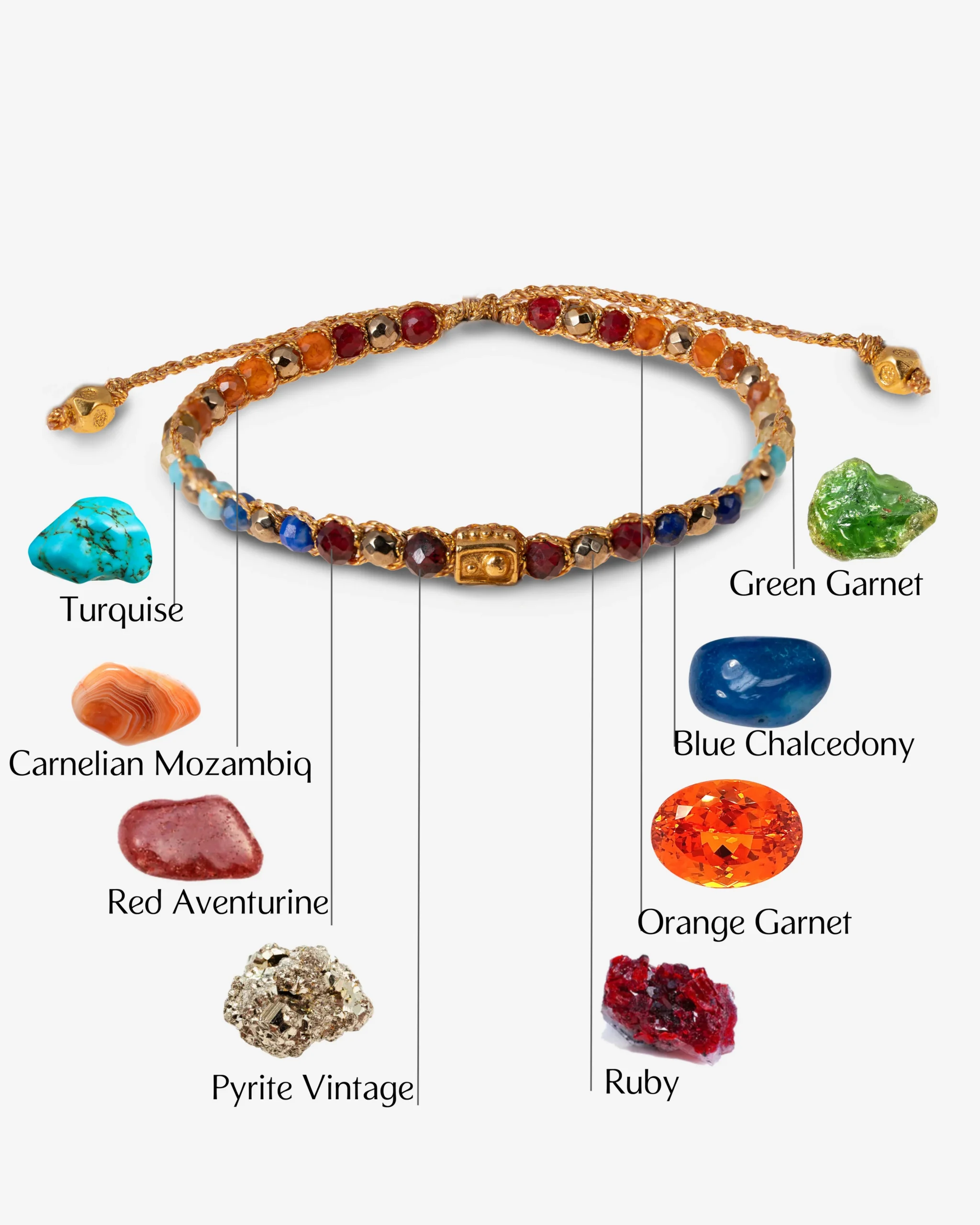
There’s also incredible variety. Bali jewelry ranges from bold, statement-making pieces — thick silver cuffs, layered necklaces heavy with stone — to incredibly fine, minimalist designs that feel almost modern. Artisans here work with gemstones too: blue topaz, turquoise, labradorite, garnet, moonstone. The combination of Balinese silverwork with natural stones is something truly hard to find anywhere else.
What to Look For When Buying
Not everything sold as “Bali jewelry” actually comes from Balinese artisans. The tourist market is full of mass-produced pieces imported from Java or manufactured in bulk. Here’s how to tell the difference.
Look at the finish. Genuine handmade Balinese jewelry has small, beautiful imperfections — slight variations in the granules, tiny differences in the wire thickness. Uniform perfection is usually a sign of machine production.
Ask about the maker. Real artisan shops in Bali, and authentic online sellers with Bali roots, will tell you exactly where their pieces come from, often naming the village or the craftsman. Samapura, Celuk, and Ubud are the three main silversmithing communities on the island. If a seller can’t tell you where the piece was made, be cautious.
Check the silver stamp. Sterling silver pieces should carry a .925 mark. If you’re buying in Bali directly from artisan workshops, you can often watch the piece being made or see the raw materials.
More Than Jewelry — A Living Culture
What makes Bali jewelry extraordinary isn’t just the craft. It’s the fact that this craft is still alive. In most parts of the world, traditional metalworking has been swallowed by industrial production. In Bali, and especially in communities like Samapura, the old ways survive because they’re valued — by the craftsmen, by the culture, and by the millions of people around the world who feel that wearing something handmade by a real person in a real village means something.
When you buy a piece of Bali jewelry, you’re not just buying an accessory. You’re participating in the continuation of something rare and worth preserving.
That’s why people keep coming back. And honestly, once you hold a real piece — once you feel the weight of the silver, trace the filigree with your fingertip, and know that a pair of human hands spent days making exactly that object — you’ll understand why no machine-made jewelry will ever quite measure up.
Bali’s jewelry tradition is one of the island’s greatest gifts to the world. If you ever get the chance to visit Samapura or sit with a silversmith in Celuk, take it. Watch how they work. Ask questions. Buy directly if you can. The piece you bring home will mean infinitely more for it.
Promote your articles nowCheck for details
Choose a promotion package
Choose a package below, scan the QR code and pay the displayed amount for 20 days.
After payment, email your article title and payment screenshot to info@yourneeds.asia. Once confirmation is received, one of our administrators will activate the promotion.

Choose where your promoted article receives extra visibility
Promotion changes presentation and placement for the selected period. It does not guarantee traffic, enquiries, search ranking or sales.
Priority visibility in the VIP Lounge, promoted shelves and highlighted article areas.
Top-style highlighting in article directories, homepage feeds and promoted article blocks.
Premium styling across supported article feeds, recommendations and directory placements.
Featured presentation in supported homepage, category, directory and related-article areas.
Build a stronger online presence for your business
Get Your Website for ₹15,000
Are you listed and don't have a website for your business? We can plan, design and launch a responsive website that makes your business easier to understand and contact.
Get My WebsiteSEO Starts from ₹10,000/Month
Improve how your business is presented across Google, local listings and AI-powered search results with ongoing SEO, content and authority-building work.
Improve My VisibilitySuggested Articles
View all articles
Exploring More Flexible Ways to Trade Digital Assets
Digital asset platforms have changed a lot over the past few years. Spot trading is still widely used, but traders now have access to…

Salesforce Implementation Partner in UK | CRM FRONTIER |
Salesforce has become an important CRM platform for businesses looking to improve sales, customer service, marketing, and business operations. However, simply purchasing Salesforce licences…
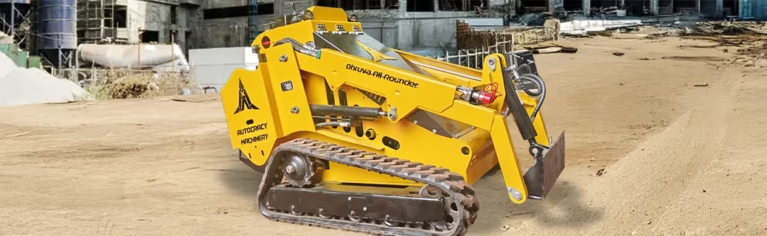
Rudra Prime Mini – 25 HP Self‑Propelled Multi‑Attachments Machine for Construction & Utilities
The Rudra Prime Mini is a 25 HP diesel‑powered, self‑propelled multi‑attachments machine designed for urban infrastructure, rural utilities, and landscaping operations across India. Built…

How to Build a Target Account List for Chiropractic Practices in 2026
Reaching chiropractic practices effectively in 2026 requires more than collecting a large number of business contacts. Healthcare marketers need to identify practices that match…
Latest Blog Posts
View all articles
Flats for Rent in Hyderabad: Apartments, Tolet, Villas & Independent Houses 2026
Flats for Rent in Hyderabad: Apartments, To-Let Homes, Villas & Independent Houses – Complete 2026 Rental Guide Finding the right Flats for rent in…
Sara777 – Satta Matka Results and Chart Latest Records
Welcome to Sara777, an online platform created to provide easy access to Satta Matka results, charts, market records, and related information in one place.…

How to deposit on allpanel777?
Here is some steps to deposit on allpanel777 are:- Step 1: Start With Your Account To deposit, users should have an active AllPanel777 account.…
How Rhythm & Royalty Fitness Makes Dance Classes in Zirakpur Fun for Every Age Group
Dance has a unique way of bringing people together, no matter their age, fitness level, or experience. With everyone seeking a workout that doesn't…
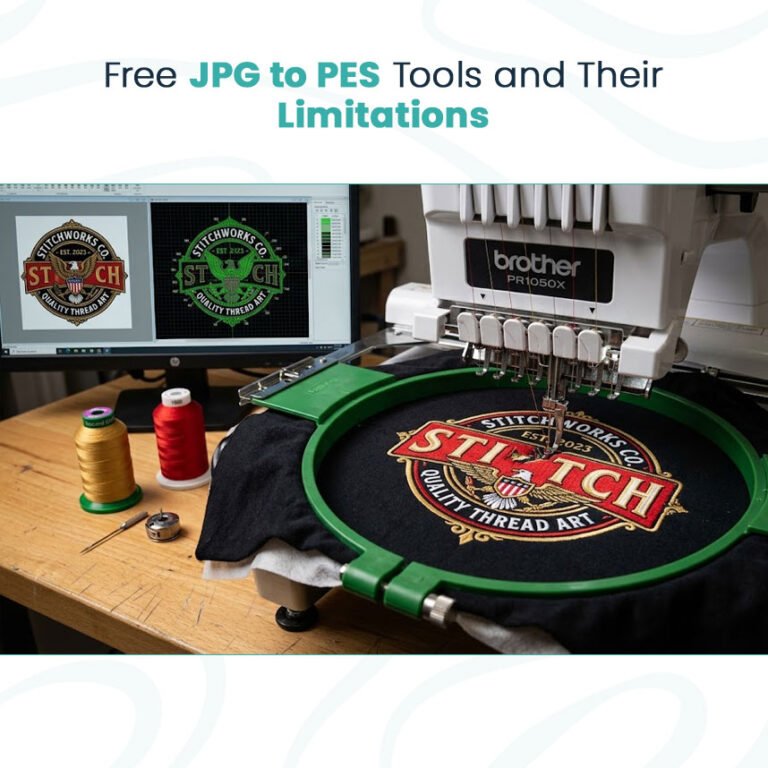
Free JPG to PES Tools and Their Limitations
Turning a picture into an embroidery file sounds simple until you see what happens inside the machine. A JPG shows an image, while a…

Getting to Know Ciprofloxacin 500 mg: Uses, Safety and Important Information
[caption id="attachment_8302" align="alignnone" width="300"] Ciprofloxacin 500 mg: Understanding the basics in a simple way.[/caption] Ciprofloxacin 500 mg: Some Basic Points to Consider When one…